Timber landscape edging: 3 Best Options
Why Every Great Garden Needs a Great Edge
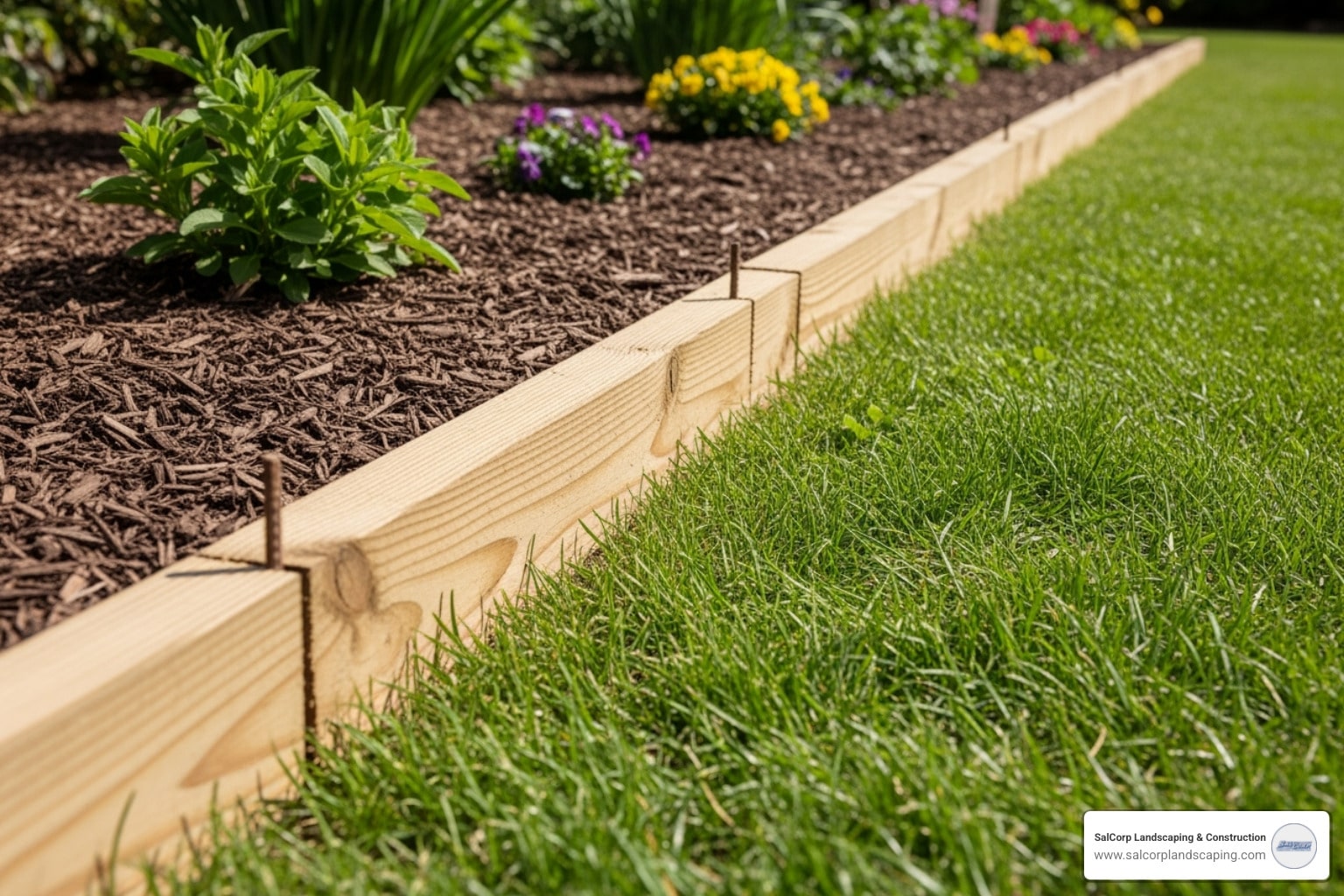
Timber landscape edging creates the clean lines that separate your lawn from flower beds and walkways. This natural material is an affordable way to boost curb appeal, prevent mulch from spilling onto the grass, and stop weeds from creeping into planting areas.
Key timber edging options at a glance (based on internet data, not SalCorp pricing):
- Half-log edging: Natural curved look, $3-10+ per linear foot
- Dimensional lumber: Clean straight lines, $2-8+ per linear foot
- Landscape timbers: Heavy-duty for raised beds, $4-12+ per linear foot
- Flexible timber rolls: Perfect for curves, $5-15+ per linear foot
Wood is a popular choice because it blends naturally with plants and soil while being budget-friendly compared to stone or metal. It’s an easy way to create an attractive, natural-looking frame for any garden bed. The material works especially well in Massachusetts, where seasonal changes demand durable solutions that can handle our freeze-thaw cycles.
I’m Sal Musto, owner of SalCorp Landscaping & Construction. For over two decades, I’ve helped Massachusetts homeowners improve their outdoor spaces with quality materials like timber landscape edging. My hands-on approach ensures every project meets the highest standards while respecting your budget and timeline.
Relevant articles related to Timber landscape edging:
Exploring Timber Landscape Edging: A Natural & Versatile Choice
There’s something special about timber landscape edging that draws homeowners back to this classic choice year after year. It’s cost-effective, DIY-friendly, and offers incredible design versatility. Whether you’re dreaming of clean, modern lines or rustic curves that wind through a cottage garden, timber can handle it all.
Types of Timber and Popular Design Ideas
When clients ask about timber landscape edging, they’re often surprised by the variety. Each type brings a unique personality to your landscape.
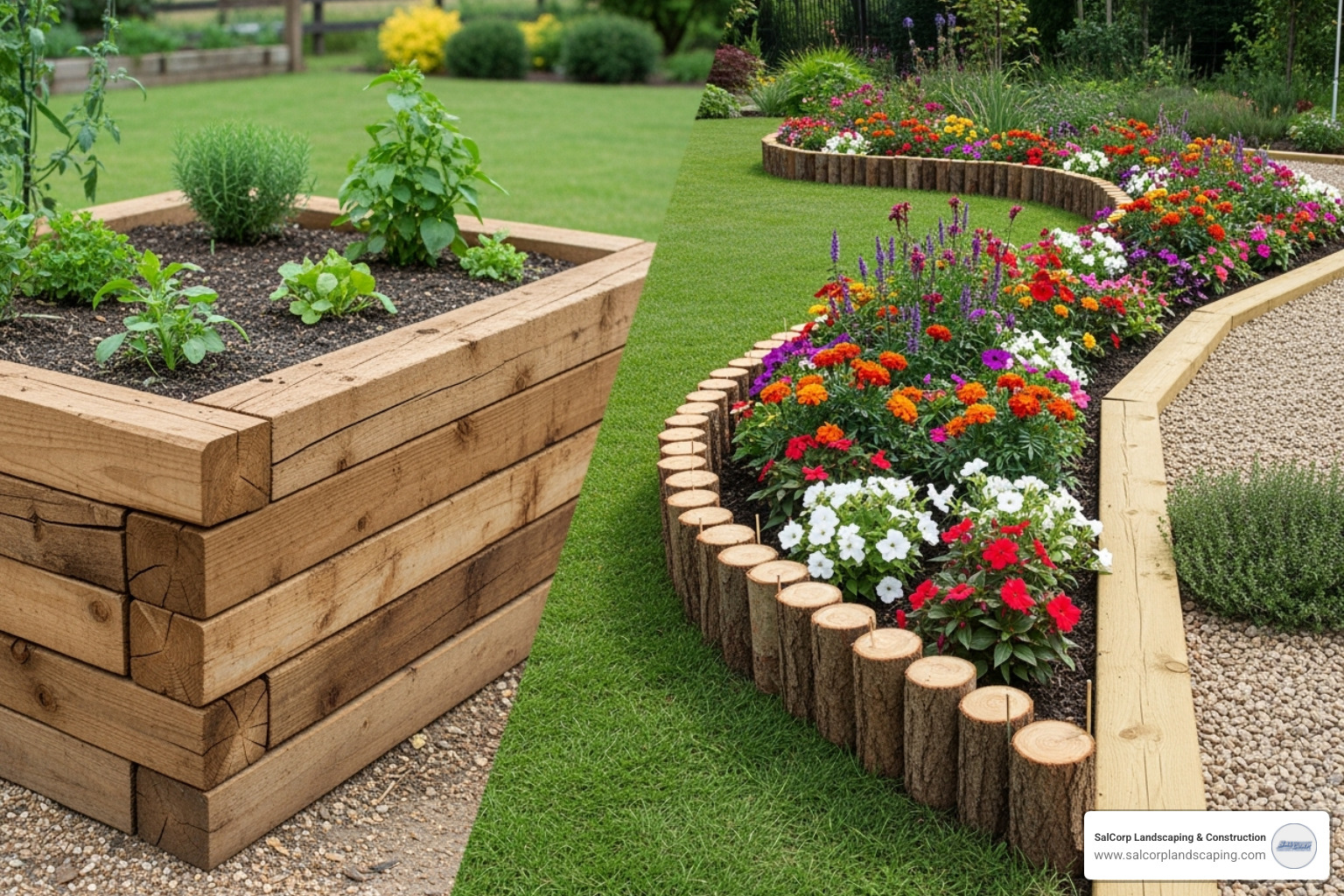
- Dimensional lumber: These pressure-treated planks create the crisp, modern lines ideal for rectangular flower beds or straight walkways.
- Landscape timbers: As a heavy-duty option, these thick pieces are perfect for building raised garden beds or low retaining walls, even on sloped properties.
- Half-logs: For a softer, more natural feel, these rounded timbers are fantastic for cottage-style gardens.
- Flexible timber rolls: Made from smaller pieces connected with wire, these are perfect for creating gentle curves around trees or along winding paths.
The design possibilities are endless. We use these materials to build raised garden beds for better drainage, define walkways to keep gravel neat, and create stunning terraced gardens on slopes to prevent erosion. If you’re curious about how these ideas might work in your yard, our team can help turn concepts into reality through our landscape design services.
Treated vs. Untreated Wood: A Key Decision
Choosing between treated and untreated wood is a key decision that affects longevity and what’s in your soil.
Treated wood is pressure-treated with chemical preservatives to resist rot and insects, giving it a lifespan of 15-20 years or more, especially with a “ground-contact rating.” While modern preservatives are safer, some homeowners avoid using treated wood near vegetable gardens.
Untreated wood is the all-natural option, but it won’t last as long when in contact with moist soil. For a durable, natural alternative, consider cedar or redwood. These woods contain natural oils that resist rot and insects. They cost more upfront but offer excellent longevity without chemicals.
The best choice depends on your project. For decorative beds, treated timber is a practical choice. For vegetable gardens, cedar or redwood is often worth the investment.
Installation Basics and Cost of Timber Landscape Edging
Proper installation is key to long-lasting timber landscape edging. The process involves careful planning, digging a level trench, placing the timbers, and securing them with galvanized spikes. Proper trenching and leveling are crucial for a stable, professional-looking result that won’t shift over time.
Based on internet data (not our specific pricing, since every project is unique), timber landscape edging typically runs $2 to $15+ per linear foot. This wide range reflects the material chosen (pressure-treated vs. cedar) and project complexity (straight lines vs. curves).
While DIY can save on labor costs, professional installation ensures the job is done correctly and efficiently, saving you time and physical work. For those interested in the DIY approach, this detailed guide on installing landscape timbers provides helpful step-by-step instructions.
Beyond Timber: A Roundup of Other Edging Materials
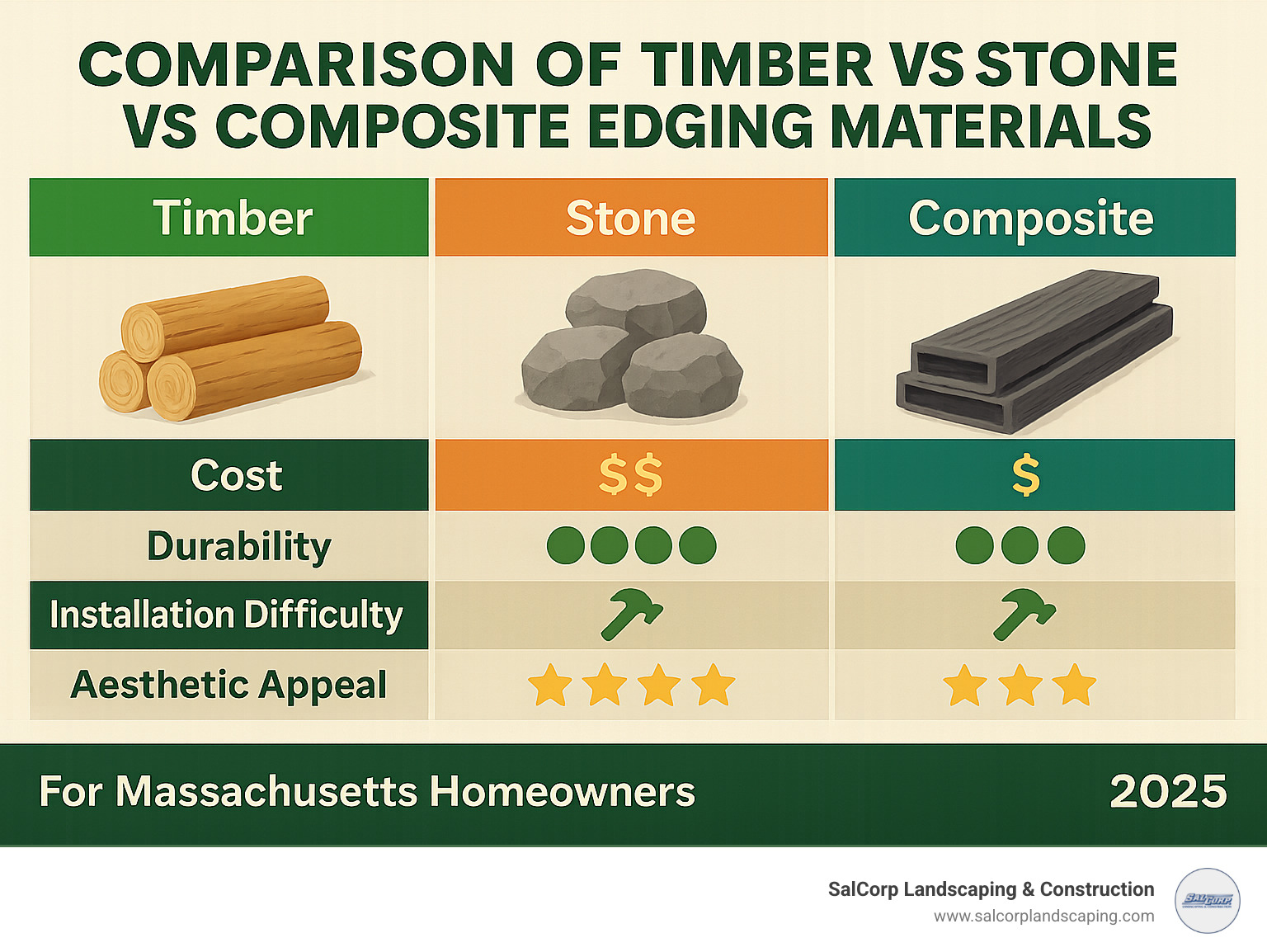
While timber landscape edging is a fantastic choice, it’s one of many options. At SalCorp Landscaping & Construction, we help homeowners find the perfect material by considering cost, lifespan, aesthetics, and installation. Here’s a quick comparison of popular choices (costs are based on internet data, not SalCorp pricing):
- Timber: $2-$15+ per linear foot. Natural look, lasts 10-20 years.
- Natural Stone: $10-$40+ per linear foot. Timeless beauty, lasts 50+ years.
- Concrete Pavers: $5-$25+ per linear foot. Customizable look, lasts 30-50 years.
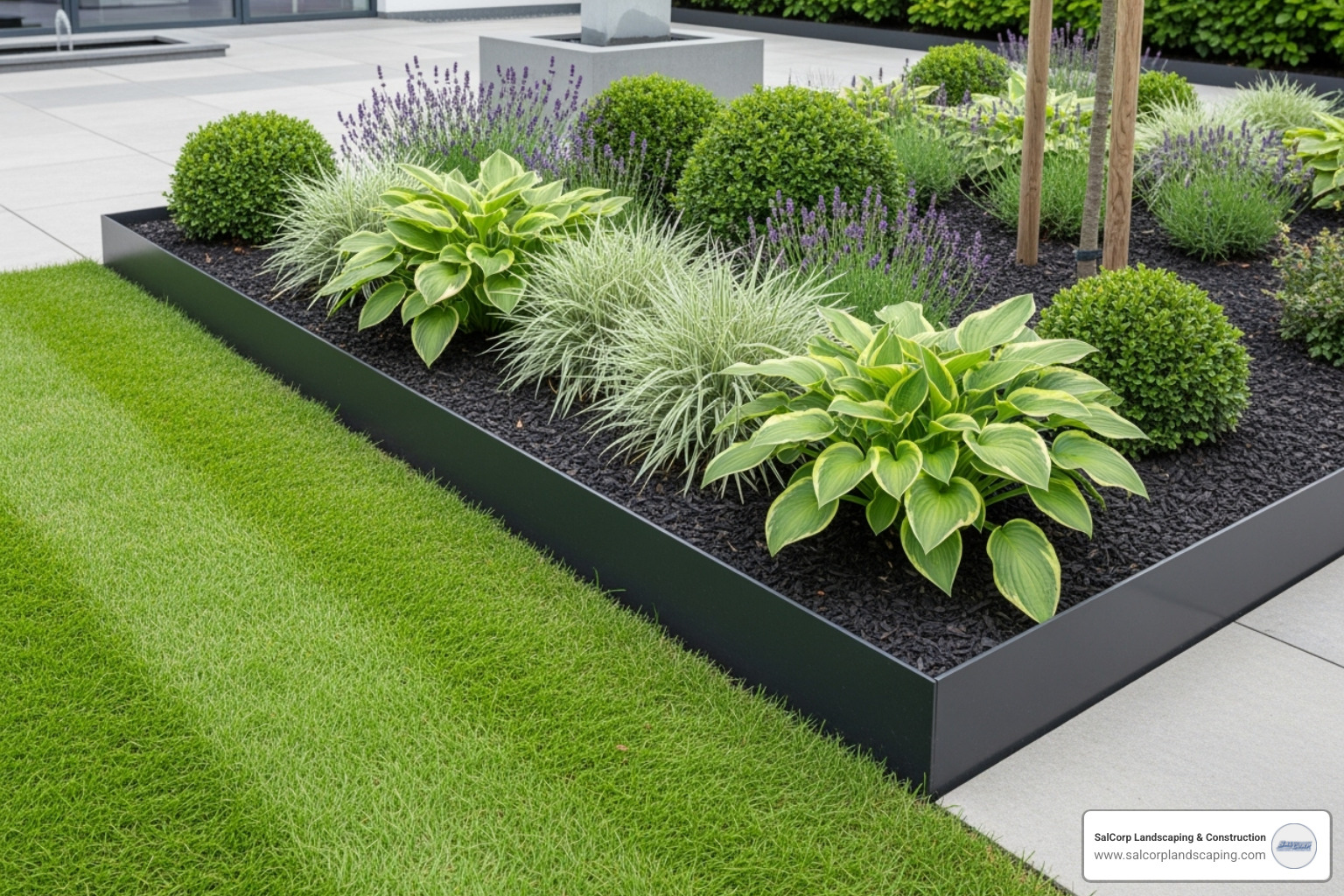
- Metal: $3-$15+ per linear foot. Sleek and modern, lasts 20-40 years.
- Plastic/Composite: $1-$10+ per linear foot. Budget-friendly, lasts 5-15 years.
- Brick: $4-$20+ per linear foot. Classic charm, lasts 50+ years.
Stone and Masonry: The Durable, High-End Options
For edging that is built to last, stone and masonry are the premier choices. These materials make a permanent, high-end statement in any landscape.
- Natural Stone: Materials like fieldstone or granite offer best character and durability, creating a one-of-a-kind border that complements the Massachusetts landscape.
- Concrete Pavers: Pavers provide the look of natural materials with the uniformity of modern manufacturing, perfect for creating clean lines along driveways and walkways.
- Poured Concrete: For ultimate customization, poured concrete can be stamped and dyed to match any style. It’s incredibly durable and low-maintenance.
While the initial investment is higher than for timber landscape edging, their 50+ year lifespan offers incredible long-term value. Professional installation is essential, which is where our team’s experience and equipment make all the difference. To see our work with these premium materials, learn about our retaining wall and patio services.
Flexible and Composite Edging: The Budget-Friendly Choice
For simple, functional, and budget-friendly projects, flexible and composite materials are an excellent choice.
- Flexible Edging: Made from plastic or rubber, these materials are perfect for creating curves around trees or winding paths. Installation is typically simple and fast.
- Composite Edging: Made from recycled plastic and wood fibers, composite gives you the look of wood without the maintenance. It won’t rot or require staining.
The main advantages are affordability, ease of installation, and flexibility for curved designs. While not as durable as timber landscape edging or stone, they are perfect for light-duty applications or for homeowners who like to change their garden layouts.
Conclusion: Choosing the Perfect Edge for Your MA Landscape
Choosing the “best” edging material depends on your property, style, and budget.
- Timber offers a popular balance of natural beauty, cost, and versatility.
- Stone and masonry provide best durability and a high-end aesthetic.
- Flexible and composite options are affordable and perfect for simple projects or curved designs.
In Massachusetts, proper installation is critical to withstand our freeze-thaw cycles and heavy snow. Our 20+ years of local experience at SalCorp Landscaping & Construction means we understand how to choose and install the right materials for our region’s specific challenges, from Walpole’s clay soils to Medfield’s rockier terrain.
As an owner-operated business, we are invested in getting every detail right using our own equipment for maximum quality control. We’re here for the long haul, providing consistent, reliable service.
Ready to transform your landscape with the perfect edging solution? Contact us for professional hardscaping services and let’s create a beautiful, functional outdoor space together.