

Under Deck Landscaping Ideas for Massachusetts Homes
That dark, weedy patch beneath your deck isn't wasted space — it's an opportunity. Gravel surfaces, shade plantings, paver patios, drainage solutions, and lighting that turn the underside of your deck into a space you actually use.
Get a Free ConsultationFive Ways to Reclaim the Space Under Your Deck
Every deck is different — clearance, sun exposure, drainage, and how you want to use the space all matter. Here are the most effective approaches we use across Massachusetts properties.

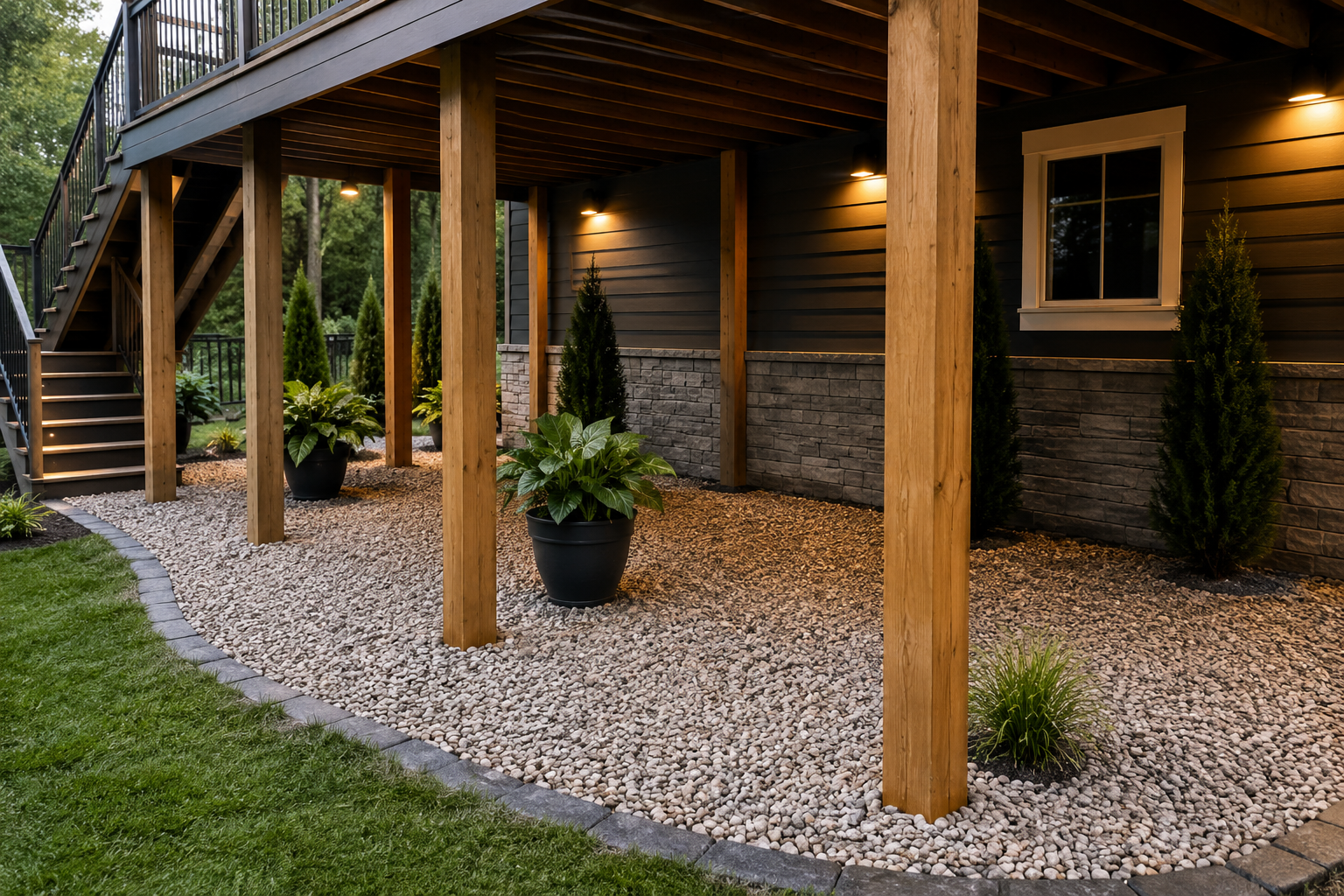
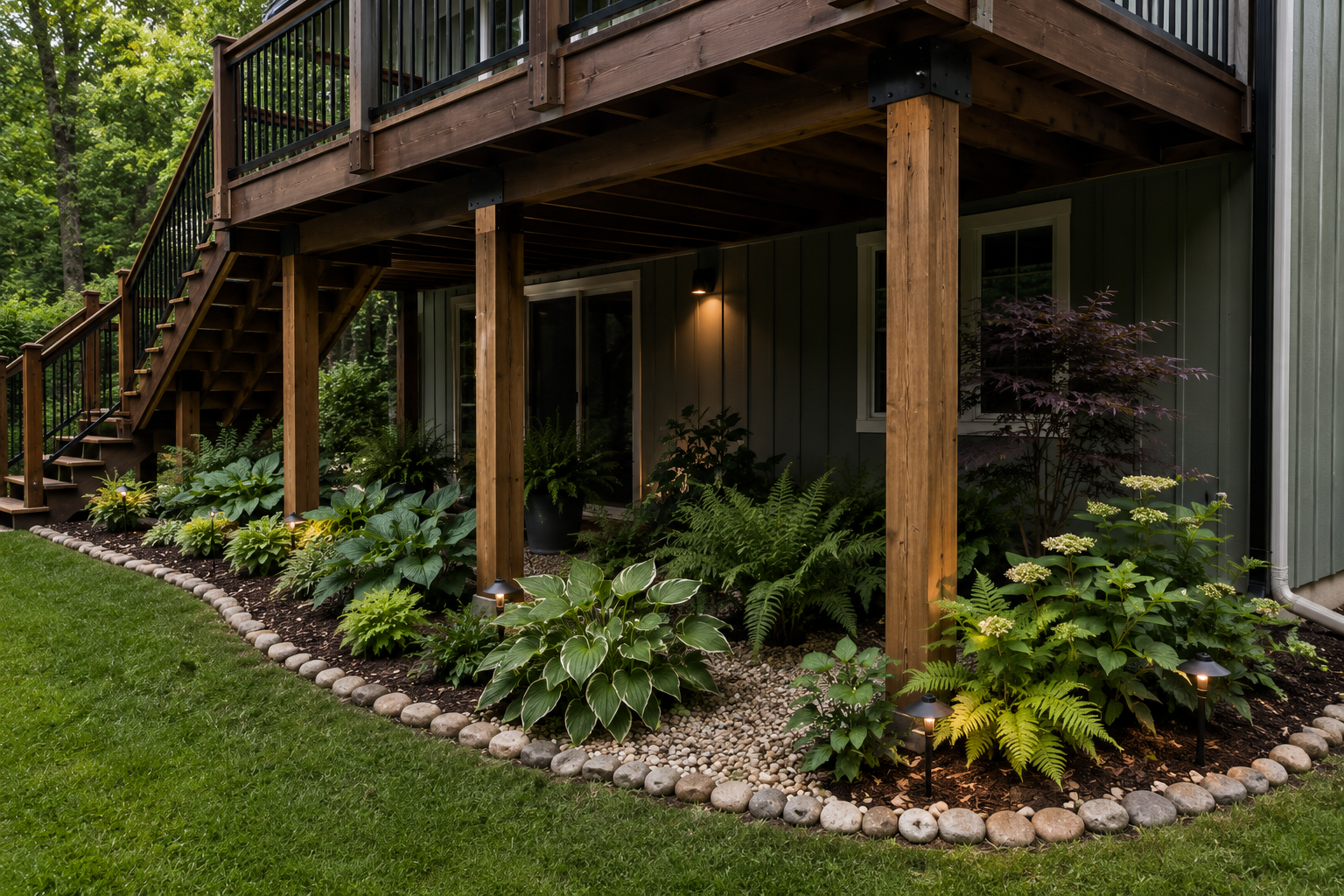
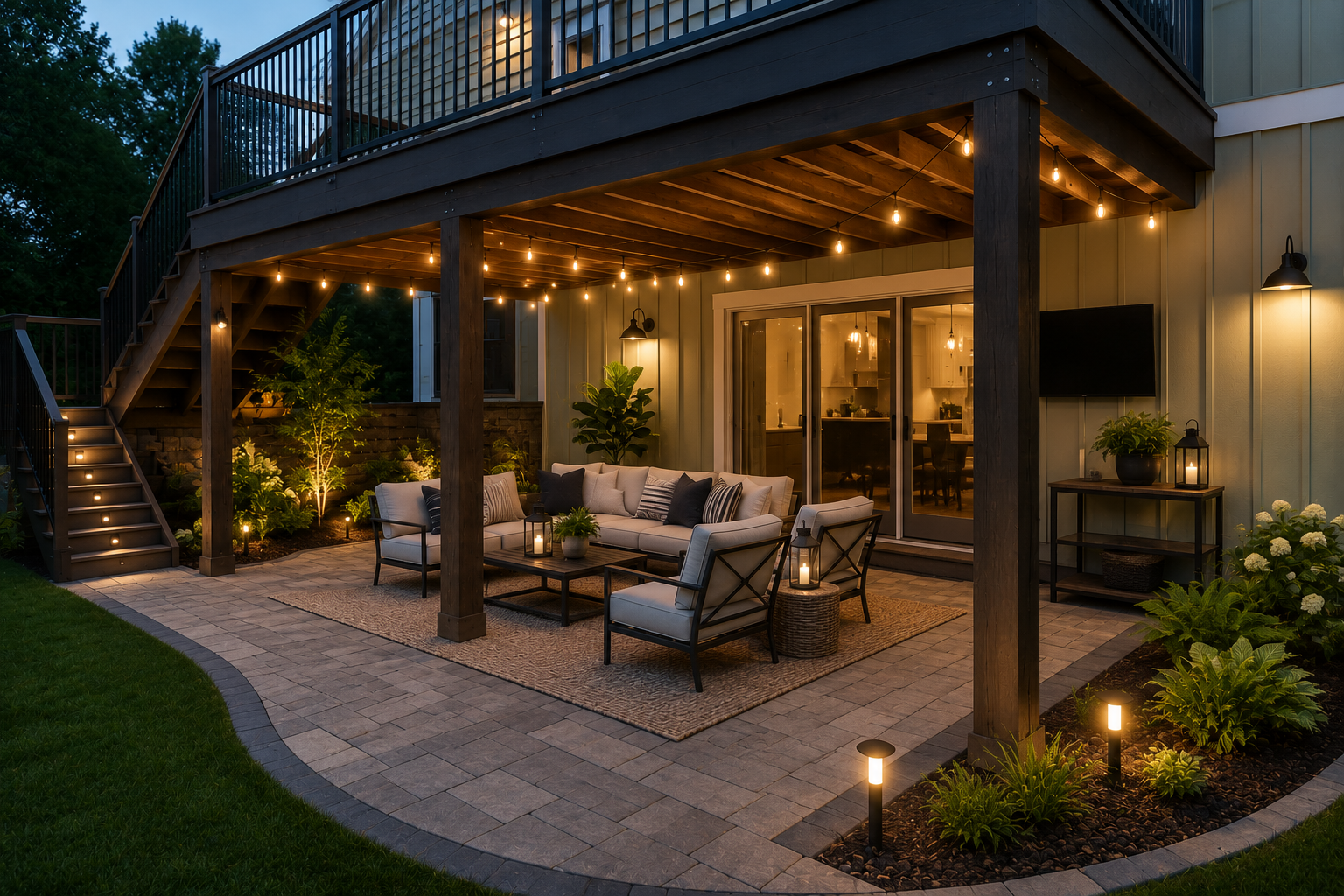
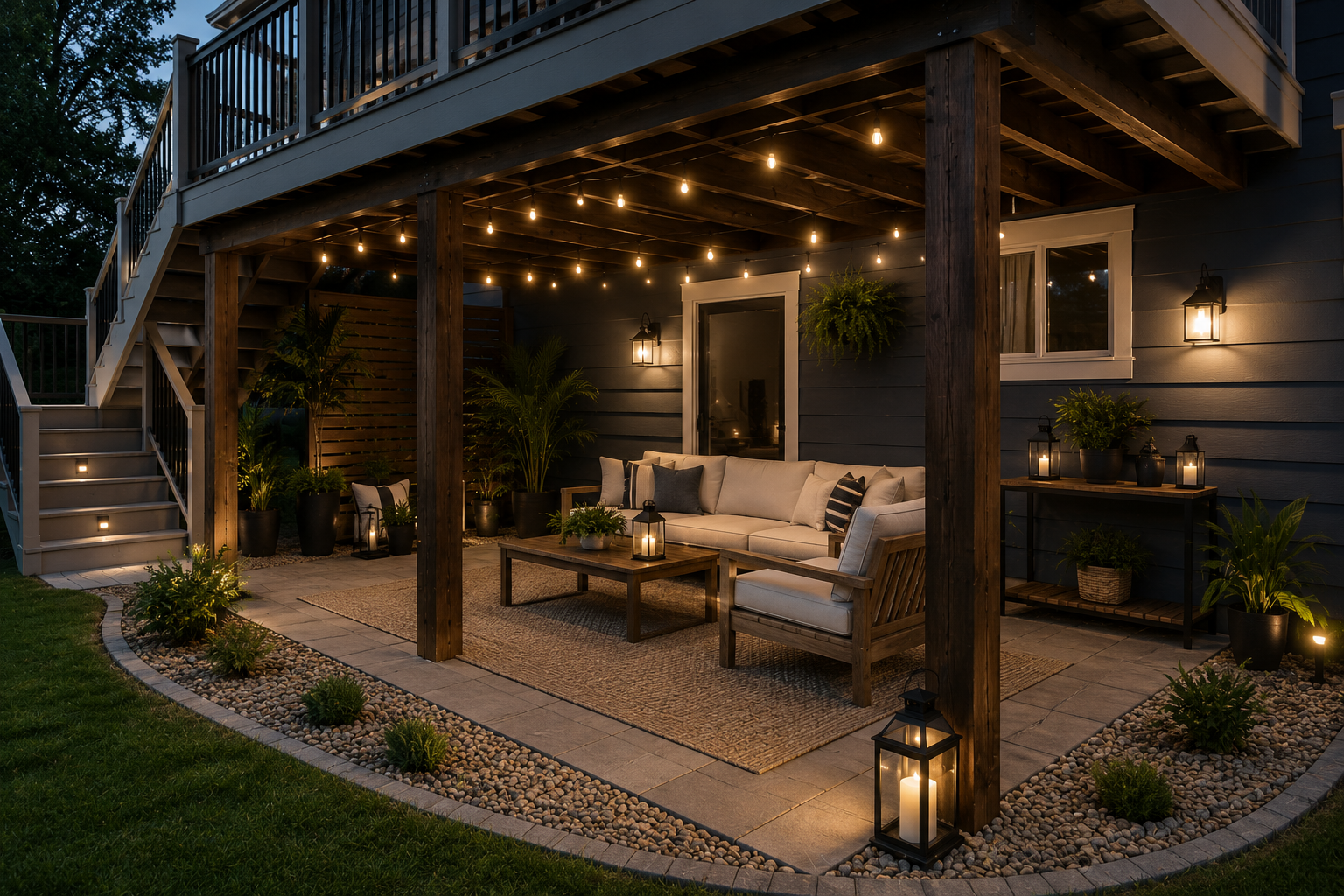
Lighting Changes Everything
The space under a deck is naturally dark — and that's actually an advantage. Low-voltage landscape lighting, string lights across the underside of the deck joists, and LED uplighting on the posts turn a dim crawl space into an atmospheric outdoor room that's usable well into the evening.
We wire landscape lighting into low-voltage transformers with timers and photocells, so the lights come on automatically at dusk and off at a set time. No switches, no forgetting, no running extension cords through the yard.
Plants That Actually Thrive Under a Deck
Under-deck conditions are dry shade — shaded by the deck above and sheltered from most rainfall. Not every plant handles that. We select species proven in Massachusetts shade: hostas for texture and variety, Japanese painted fern for color, heuchera for year-round foliage, and native ground covers like pachysandra and sweet woodruff that spread to fill gaps without constant attention.
The strategy is stone directly under the deck footprint (where nothing grows reliably) and plantings around the visible perimeter where they get more rain and create a finished, landscaped frame around the deck base.
Choosing the Right Ground Cover
The material under your deck needs to handle shade, moisture, and Massachusetts freeze-thaw cycles without creating maintenance headaches. Here's how each option stacks up.
Angular Crushed Stone
The workhorse option. 3/4-inch crushed stone locks together, stays put, drains fast, and won't attract insects. Laid over landscape fabric, it stays clean for years.
Most recommendedPea Gravel
Smooth, rounded stones with a softer look. More comfortable underfoot than crushed stone but shifts more easily — pair with edging and expect some migration.
Best appearanceRiver Rock
Larger decorative stones (2-4 inches) for a natural, upscale look. Excellent drainage but doesn't create a walkable surface — best as an accent or in low-traffic areas.
Decorative accentPavers or Flagstone
Creates a solid, level surface for furniture, storage, or a full outdoor room. Requires the same base preparation as any patio — gravel, sand, proper grade.
Elevated decks onlyRubber Mulch
Won't decompose like wood mulch and won't attract termites. Lasts 10+ years. Good for budget-conscious projects where appearance matters more than creating a hard surface.
Budget-friendlyWood Mulch
Lowest cost option and natural appearance, but decomposes within 2-3 seasons and can attract termites and carpenter ants — a concern when used directly against a wood deck structure.
Use with cautionWhy Under-Deck Landscaping Matters in Massachusetts
An unfinished deck underside in Massachusetts isn't just unattractive — it's an active problem. Bare soil under a deck collects moisture, grows weeds, erodes toward the foundation, and creates a habitat for insects and small animals. In a climate where snow melt and spring rain saturate the ground for weeks, the area under a deck can become a persistent wet zone that contributes to foundation moisture and basement dampness.
Properly landscaping under the deck solves these problems while reclaiming square footage that's otherwise wasted. Even a simple gravel-over-fabric installation eliminates weeds, improves drainage, and gives the deck a finished look from every angle.
The deck skirting decision.
Skirting — lattice, vertical boards, or plantings around the base of the deck — hides the crawl space and creates a polished perimeter. But it also reduces airflow, which can accelerate wood rot on the deck structure if moisture gets trapped. We recommend skirting with ventilation gaps or removable panels so air still circulates while the deck looks finished.
The Drainage Question
Most deck boards have gaps that let rain through. Whether you need a drainage system depends on what you want to do with the space below:
- Gravel only: No drainage system needed — the gravel itself handles water. Just make sure the grade slopes away from the house.
- Usable living space: An under-deck drainage system (panels attached to the joist underside that channel water to perimeter gutters) keeps the space below completely dry.
- Near the foundation: If the deck is attached to the house, water falling through the deck boards onto the ground near the foundation needs to be directed away — either through grading, a french drain, or extending the drainage system's discharge.
Massachusetts Plants for Dry Shade Under Decks
The perimeter around your deck base is the planting zone — directly under the deck footprint is typically too dry and dark for sustained plant growth. Focus plantings where they'll get at least some rain and indirect light:
- Hostas — hundreds of varieties, from miniature to giant. The most reliable shade perennial in Massachusetts.
- Japanese painted fern — silver and purple fronds that brighten dark areas. Hardy to Zone 4.
- Astilbe — feathery flower plumes in shade. Needs more moisture than other shade plants — best where the perimeter gets rain runoff.
- Heuchera (coral bells) — year-round foliage in colors from lime green to deep purple. Excellent for adding color without flowers.
- Pachysandra — evergreen ground cover that spreads to fill gaps. Classic New England shade plant.
- Sweet woodruff — fragrant, low-growing, spreads nicely in shade. White flowers in spring.
- Creeping jenny — bright chartreuse ground cover that tolerates shade and fills quickly.
How We Approach an Under-Deck Project
- Assessment — we check clearance, drainage patterns, soil conditions, and proximity to the foundation.
- Material selection — based on how you want to use the space, your deck height, and budget.
- Prep work — remove existing weeds and debris, grade the soil for drainage, and lay landscape fabric.
- Installation — stone, pavers, or plantings go in. Edging keeps materials contained. Lighting wired if included.
- Perimeter plantings — shade-tolerant plants installed around the deck base for a finished, landscaped look.
Communities We Serve
SalCorp handles under-deck landscaping projects throughout Norfolk County, Plymouth County, and Greater Boston — including Walpole, Westwood, Norwood, Needham, Wellesley, Dover, Sherborn, Medfield, Sharon, Foxborough, Hingham, Norwell, Cohasset, Scituate, Weymouth, Braintree, Milton, Canton, and surrounding towns.
Have a deck with wasted space underneath? Contact SalCorp for a free consultation. We'll look at what you're working with and recommend the right approach for your specific deck.
Under Deck Landscaping FAQs
What is the best thing to put under a deck?
The best material depends on how you want to use the space and how much clearance you have. For low-clearance decks where you won't walk underneath, a weed barrier topped with 3 inches of angular crushed stone is the most effective, low-maintenance option — it prevents weeds, drains well, and keeps the area clean without attracting pests. For elevated decks with enough headroom to create a usable space, pavers or flagstone over a compacted base create a solid, level surface for furniture, storage, or a second outdoor living area. Pea gravel is popular for its appearance but shifts underfoot and migrates; angular crushed stone locks together better and stays put.
How do you make the underside of a deck look better?
Start with the perimeter — skirting the deck base with lattice, vertical boards, or evergreen plantings hides the crawl space and gives the deck a finished look from every angle. Under the deck itself, replace bare dirt with gravel or stone for a clean, maintained appearance. For elevated decks, add landscape lighting (low-voltage path lights, string lights, or uplighting on the deck posts) to turn the space from a dark afterthought into an inviting area. If the deck boards above allow rain through, installing an under-deck drainage system captures water and keeps the space below dry enough for furniture and storage.
What should I plant under my deck?
Under-deck areas are typically dry shade — shaded by the deck above and sheltered from rain. Choose plants that tolerate both low light and drier conditions. Hostas, ferns (especially Japanese painted fern and autumn fern), astilbe, heuchera, and native ground covers like pachysandra and sweet woodruff do well in Massachusetts shade. Around the deck perimeter where plants get more rain, you can use slightly less drought-tolerant shade plants. Avoid planting anything that needs regular watering directly against deck posts — the moisture can accelerate wood rot. Container plantings are a good alternative for adding greenery without soil contact with the deck structure.
What to put under a deck instead of grass?
Grass won't survive under most decks because it needs full sun and regular rain — neither of which reaches under a deck. The most common alternatives: crushed stone or pea gravel over landscape fabric (low maintenance, excellent drainage), pavers or flagstone (creates a usable hard surface), mulch (inexpensive but decomposes and may attract termites near the house), rubber mulch (lasts longer than wood mulch, won't rot), or shade-tolerant ground covers like creeping jenny, ajuga, or sweet woodruff along the perimeter. For the area directly under the deck footprint, stone is almost always the best choice because it doesn't decompose, doesn't attract insects, and requires virtually no maintenance.
Do I need drainage under my deck?
If your deck boards have gaps (which most do), rain falls through and hits the ground below. Whether you need a drainage system depends on what you want to do with that space. If you're just laying gravel and walking away, the gravel itself handles drainage. But if you want a dry, usable space under an elevated deck — for furniture, storage, or a living area — you'll need an under-deck drainage system. These systems (like Trex RainEscape or similar) attach to the underside of the deck joists and channel water to gutters at the perimeter, keeping everything below completely dry. In Massachusetts, proper drainage under the deck also prevents the water from pooling near the foundation.
Can I put a patio under my deck?
Yes — if your deck has enough clearance (generally 7 feet or more of headroom), a paver patio or flagstone surface under the deck creates a second outdoor living area that's naturally shaded in summer and protected from light rain. The installation process is similar to a standard patio: excavation, compacted gravel base, sand bedding, and pavers, with the same attention to slope and drainage. The main difference is coordinating the patio grade with the deck posts and ensuring water drains away from both the patio surface and the house foundation. For decks with less clearance, a simpler gravel or stone surface may be more practical.
What ground cover works best under a deck in Massachusetts?
For living ground cover around the deck perimeter in Massachusetts, the best performers in shade are creeping jenny (Lysimachia nummularia), ajuga, sweet woodruff, pachysandra, and vinca minor. These tolerate shade, spread to fill gaps, and handle Massachusetts winters. For the area directly under the deck footprint where conditions are dry shade, non-living ground cover — crushed stone, river rock, or pea gravel over landscape fabric — is more reliable than any plant because the lack of rain and light makes sustained plant growth difficult. The combination approach works best: stone under the deck, living ground cover around the visible perimeter.
How much does it cost to landscape under a deck?
Under-deck landscaping costs vary widely based on the approach. A basic gravel installation — landscape fabric plus 3 inches of crushed stone — is the most affordable option and works well for most standard decks. Adding a paver patio underneath, shade plantings around the perimeter, landscape lighting, or a full under-deck drainage system increases the investment proportionally. The biggest variable is typically whether the space needs excavation and grading before materials go down, which depends on the existing conditions under your deck. We provide detailed estimates after seeing the space — every deck is different.
Ready to Reclaim the Space Under Your Deck?
Schedule a free consultation with SalCorp. We'll assess your deck, discuss options, and show you what's possible with the space you already have.
Get Your Free Consultation