Annual lawn care schedule: The ultimate 2025 guide!
Why an Annual Lawn Care Schedule is Your Lawn’s Best Friend
An annual lawn care schedule is the roadmap to a healthy, beautiful lawn. Without proper timing, even the most expensive products won’t deliver the results you want.
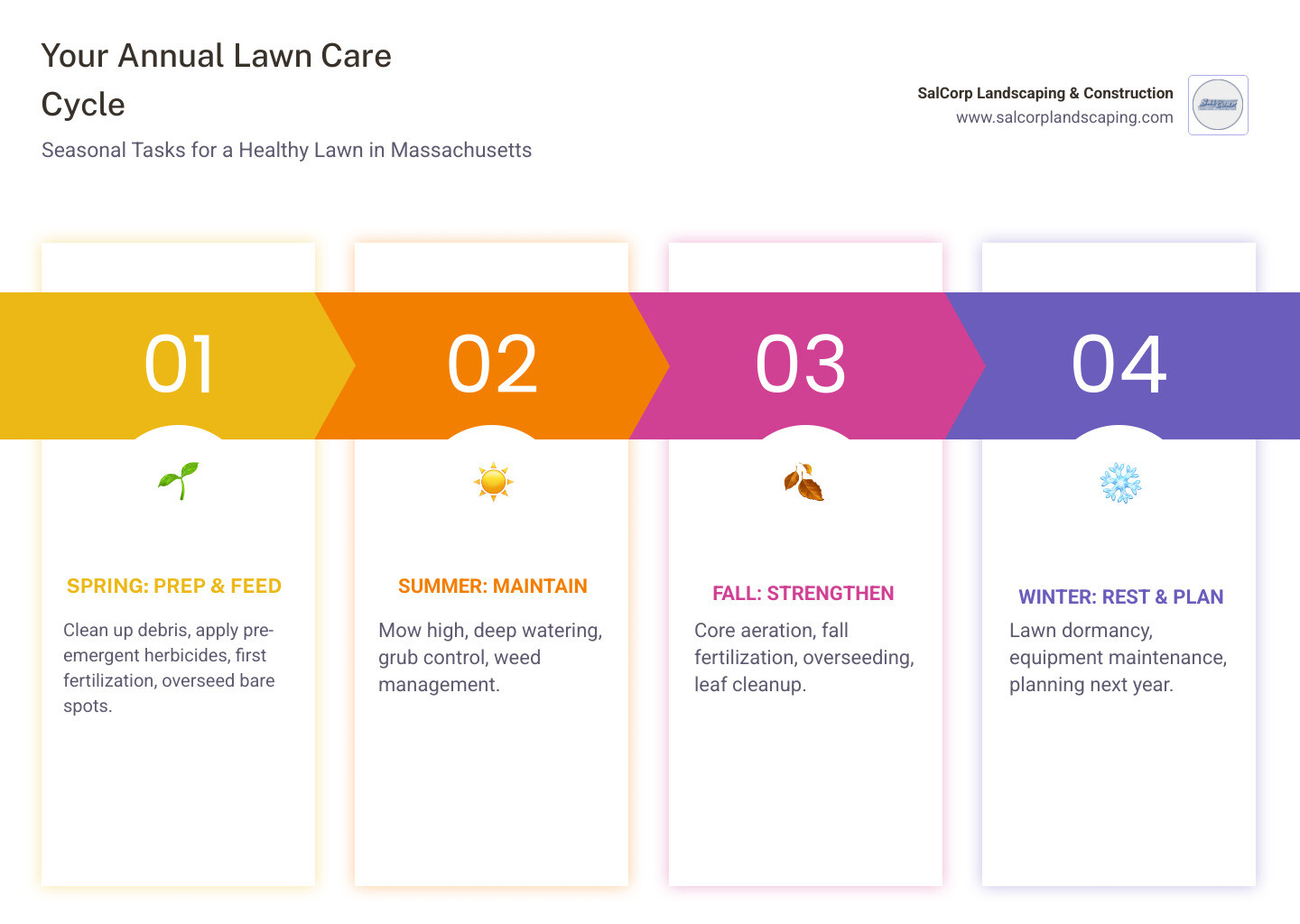
Quick Annual Lawn Care Schedule Overview:
- Spring (March-May): Clean up debris, apply pre-emergent herbicides, first fertilization, overseed bare spots
- Summer (June-August): Mow high, deep watering, grub control, weed management
- Fall (September-November): Core aeration, fall fertilization, overseeding, leaf cleanup
- Winter (December-February): Lawn dormancy, equipment maintenance, planning next year
The difference between a struggling lawn and a thick, green one comes down to timing. Cool-season grasses common in Massachusetts thrive in temperatures around 65 to 75 degrees Fahrenheit, with peak growth in spring and fall. Skipping fall fertilization means less energy for spring green-up, while applying pre-emergent herbicides too late means a summer of battling crabgrass.
A proper schedule also saves you money. Preventive care, like a spring grub application, costs far less than reseeding an entire lawn after grub damage.
I’m Sal Musto, owner of SalCorp Landscaping & Construction, and I’ve spent over two decades helping Massachusetts property owners master their annual lawn care schedules. I’ve seen how the right timing transforms struggling grass into the kind of lawn that becomes the envy of the neighborhood.
First Things First: Understanding Your Lawn’s Foundation
Before creating an annual lawn care schedule, you must understand your lawn’s foundation: its grass type, soil health, and local climate. Getting these basics right ensures your efforts pay off.
Know Your Grass Type: Cool-Season vs. Warm-Season
Not all grass is the same. Cool-season grasses like Kentucky Bluegrass, Perennial Ryegrass, and Fine Fescue are the stars in Massachusetts. They thrive when temperatures are between 65 to 75 degrees Fahrenheit, which is why they look best in spring and fall. They slow down or go dormant in summer’s heat and winter’s cold.
Warm-season grasses like Zoysia and Bermuda grass love heat and are less common here, though they may be found in sheltered spots.
| Feature | Cool-Season Grasses | Warm-Season Grasses |
|---|---|---|
| Growth Temp | 65-75°F | 85-90°F |
| Peak Growth | Spring and Fall | Summer |
| Dormancy | Summer (heat/drought) and Winter (cold) | Winter (cold/frost) |
| Common Types in MA | Kentucky Bluegrass, Perennial Ryegrass, Fine Fescue, Tall Fescue | Less common, but some Zoysia or Bermuda may be found in sheltered spots. |
This matters because timing is everything. Fertilizing cool-season grass in mid-summer is ineffective, but feeding it in early fall fuels thick, healthy growth. If you’re starting a new lawn, choosing the right grass type is the first step to success. More info about new lawn installation.
The Importance of Soil Testing
Your soil is your lawn’s foundation. A soil test reveals exactly what’s going on beneath the surface, providing two critical pieces of information:
Soil pH is the most important number. Most grasses prefer a slightly acidic to neutral pH between 6.0 and 7.0. If the pH is off, your grass can’t absorb nutrients, even if they’re present in the soil. Why soil pH matters for nutrient uptake.
Nutrient levels show what your lawn is hungry for, measuring nitrogen (N), phosphorus (P), and potassium (K). This prevents guesswork when buying fertilizer.
The best time to test soil is spring or fall, every 2-3 years. For accurate results, send a sample to a professional lab like the University of Massachusetts Soil Testing Laboratory. This small investment saves money and is crucial for establishing new grass. More info about hydroseeding services.
Your Complete Annual Lawn Care Schedule by Season
Here’s a breakdown of what to do and when. This annual lawn care schedule is designed for cool-season grasses in Massachusetts, but always adapt to the year’s specific weather patterns.
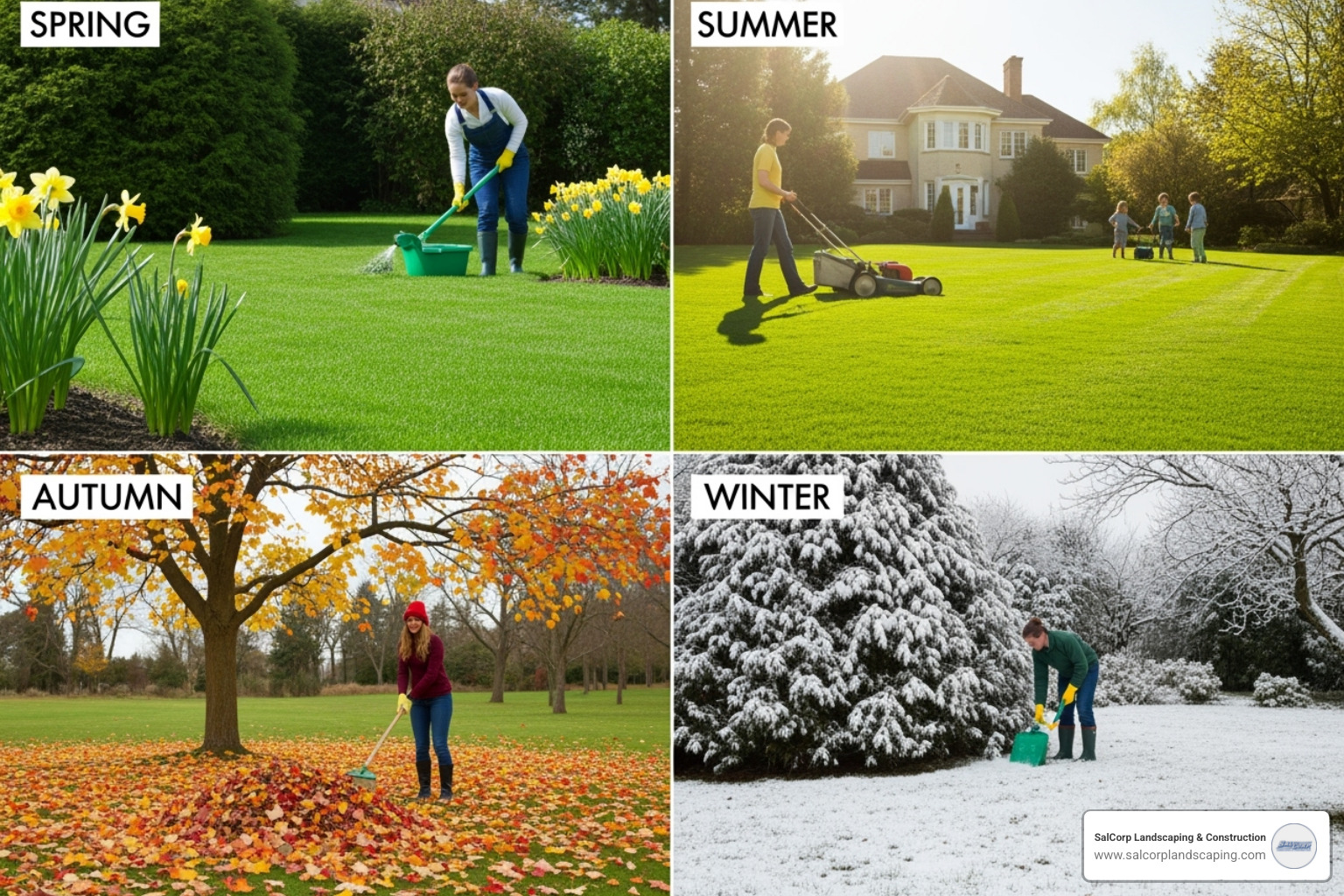
Spring (March, April, May): The Great Awakening
Spring sets the stage for the entire year.
- Yard Cleanup: As snow melts, rake up leaves, dead grass, and debris to prevent disease and allow new growth.
- Mower Maintenance: Sharpen your mower blades for a clean cut that prevents grass damage and disease. Wait for consistent 50°F temperatures and 2-2.5 inch grass height for the first mow.
- Pre-Emergent Herbicides: In April, apply pre-emergents to prevent crabgrass. The best time is when soil temperatures reach 55°F (look for forsythia blooms). This is your best defense against a summer-long weed battle.
- First Fertilization: Feed your lawn when soil temperatures hit 55°F to replenish nutrients and fuel spring growth.
- Overseeding & Aeration: Address bare patches by overseeding. If your lawn is compacted, early spring aeration before overseeding will improve air, water, and nutrient flow to the roots.
- Grub Control: A preventative application in late spring stops grubs before they damage grass roots.
More info about basic lawn care services.
Summer (June, July, August): Beating the Heat
Summer is about helping your cool-season grass survive heat and drought.
- Mow High: Set your mower to 3-4 inches. Taller grass shades the soil, reduces evaporation, and encourages deeper, more resilient roots.
- Weed Control: Spot-treat any weeds that appear with a post-emergent herbicide. Always read and follow product labels.
- Grub Control: If you missed the spring application, early summer is your next window to treat for young, hatching grub larvae.
- Water Smart: Your lawn needs 1 to 1¼ inches of water weekly, including rain. Water deeply and infrequently in the early morning (4-10 AM) to encourage deep roots and minimize evaporation and disease risk. More info about irrigation sprinkler systems.
- Disease Monitoring: Watch for brown patch or dollar spot during hot, humid weather.
Fall (September, October, November): Preparing for Dormancy
Fall is the most critical season for cool-season grasses to recover from summer and store energy for winter.
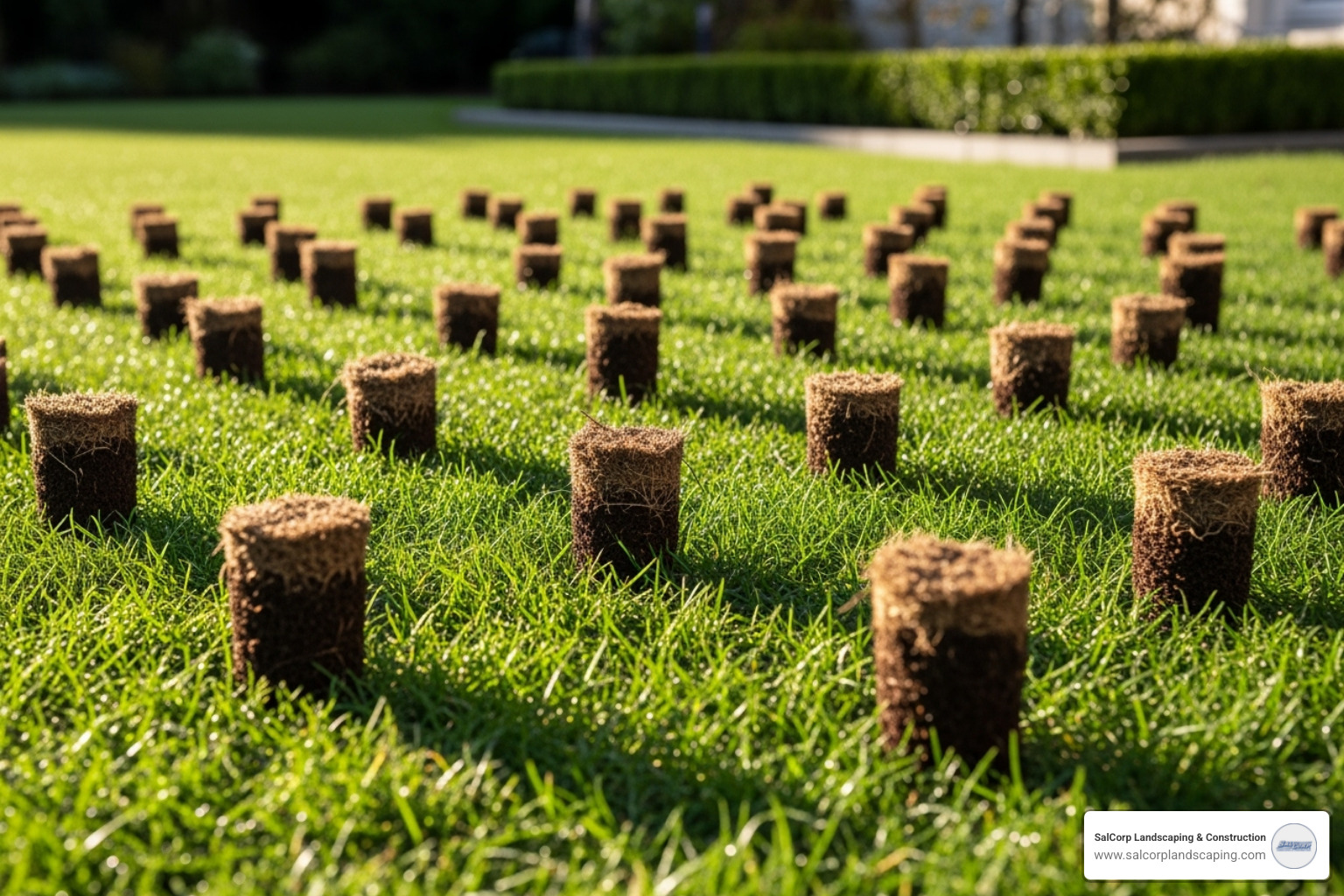
- Core Aeration & Dethatching: In September, aerate to relieve soil compaction. If you have more than a half-inch of thatch (the spongy layer on the soil), dethatch to allow water and nutrients to reach the roots.
- Overseeding: September is the best time to overseed. The fresh aeration holes provide excellent seed-to-soil contact, and the cooler, moist weather is perfect for germination.
- Fall Fertilization: This is the most important feeding of the year. Apply a fall fertilizer about six weeks before the first expected frost to encourage root growth and ensure a quick green-up next spring.
- Leaf Management: Rake leaves regularly or mulch them with your mower to return valuable nutrients to the soil. Don’t let them smother the grass. More info about mulching services.
- Final Mow: For your last mow in November, cut the grass shorter, to about 1.5-2 inches, to help prevent snow mold.
Winter (December, January, February): Rest and Planning
Your lawn is dormant, but a few tasks remain.
- Limit Foot Traffic: Avoid walking on frozen or dormant grass, as it’s brittle and won’t heal until spring.
- Use Safe Ice Melt: Choose calcium chloride products over rock salt, which can burn grass near walkways.
- Equipment Maintenance: Clean, service, and sharpen your tools so they’re ready for spring.
- Plan for Next Year: Review what worked in your annual lawn care schedule and plan any new projects for the coming season. How grass becomes dormant in winter.
Mastering Key Lawn Maintenance Tasks
Following your annual lawn care schedule is key, but mastering the techniques will take your lawn to the next level.
Mowing: More Than Just a Haircut
Proper mowing is critical for grass health.
- The One-Third Rule: Never cut more than one-third of the grass blade’s height in a single mowing. Cutting too much at once shocks the plant.
- Sharp Blades: Sharp blades make a clean cut that heals quickly. Dull blades tear the grass, leaving it vulnerable to disease. Sharpen blades at least once per season.
- Seasonal Mowing Heights: Mow higher in summer (3-4 inches) to shade the soil and encourage deep roots. In fall, gradually lower the height for the final cut (around 2-2.5 inches).
- Grasscycling: Leave the clippings on the lawn. They are mostly water and nitrogen, acting as a free, natural fertilizer.
More info about commercial lawn care.
Watering: Quenching Your Lawn’s Thirst
How and when you water makes a huge difference.
- Amount: Established lawns need about 1 to 1¼ inches of water per week, including rain. Use a tuna can to measure your sprinkler’s output.
- Timing: Water in the early morning (4 AM to 10 AM) to reduce evaporation and allow grass blades to dry before nightfall, preventing fungal diseases.
- Method: Water deeply and infrequently. This encourages roots to grow deeper into the soil, making your lawn more drought-resistant.
- Signs of Thirst: Water when grass looks dull or bluish-gray, or when footprints remain visible long after you’ve walked by.
More info about installing a new sprinkler system.
Fertilizing: Feeding for a Healthy Diet
Your lawn needs the right nutrients at the right time.
- N-P-K: The three numbers on fertilizer bags stand for Nitrogen (green growth), Phosphorus (roots), and Potassium (overall health).
- Slow-Release: Choose fertilizers with at least 30% slow-release nitrogen. They provide steady nutrition over several months instead of a single rush of growth.
- Spreaders: Use a broadcast spreader for large, even coverage and a drop spreader for precision near gardens. Always follow the application rates on the bag.
More info about turf lawn care.
Weed Control: The Pre-emptive Strike
A good defense is the best way to manage weeds.
- Pre-Emergents: Apply these in spring when soil temperatures hit 55°F to create a barrier that stops crabgrass seeds from germinating. Timing is critical.
- Post-Emergents: Use these to spot-treat existing weeds like dandelions and clover. Identify the weed to choose the right product.
- Best Prevention: A thick, healthy lawn is the best defense against weeds. Dense turf leaves no room for weeds to get established.
Find your local university extension service for specific advice.
Aeration and Dethatching: Helping Your Lawn Breathe
Over time, soil gets compacted and a layer of thatch can build up, choking your lawn.
- Core Aeration: This process removes small plugs of soil, relieving compaction and allowing air, water, and nutrients to reach the roots. Fall is the ideal time for cool-season grasses.
- Dethatching: This removes the thick layer of dead organic matter (thatch) between the grass and the soil. Dethatch if this layer is over ½ inch thick and feels spongy.
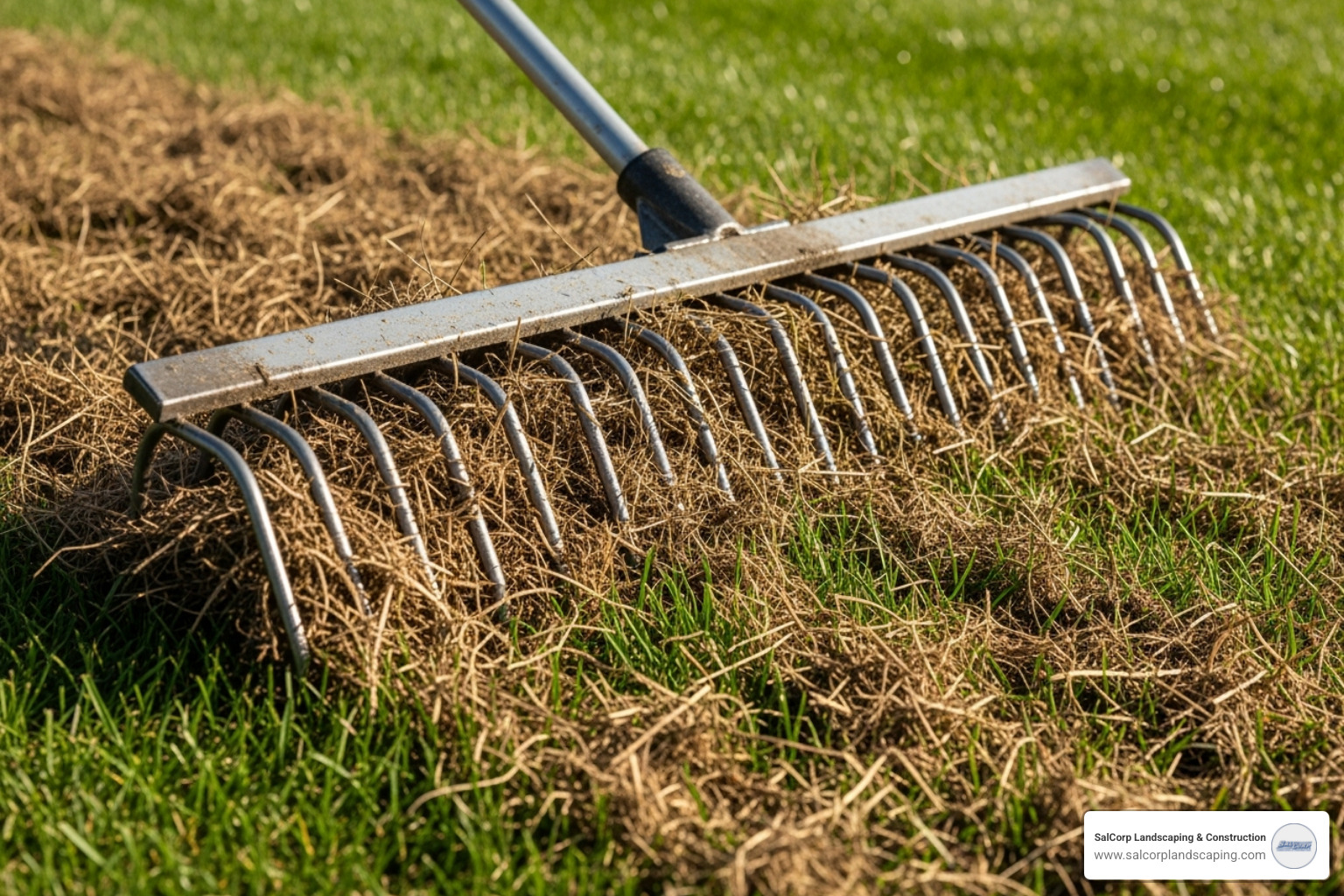
These techniques work together. Proper mowing, watering, and fertilizing, supported by aeration, create a healthy system for a beautiful lawn.
DIY vs. Professional Lawn Care: Making the Right Choice
Following an annual lawn care schedule requires time, effort, and knowledge. This leads many homeowners to ask: should I do it myself or hire a professional? The right choice depends on your time, budget, and expertise.
Evaluating the Costs and Benefits
DIY lawn care means more than just buying fertilizer. It involves research, timing applications, and investing in equipment. A professional service handles all of this for you.
- Time Commitment: DIY tasks like aeration and overseeding can consume weekends. A pro service gives you that time back.
- Equipment Costs: A mower, spreader, and other tools add up, not to mention annual maintenance and rental fees for equipment like aerators. Professionals use their own commercial-grade equipment.
- Expertise: Professionals can diagnose problems, adjust treatments for weather, and spot issues before they become severe. They understand the science behind a healthy lawn.
- Results & Effort: While dedicated DIYers can get great results, it requires consistency and significant physical effort. Professionals deliver predictable results without the back-breaking work.
- Cost: While professional services have a fee, consider the cost of your own time, products, and equipment. A typical 6-treatment program can range from $300 to over $900 annually, with aeration services costing $150 to $450 or more. These are average costs based on internet data and not actual costs for SalCorp Landscaping & Construction.
When to Call a Professional
Hiring a pro is often the best choice in certain situations:
- Large properties where lawn care becomes a part-time job.
- Lack of time, equipment, or physical ability to perform the necessary tasks.
- Desire for guaranteed, consistent results, especially after investing in landscaping.
- Complex issues like severe weed infestations, disease, or drainage problems that require expert diagnosis.
- Peace of mind knowing your lawn is in expert hands and treatments will be done on schedule.
At SalCorp Landscaping & Construction, we’ve helped Massachusetts property owners for over 20 years. As an owner-operated business, we bring deep local expertise and our own machinery to properties in Walpole, Canton, Foxborough, Medfield, and beyond. More info about professional lawn care near you.
Frequently Asked Questions about Your Annual Lawn Care Schedule
After two decades of helping Massachusetts homeowners, I’ve heard the same questions many times. Here are the answers to help you achieve a thick, green lawn.
How often should I mow my lawn?
Let your grass tell you. During peak growth in late spring and early fall, you may need to mow every 5-7 days. In the heat of summer, this can stretch to 10-14 days. The most important rule is to never cut more than one-third of the grass blade’s height at once. If grass gets too tall, reduce its height gradually over a few mows.
When is the best time to fertilize my lawn in Massachusetts?
For the cool-season grasses in our area, timing is critical. The two most important applications for your annual lawn care schedule are:
- Fall (September/October): This is the most crucial feeding. It helps the lawn build strong roots and store energy to survive winter.
- Spring (April/May): This application helps the grass recover from dormancy and prepares it for summer stress.
Avoid heavy fertilization in mid-summer when cool-season grasses are naturally slowing down.
Do I really need to aerate my lawn every year?
Not every lawn needs it annually, but most in Massachusetts benefit greatly due to our heavy clay soil and foot traffic. Annual aeration is a good idea if you have compacted soil, which is often indicated by water puddling after rain or the ground feeling rock-hard. Aeration creates channels for air, water, and nutrients to reach the roots, which is essential for a healthy lawn. For most properties, annual fall aeration is a key step to achieving a thick, lush lawn.
Conclusion: Your Partner in Year-Round Lawn Health
Consistency is the secret to a successful lawn. Your annual lawn care schedule is the roadmap to creating a lawn that makes your neighbors envious. A healthy lawn is more than just beautiful—it filters rainwater, cools your property, and is more resilient against weeds, disease, and weather stress.
A beautiful lawn improves your entire property’s curb appeal and value. Whether you plan to sell or simply want to enjoy your outdoor space, investing in proper lawn care pays dividends.
At SalCorp Landscaping & Construction, we’ve spent over two decades helping Massachusetts homeowners with their lawn care needs. As an owner-operated business, we understand that every lawn is unique. Whether you use this guide to tackle your annual lawn care schedule yourself or prefer to have professionals handle the work, we are here to support you.

Every great lawn starts with a commitment. With the right schedule and knowledge, you’ll be amazed at what’s possible.
Ready to take your lawn to the next level? Get help with your annual landscape maintenance schedule.