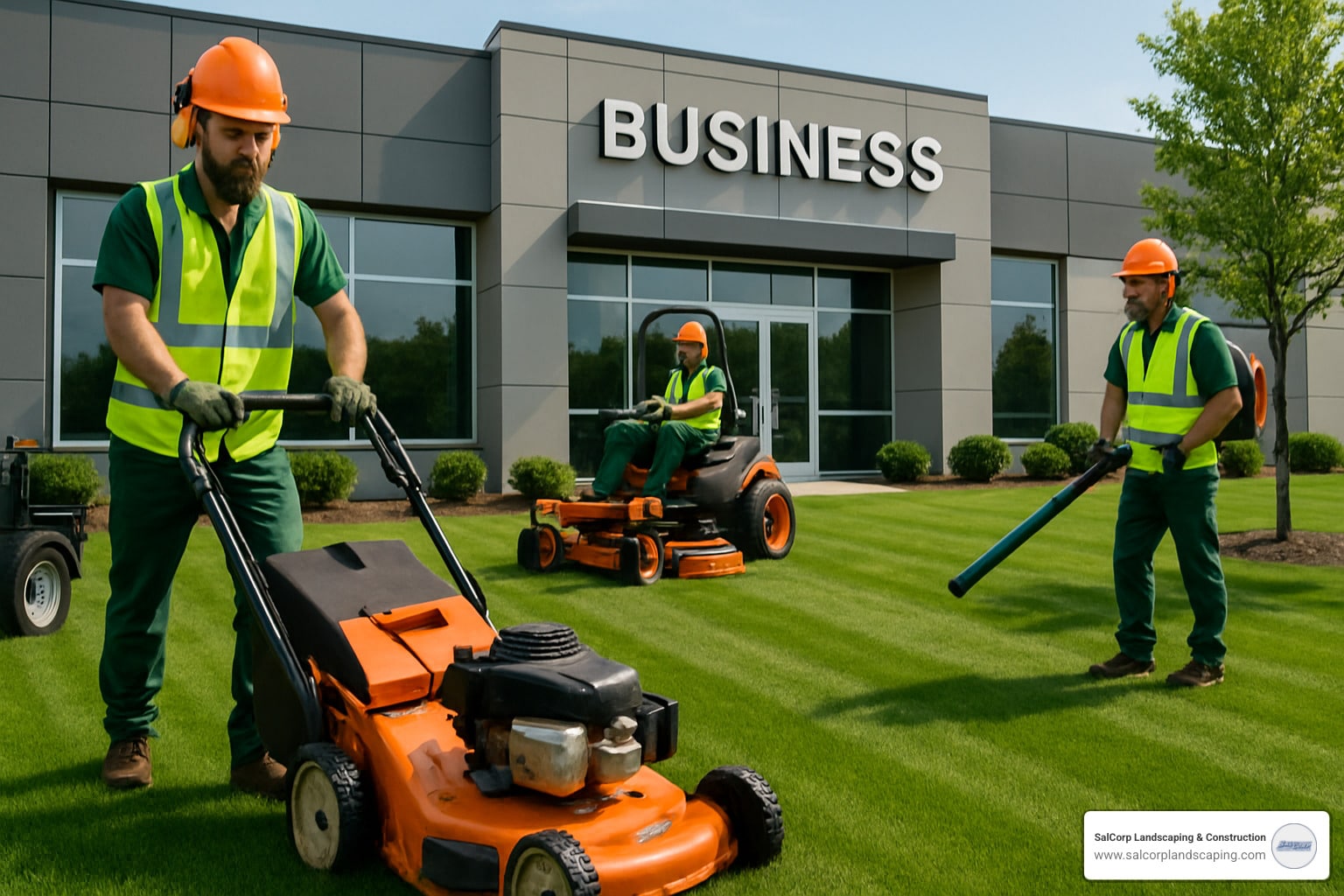
Commercial Lawn Care: 10 Powerful Tips for Superior Results 2025
Why Professional Commercial Lawn Care Matters
Commercial lawn care encompasses the specialized maintenance of business properties, including regular mowing, fertilization, weed control, plant bed maintenance, insect treatments, irrigation management, and trash removal. Unlike residential lawn care, commercial services must address larger areas, higher foot traffic, and stricter aesthetic standards while minimizing disruption to business operations.
Key Elements of Commercial Lawn Care:
– Weekly precision mowing and edging
– Seasonal fertilization and weed treatments
– Plant bed maintenance and mulching
– Insect and pest control programs
– Irrigation system management
– Regular trash and debris removal
– Spring and fall cleanups
A well-maintained commercial landscape isn’t just about aesthetics—it’s a crucial business investment. According to industry research, professional landscaping can increase property values by up to 15% and boost occupancy rates by as much as 7%. Additionally, businesses with attractive outdoor spaces report approximately 10% higher customer retention rates.
Commercial properties face unique challenges that residential lawns don’t. High-traffic areas require specialized turf management strategies, while property managers must balance curb appeal with budget constraints. Professional commercial lawn care services help businesses maintain a consistent, professional image year-round without disrupting daily operations.
Regular maintenance prevents costly problems before they develop. Neglected commercial lawns quickly become dry, patchy, and overrun with weeds, creating negative impressions for clients and visitors. By implementing a year-round maintenance schedule, property managers can ensure their grounds remain an asset rather than a liability.
I’m Sal Musto, owner of SalCorp Landscaping & Construction, with over two decades of experience providing commercial lawn care and landscaping services throughout Massachusetts. My team and I understand that commercial lawn care requires specialized equipment, trained technicians, and systematic approaches to maintain professional standards across diverse property types.
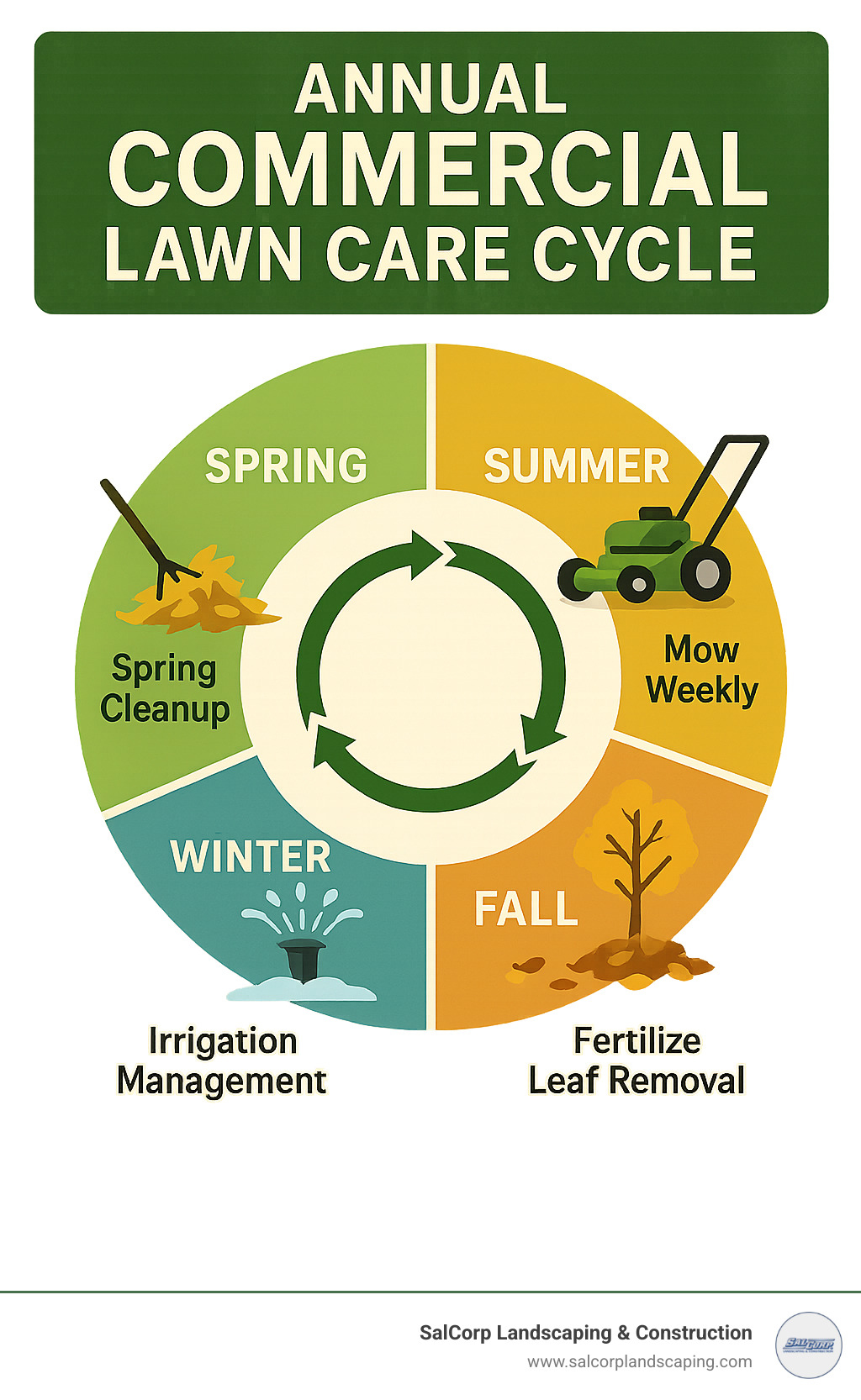
Key terms for commercial lawn care:
– commercial landscape lighting
– commercial irrigation installation
– commercial edging for landscaping
Commercial Lawn Care Essentials: Definition & Business Benefits
Commercial lawn care is more than just keeping grass trimmed—it’s a comprehensive approach to maintaining business properties that blends science, aesthetics, and practical know-how. When done right, it transforms ordinary outdoor spaces into valuable business assets that improve your company’s image and create welcoming environments for everyone who visits your property.
The numbers tell the story of just how important this industry has become: the U.S. commercial landscaping sector now exceeds $129 billion in value, with over 600,000 businesses employing more than a million professionals nationwide. These figures reflect the growing recognition that professional outdoor maintenance is essential for business success.
| Commercial Lawn Care | Residential Lawn Care |
|---|---|
| Large-scale acreage (often acres) | Smaller plots (typically under 1 acre) |
| High-traffic tolerance required | Lower traffic expectations |
| Industrial-grade equipment | Consumer or prosumer equipment |
| Strict compliance with regulations | Fewer regulatory concerns |
| Year-round service contracts | Often seasonal or as-needed service |
| Brand image implications | Personal enjoyment focus |
| Liability and safety emphasis | Aesthetic emphasis |
| Multiple stakeholders (management, tenants) | Single decision-maker (homeowner) |
Here at SalCorp Landscaping & Construction, we understand the unique demands of Massachusetts commercial properties. Our Commercial Grounds Maintenance services are custom to each property’s specific needs, with owner involvement ensuring personal attention to every detail.
What Sets Commercial Lawns Apart?
Commercial properties face unique challenges that most homeowners never encounter. Understanding these differences helps smart property managers make better decisions about their maintenance needs.
Scale and Scope: Most commercial properties cover multiple acres, requiring specialized equipment and efficient work patterns to maintain consistently. At SalCorp, we’ve invested in commercial-grade machinery that handles large areas while still delivering precise results that look great up close.
High-Traffic Resilience: From office parks to shopping centers, commercial spaces see hundreds or thousands of footsteps daily. This constant use demands specially selected turf varieties and maintenance practices that address soil compaction and wear patterns before they become eyesores.
As industry expert Douglass Delano puts it, “A well-maintained lawn is important to your business image and your bottom line. It’s often the first impression customers have of your business.”
Regulatory Compliance: Commercial properties must steer a maze of local ordinances, ADA requirements, and environmental regulations that don’t apply to residential spaces. For example, when Montgomery County Council banned certain pesticides on private lawns and childcare facilities in 2019, commercial providers had to quickly adapt their weed-control approaches.
Specialized Equipment: The machinery needed for professional commercial lawn care represents a significant investment. We maintain our own fleet of commercial-grade equipment at SalCorp, ensuring we’re always ready to handle projects of any size throughout Massachusetts without delays or equipment rental issues.
Why Regular Maintenance Matters for Businesses
Consistent commercial lawn care delivers concrete benefits that directly impact your business success:
Improved Curb Appeal: You never get a second chance at a first impression. A beautifully maintained landscape silently communicates your commitment to quality and attention to detail. Research shows that thoughtful seasonal color rotation and well-maintained plant beds improve first impressions for an impressive 95% of visitors.
Customer Retention: The numbers don’t lie—businesses investing in professional landscaping report a 10% increase in customer retention. People naturally prefer to visit and return to businesses that demonstrate care for their environment.
Employee Morale and Productivity: Pleasant outdoor spaces give your team comfortable areas for breaks and lunch, contributing to workplace satisfaction and productivity. Studies consistently show that access to green spaces reduces workplace stress while increasing focus and creativity.
Liability Reduction: Regular maintenance identifies potential hazards before they cause accidents. Uneven turf, overgrown vegetation blocking sightlines, or deteriorating walkways can all create serious liability issues for property owners.
As one of our satisfied customers shared: “As a customer I definitely feel they care and do an amazing job. Their customer service is phenomenal and everyone is polite and attentive to my needs.”
With over two decades of experience serving Massachusetts businesses, we at SalCorp understand that commercial lawn care is more than just maintaining grass—it’s about creating outdoor spaces that work as hard for your business as you do.
Service Checklist: Mowing to Pest Control
A comprehensive commercial lawn care program does more than just keep grass looking nice—it creates a complete ecosystem of healthy, attractive landscapes that work together. Property managers should look for these essential services when choosing a partner:
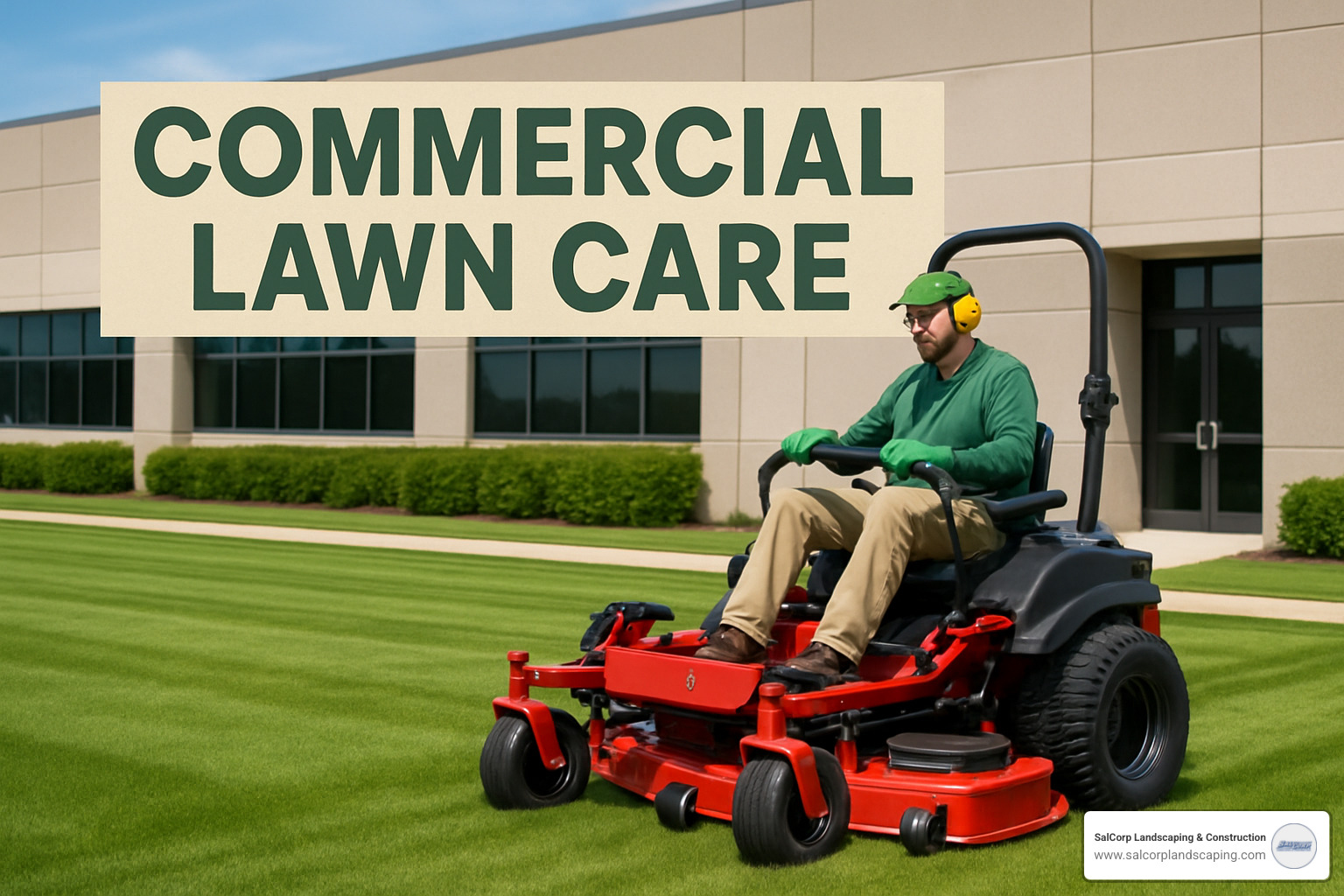
Core Commercial Lawn Care Services
Regular, Timely Mowing forms the foundation of any professional lawn program. For most Massachusetts commercial properties, this means weekly service during our active growing season, with adjustments based on weather patterns and growth rates. At SalCorp, we follow the golden rule of turf care—never removing more than one-third of the grass blade in a single cut. This simple practice preserves vital nutrients and encourages those deeper root systems that help your lawn thrive even during our challenging New England summers.
The Weed-and-Feed approach is something we’ve perfected over our 20+ years in business. Rather than treating these as separate concerns, we’ve found that timing is everything. Pre-emergent herbicides work wonders when applied before weed seeds germinate, creating an invisible shield against unwanted vegetation. We then follow up with targeted post-emergent treatments only where needed, combined with properly scheduled fertilization that strengthens your turf naturally. A thick, healthy lawn simply doesn’t leave much room for weeds to take hold.
Your Plant Beds frame and showcase your lawn, creating those visual focal points that catch the eye. Our regular maintenance includes hand-weeding (we believe some jobs just can’t be rushed), annual mulch refreshing to suppress weeds and retain moisture, careful pruning of ornamentals, and thoughtful replacement of any plants that aren’t thriving. These beds often create those crucial first impressions of your business, so we treat them with special care.
Clean Edging and Trimming is often what separates a merely mowed lawn from a truly maintained one. Those crisp lines along walkways and planting beds give your property that professionally manicured appearance that speaks volumes about your business. Our crews take pride in maintaining consistent, clean edges throughout your property.
For a complete overview of what we offer, visit our Commercial Lawn Care Services page. We customize every service plan to match each property’s specific needs while maintaining our signature quality across all Massachusetts locations we serve.
Advanced Lawn Health Treatments
Beyond the basics, commercial properties benefit enormously from specialized treatments that address deeper turf health issues.
We begin with Soil Testing and Analysis because what happens below ground determines success above it. Professional testing identifies specific nutrient deficiencies, pH imbalances, and other issues that might be holding your turf back. Rather than guessing, we apply targeted amendments based on actual science, creating ideal growing conditions specific to your property.
Aeration might be the most underrated service in commercial lawn care. When hundreds of people walk across your property daily, soil becomes compacted, restricting water, air, and nutrients from reaching grass roots. Our core aeration service removes small plugs of soil, allowing these essentials to penetrate deeper. For high-traffic commercial areas, we typically recommend this service twice yearly—spring and fall—when turf can best recover and respond.
Overseeding works hand-in-hand with aeration. By introducing fresh grass seed to existing turf, we fill in thin areas and introduce improved grass varieties bred for better disease resistance and drought tolerance. This continuous improvement approach keeps your lawn looking its best even as conditions change throughout the seasons.
Healthy Trees and Shrubs are vital components of your overall landscape. Our Commercial Garden Maintenance program includes regular monitoring for pests and diseases, targeted treatments when necessary, proper structural pruning, and deep root fertilization to support these long-term landscape investments.
Our Insect Treatments focus on early detection and targeted control. Rather than blanket spraying, we monitor for specific threats like grubs, chinch bugs, and armyworms, addressing problems before visible damage occurs. This approach is not only more effective but also more environmentally responsible.
Safety & Non-Disruptive Practices
We understand that maintaining your property shouldn’t disrupt your business operations. That’s why we’ve developed practices specifically designed for commercial environments.
Our growing fleet of Electric Equipment offers quieter, cleaner alternatives, especially valuable around healthcare facilities, office parks, or other noise-sensitive environments. These battery-powered options significantly reduce noise while eliminating emissions—a win for everyone involved.
Off-Hours Service is standard practice for many of our commercial clients. We’re happy to schedule maintenance during early mornings, weekends, or whenever your business activity is lowest. Your retail customers or office workers shouldn’t have to compete with lawn mowers during their visit.
When working in active areas, our teams use proper Safety Signage and barriers to protect both the public and our crew members. All team members are trained in OSHA safety standards and follow strict protocols to prevent accidents or disruptions to your business flow.
You’ll always recognize our Uniformed Crews in clearly branded vehicles. This professionalism not only projects a better image on your property but also provides peace of mind for your employees and customers. In today’s security-conscious world, clearly identified service providers are increasingly important.
Our comprehensive Risk Management approach includes full insurance coverage and ongoing safety training. Regular equipment maintenance and pre-work inspections further reduce risks to your property and our workers. We believe the best problems are the ones that never happen because they were prevented.
For more information about establishing a maintenance contract, visit our Commercial Lawn Care Contracts page to learn about our flexible options.
Seasonal Strategies & Irrigation Management
The beauty of commercial lawn care in Massachusetts lies in its seasonal rhythm. Each time of year brings unique challenges and opportunities that require thoughtful planning and specialized knowledge. At SalCorp, we’ve developed seasonal strategies that keep commercial properties looking their best year-round, regardless of what Mother Nature throws our way.
Spring & Summer Playbook
Spring is nature’s fresh start, and it’s when we lay the groundwork for a successful year:
As March rolls in, our crews begin spring cleanup operations, clearing away winter’s leftover debris and fallen branches. This is the perfect time to cut back those ornamental grasses that add winter interest but need refreshing for the new season.
By April, we’re applying pre-emergent herbicides to stop weeds before they start – a much more effective approach than battling them once established. Our soil tests guide precise fertilization plans, ensuring your turf gets exactly what it needs, not just a generic treatment.
“The difference between good and great commercial lawn care comes down to timing,” says Sal Musto, our founder. “Being proactive in spring pays dividends all season long.”
When summer hits, we shift into high gear with weekly mowing at proper heights – never cutting more than one-third of the blade at once. Our balanced fertilization program, based on those earlier soil tests, keeps grass lush without promoting excessive growth that demands constant cutting.
Massachusetts summers bring unique challenges – those humid days create perfect conditions for fungal diseases like dollar spot and brown patch. Our technicians are trained to spot the early warning signs, allowing for prompt treatment before unsightly damage occurs.
Fall & Winter Considerations
Fall isn’t just about leaf removal (though we handle that thoroughly to prevent turf damage). It’s a critical season for strengthening your property’s lawn before winter:
September through November is when we perform core aeration, relieving soil compaction that builds up during the busy summer months. This is also the ideal window for overseeding with hardy cool-season grasses that thrive in our Massachusetts climate.
Our fall fertilization program focuses on root development rather than top growth, preparing turf to survive winter dormancy and emerge stronger in spring. We’re also pruning trees and shrubs during this period, when it’s easier to see their structure without full foliage.
As winter approaches, we complete a final mowing at a slightly lower height and apply specialized winter fertilizer to support root development during dormancy. One crucial service that protects your investment is irrigation winterization – we thoroughly blow out all water from pipes and heads to prevent freeze damage.
“Water left in pipes can freeze and expand, causing pipes and valves to rupture,” explains our irrigation team leader. “Proper winterization prevents costly repairs in spring.”
Our Massachusetts locations allow us to provide responsive winter services, including snow removal, keeping commercial properties safe and accessible year-round.
Smart Irrigation for Commercial Landscapes
Water management is where science meets sustainability in commercial lawn care. Our smart irrigation approach balances plant health with conservation and cost control:
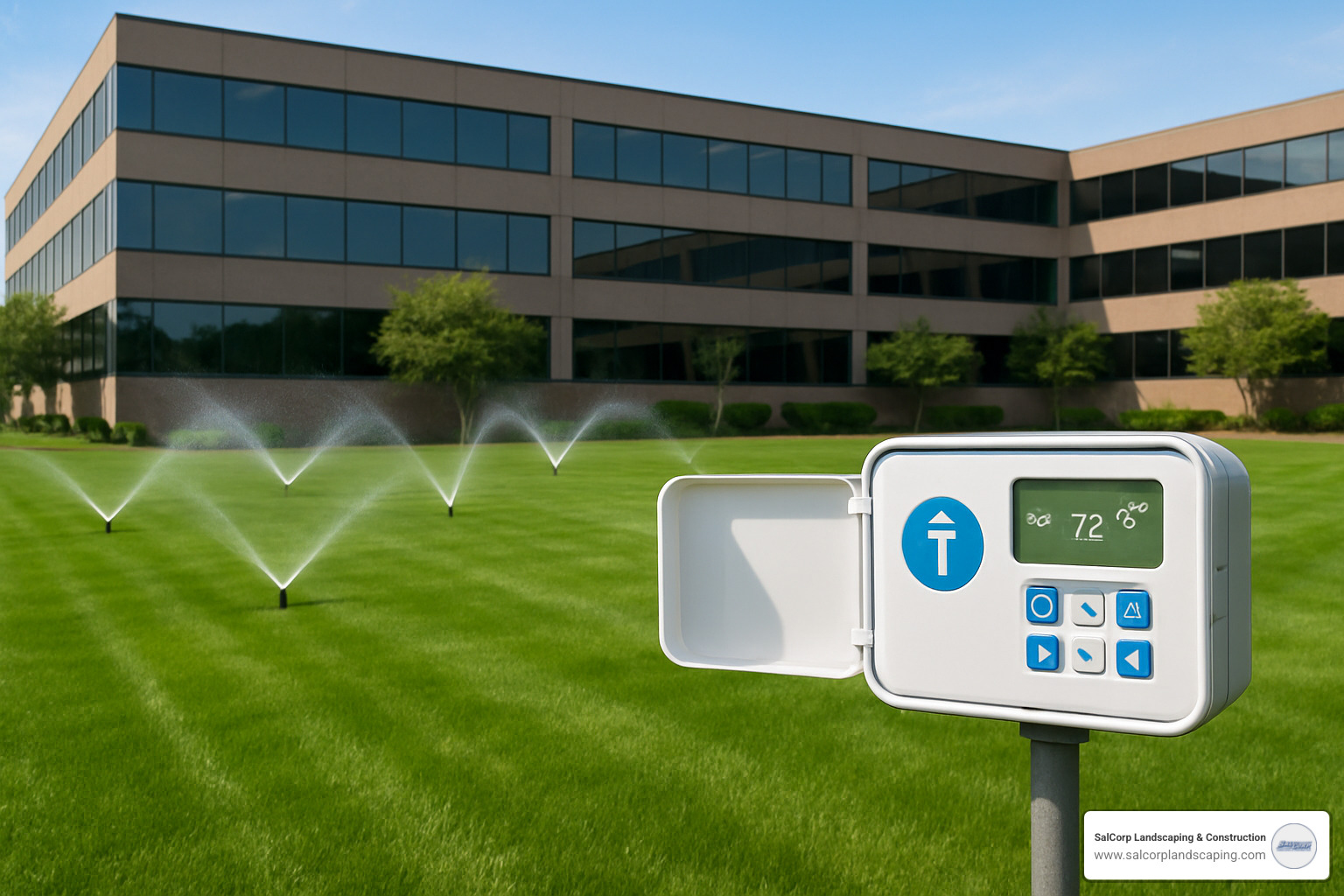
Today’s technology gives us powerful tools to optimize irrigation efficiency. Smart controllers adjust watering schedules based on real-time weather data, while rain sensors prevent wasteful irrigation during or after rainfall. Pressure-regulating heads ensure even water distribution without wasteful misting, and drip irrigation delivers water directly to plant roots in beds where sprinklers would be inefficient.
Properties with regular irrigation maintenance typically save up to 30% on water usage compared to poorly maintained systems. That’s real savings flowing directly to your bottom line while supporting sustainability goals. Our Commercial Landscaping services include comprehensive irrigation management to maximize this efficiency.
Each season requires specific irrigation approaches:
– Spring inspections identify any winter damage before the system becomes active
– Mid-season checks ensure optimal performance during peak demand
– Fall winterization protects your investment from freeze damage
– Year-round monitoring tracks water usage for reporting and planning
For Massachusetts properties, proper drainage is equally important as irrigation. Our team designs and implements solutions for stormwater management that prevent pooling water and erosion while keeping you compliant with increasingly strict local regulations.
According to scientific research on sustainable watering, commercial properties with optimized irrigation systems not only save water but also experience healthier plant growth with deeper root systems that better withstand drought conditions.
Boosting Value: Curb Appeal, Sustainability & Customization
Beyond basic maintenance, strategic commercial lawn care can significantly improve property value and tenant satisfaction while advancing sustainability goals.
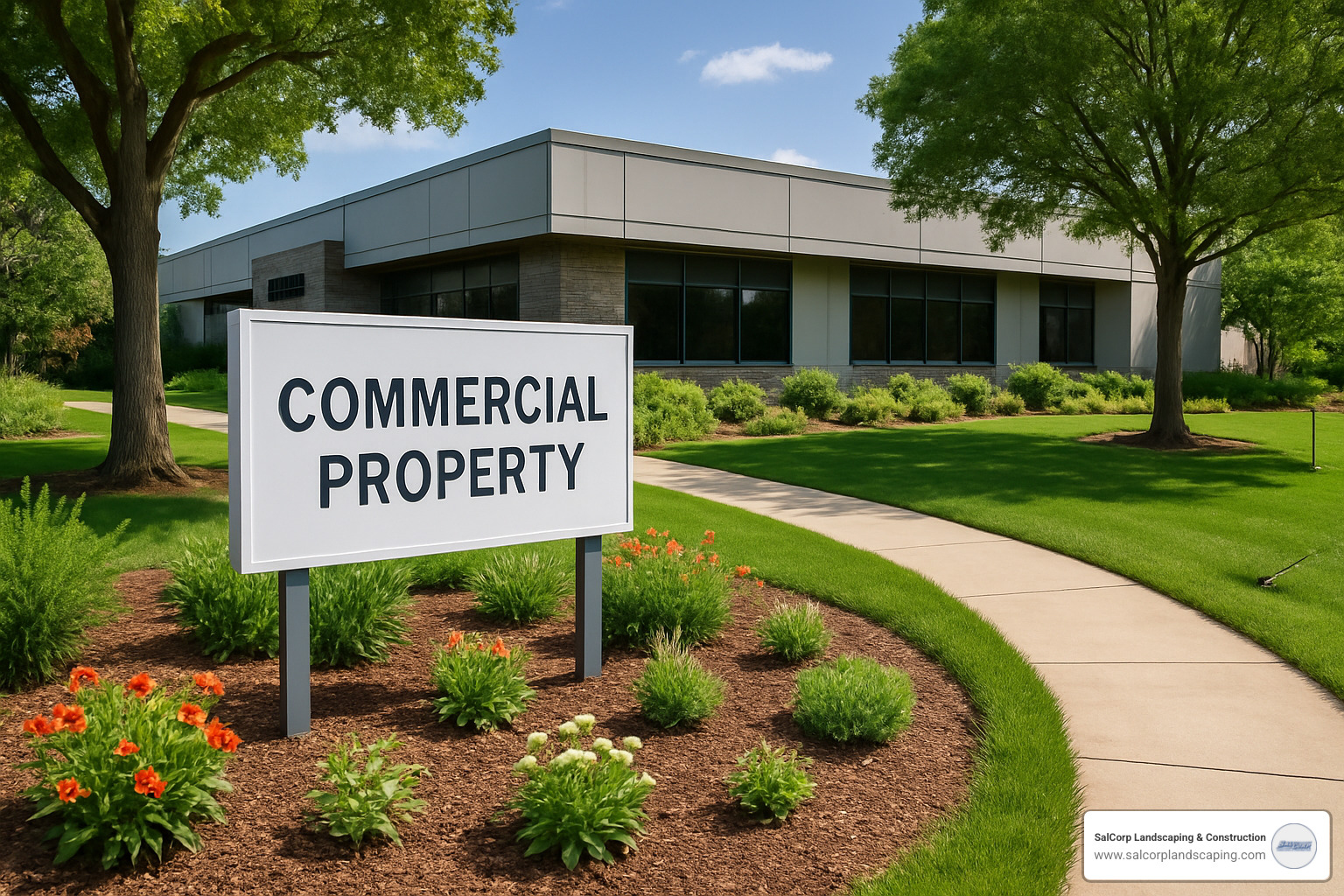
The numbers don’t lie – well-executed commercial landscaping can boost your property value by up to 15% and improve occupancy rates by as much as 7%. That’s not just prettier grass; it’s a tangible return on investment that affects your bottom line.
Here at SalCorp, we’ve seen how our Commercial Landscape Design transforms Massachusetts businesses from ordinary to extraordinary. We create outdoor spaces that balance beauty, function, and sustainability – the perfect trifecta for modern commercial properties.
Want to make a lasting impression? Curb appeal improvements like seasonal color rotations in high-visibility areas grab attention immediately. We love adding architectural focal points – think ornamental trees or statement planters – that become signature elements of your property. Smart lighting design not only highlights these features but improves safety after dark. And thoughtfully placed hardscape elements naturally guide visitors while defining your outdoor spaces.
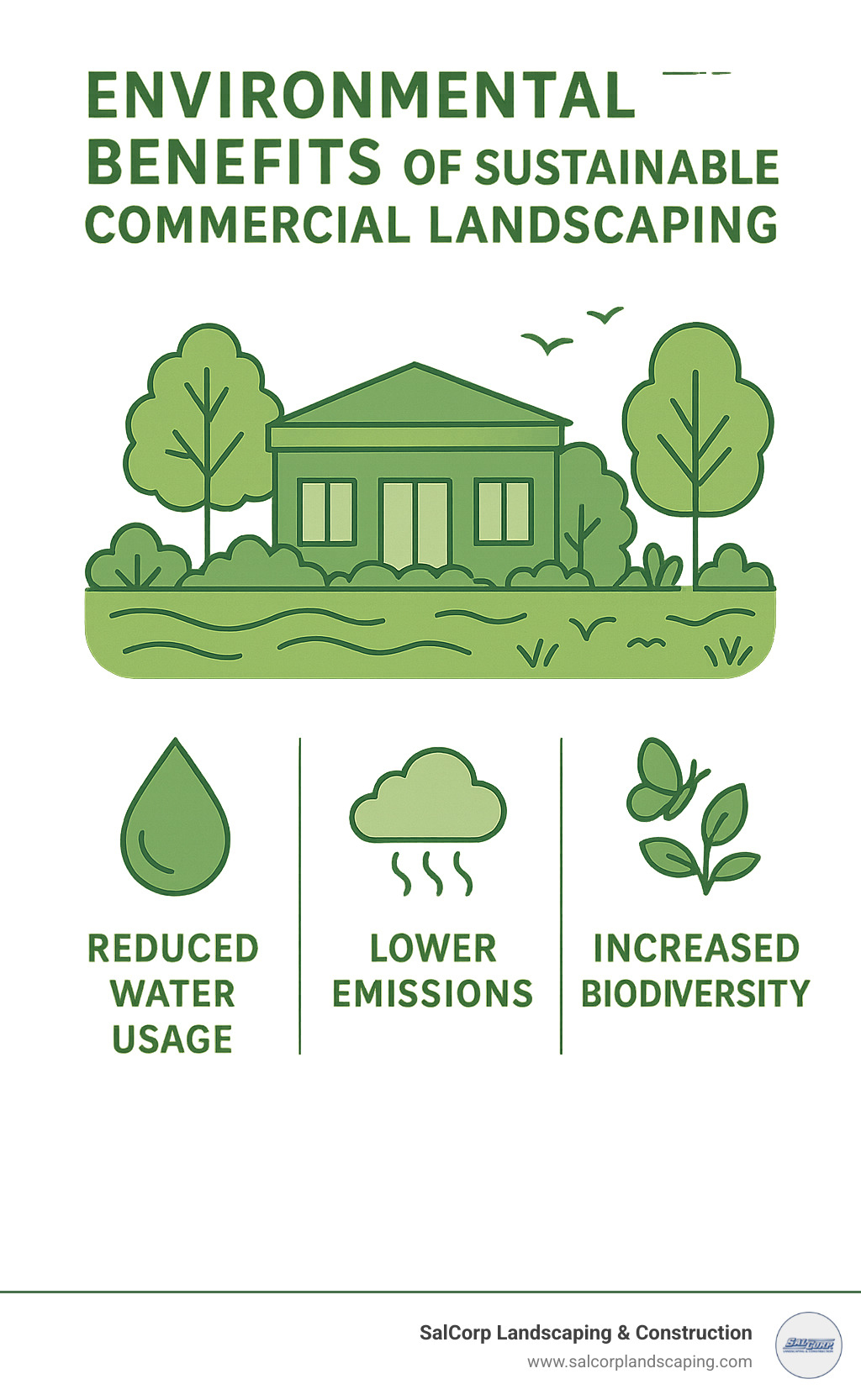
But today’s savvy property managers know that beauty isn’t enough – sustainable landscape practices matter too. We’re big fans of native plant selections that thrive with less water and maintenance. Rain gardens and bioswales manage stormwater naturally while adding visual interest. In appropriate areas, we can reduce turf footprints to minimize resource usage. And our organic and reduced-chemical maintenance programs protect the environment while keeping your property looking pristine.
Industry-Specific Custom Solutions
One size definitely doesn’t fit all when it comes to commercial lawn care. Different properties have unique needs that deserve custom approaches.
Retail centers thrive when we focus on entry areas and high-visibility zones with eye-catching seasonal color and immaculate maintenance. We’ve found that comfortable seating areas and clear landscape-based wayfinding help shoppers steer and linger longer – translating to increased sales for tenants.
Hospitality properties need to wow guests from the moment they arrive. We create memorable first impressions with distinctive plantings and meticulous attention to detail. Hotels often require our 24/7 maintenance schedules and special focus on guest amenity areas like pools and outdoor dining spaces. After all, those Instagram-worthy moments don’t maintain themselves!
For healthcare campuses, we emphasize healing gardens and tranquil spaces with minimal allergen-producing plants. These environments demand strict attention to safety, accessibility, and maintenance that doesn’t disrupt patients or staff. A peaceful garden view can make a world of difference for someone in recovery.
Homeowners Associations face the constant challenge of balancing community aesthetics with budget constraints. Our efficient maintenance routines deliver consistent results while respecting financial limitations. We’ve found that clear communication about seasonal changes and maintenance activities helps keep everyone happy.
Office parks shine when designed for employee enjoyment. We create comfortable outdoor meeting and break areas that boost morale and productivity. Many corporate campuses now request sustainable practices that align with company environmental values – something we’re proud to deliver.
After two decades serving Massachusetts properties, we’ve refined our approach for each of these unique environments. Our experience means we anticipate needs before they become issues.
Sustainable Innovations in Commercial Lawn Care
The landscaping industry is going green in ways that benefit both your property and the planet:
Battery-powered equipment is revolutionizing how we work. The transition from gas to electric reduces emissions, noise pollution, and maintenance requirements. Many of our commercial clients now specifically request electric options, especially in noise-sensitive environments like hospitals and office complexes. The quieter operation means we can often work without disrupting your business activities.
Smart water management technologies are game-changers. Advanced irrigation controllers can slash water usage by 30% or more compared to traditional systems. These smart systems adjust watering based on real-time weather conditions, soil moisture, and plant needs – saving both water and money. In Massachusetts, where water costs continue to rise, this technology pays for itself quickly.
Organic and hybrid programs are increasingly popular among forward-thinking property managers. These approaches integrate organic products with traditional treatments, focusing on soil health as the foundation for plant health. Healthier soil means stronger plants that naturally resist pests and disease.
Even here in Massachusetts, drought-tolerant landscaping provides insurance against increasingly unpredictable weather patterns. By incorporating drought-resistant turf varieties and native plants, we create resilience against changing climate conditions. These landscapes not only survive dry periods but continue to look great with minimal intervention.
Green infrastructure elements like permeable paving, rain gardens, and green roofs do double duty – managing stormwater while creating attractive amenities. These features can reduce heating and cooling costs while demonstrating your commitment to environmental stewardship. One client’s green roof installation has become their signature sustainability feature, frequently highlighted in their marketing materials.
At SalCorp Landscaping & Construction, we blend these innovations with tried-and-true practices to deliver commercial lawn care that improves your property’s value, sustainability, and appeal. Our Massachusetts roots give us unique insight into what works in our region’s specific climate and conditions.
Selecting & Budgeting for a Provider
Finding the right commercial lawn care partner feels a bit like dating – you’re looking for someone reliable, skilled, and in it for the long haul. After all, this relationship will directly impact your property’s appearance and your bottom line.
Key Criteria for Choosing Your Partner
When I meet with property managers, I always emphasize looking beyond the quote sheet. The cheapest option might save you money today, but often costs more down the road through poor service and landscape deterioration.
Insurance and licensing should be your non-negotiables. Any reputable provider should readily share proof of general liability insurance, workers’ compensation coverage, and all required state licenses. This protects not just your property, but also shields you from potential liability issues.
Industry certifications speak volumes about a company’s commitment to professionalism. Look for teams whose staff hold credentials from organizations like the National Association of Landscape Professionals or Massachusetts-specific qualifications.
I’m particularly proud that at SalCorp, we own and maintain all our equipment rather than renting. This might seem like a small detail, but it translates to more reliable service and faster response times when your property needs attention.
Before signing any contract, pay attention to a company’s site analysis process. Quality providers will walk your entire property, conduct soil testing, evaluate your irrigation system, and identify problem areas before making recommendations. If someone offers a quote without this thorough assessment, consider it a red flag.
Always ask for references from similar properties – particularly those they’ve maintained for several years. Consistency over time tells you far more than a beautiful portfolio of new installations.
You can learn more about our qualifications on our Commercial Landscape Contractors page, where we outline our approach to commercial properties throughout Massachusetts.
Understanding Commercial Lawn Care Costs
“How much will this cost?” It’s the question on every property manager’s mind, and understandably so. While specific pricing depends on your unique property, understanding the factors that influence costs helps you budget more effectively.
Most providers offer service tiers ranging from basic (regular mowing, edging, and cleanup) to comprehensive packages that include fertilization, pest control, irrigation management, and seasonal improvements. The right level depends on your property’s needs and visibility.
Pay attention to whether your quote uses line-item or all-inclusive pricing. All-inclusive contracts provide budget certainty but might include services you don’t need. Line-item pricing lets you customize, but can lead to surprise costs if something unexpected arises.
Commercial lawn care is labor-intensive work, with labor typically representing 60-70% of service costs. Properties with complex layouts, limited access points, or special features may require more time and specialized equipment, affecting your bottom line.
Massachusetts commercial properties face specific regional challenges – from harsh winters to humid summers and specific regulatory requirements – all influencing service needs and costs.
Based on internet research (not SalCorp pricing), commercial lawn care services generally range from $50 to $1,500 per acre monthly, depending on service level, property complexity, and local market conditions. For accurate pricing specific to your property, I recommend requesting a customized assessment.
For more budgeting considerations, visit our Commercial Landscaping Cost page.
Maximizing ROI Through Clear Reporting
The best commercial relationships thrive on transparency and communication. When evaluating providers, ask about their reporting practices.
Establish clear Key Performance Indicators (KPIs) from the start – measurements like turf density, weed presence, irrigation efficiency, and response time give you objective ways to evaluate service quality.
Today’s leading companies offer digital documentation of work performed. At SalCorp, we provide photo documentation before and after major services, allowing property managers to see exactly what they’re paying for, even if they’re not on-site during service.
The difference between good and great providers often comes down to proactive communication. You want a partner who spots potential problems before they become visible and proposes solutions rather than waiting for complaints.
Many companies now offer client portals where you can view service schedules, reports, and communication history. These tools help property managers stay informed without requiring constant phone calls or emails.
I’ve found that communication is just as important as the quality of our work. When we notice something concerning during routine maintenance – perhaps signs of a developing disease or irrigation issue – we alert our clients immediately, often preventing small issues from becoming costly emergencies.
Frequently Asked Questions about Commercial Lawn Care
How often should commercial lawn care be performed?
The rhythm of commercial lawn care follows the natural growing cycles while adapting to your property’s specific needs. During the peak growing months of May through September here in Massachusetts, most commercial properties need weekly mowing to maintain that crisp, professional appearance visitors notice immediately.
“We adjust our service frequency based on what your lawn is telling us,” explains Sal Musto, owner of SalCorp Landscaping. “During heavy spring growth, some properties might need more frequent visits, while we might scale back during dry periods to prevent stress on the turf.”
Beyond mowing, a well-structured commercial maintenance program typically includes 4-6 strategic fertilizer applications throughout the year. These applications are carefully timed to support your lawn’s seasonal needs – promoting root development in spring, stress resistance in summer, and winter hardiness in fall.
Weed control follows a similar seasonal approach, with pre-emergent treatments in spring and fall creating a protective barrier, supplemented by targeted spot treatments as needed. Most of our Massachusetts commercial clients also benefit from monthly irrigation system checks during the growing season, with more comprehensive inspections during spring startup and fall winterization.
The frequency of trash removal depends heavily on your property type and foot traffic patterns. High-traffic retail centers might require several weekly visits, while office parks might need less frequent attention. At SalCorp, we customize each maintenance schedule based on your property’s unique characteristics and your budget priorities.
Are eco-friendly commercial lawn care options worth the investment?
Sustainable commercial lawn care practices have evolved dramatically in recent years, moving from niche offerings to mainstream solutions that deliver both environmental and financial benefits.
“What we’re seeing is that the initial investment in sustainable practices often pays for itself through reduced resource consumption and maintenance needs,” notes an industry sustainability expert. “Plus, there’s the added value of improved brand perception.”
The business case for eco-friendly commercial landscaping includes several compelling advantages:
Long-term cost efficiency comes through reduced water usage, fewer chemical inputs, and decreased maintenance frequency. Properties implementing smart irrigation controllers alone report water savings of 20-30%, directly impacting utility bills.
Improved brand reputation matters to businesses whose customers and partners increasingly value environmental responsibility. A visibly sustainable landscape demonstrates your commitment to environmental stewardship in a tangible way visitors can see and appreciate.
Regulatory preparedness positions your property ahead of the curve as environmental regulations continue to evolve. Massachusetts has seen increasing restrictions on certain landscape chemicals and water usage – sustainable landscapes are already adapted to these changes.
Improved workplace satisfaction emerges when employees can enjoy healthier outdoor spaces. Research shows that environmentally-friendly landscapes contribute to employee wellbeing and satisfaction, potentially reducing turnover costs.
While traditional chemical programs might show faster initial results, sustainable approaches build healthier soil biology over time, creating naturally resilient landscapes that require fewer interventions. Many of our Massachusetts clients choose a balanced hybrid approach that combines the immediate effectiveness of targeted conventional treatments with the long-term benefits of organic soil management.
What should a commercial lawn care contract include?
A well-crafted commercial lawn care contract creates clarity and prevents the misunderstandings that often lead to service disappointments. It’s essentially the roadmap for your landscape’s care throughout the year.
Every comprehensive contract should clearly define the scope of services with specifics about which areas are maintained, which services are included, and how frequently they’ll be performed. Vague language like “regular maintenance” invites misinterpretation – look for contracts that specify “weekly mowing at 3-inch height” instead.
The service schedule provides a timeline for when to expect routine services and seasonal treatments. This calendar approach helps property managers coordinate landscape maintenance with other property activities and tenant needs.
Service Level Agreements (SLAs) establish measurable standards for quality and responsiveness. These might include metrics like “less than 5% weed presence in turf areas” or “response to urgent requests within 24 hours.” Clear SLAs create accountability and provide objective ways to evaluate service quality.
“The most common source of dissatisfaction with commercial lawn care is unclear expectations,” notes an industry expert. “A detailed contract prevents misunderstandings and ensures all parties share the same vision for the property.”
The pricing structure should transparently outline regular service costs, payment terms, and any potential additional charges for services outside the standard scope. Beware of contracts with vague language about “additional services as needed” without clear pricing parameters.
Communication protocols define how routine updates, service verification, and issue reporting will be handled. The best contracts specify who your main contact will be, how to reach them, and what response time to expect.
Termination clauses protect both parties by clearly outlining the process for modifying or ending the service relationship. Look for reasonable notice periods and fair conditions for contract changes.
Insurance and liability sections verify the provider’s coverage and define responsibility boundaries. Reputable contractors will readily provide proof of comprehensive insurance coverage.
At SalCorp, we believe in transparent contracts that clearly outline our responsibilities and your expectations. This clarity builds trust and ensures consistent service delivery across all our Massachusetts service areas, giving you confidence that your property will receive the attention it deserves.
Conclusion
When you invest in commercial lawn care, you’re not just paying for grass to be cut – you’re enhancing your property’s value, boosting tenant satisfaction, and actually reducing costs over time. Throughout this guide, we’ve seen how commercial properties face unique challenges that require specialized expertise and equipment.
Think about what we’ve learned together: commercial lawn care isn’t a seasonal luxury but a year-round necessity that adapts to each season’s specific demands. Those weekly mowing visits are just the beginning – a truly comprehensive program integrates fertilization, strategic weed control, smart irrigation management, and specialized treatments that work together to create a thriving landscape.
The numbers tell a compelling story. Professional landscape maintenance can boost your property values by up to 15% while increasing occupancy rates by as much as 7%. That’s not just curb appeal – it’s measurable return on investment that impacts your bottom line.
I’ve noticed more of our Massachusetts clients are increasingly interested in sustainable practices, and for good reason. These approaches aren’t just good for the environment – they often deliver impressive cost savings through reduced water usage and lower maintenance requirements. Your property can look beautiful while also supporting your organization’s sustainability goals.
Choosing the right maintenance partner makes all the difference. Look beyond the price quote to evaluate credentials, equipment quality, communication systems, and most importantly, their proven track record with properties similar to yours. The right partnership should feel like gaining an extension of your property management team.
At SalCorp Landscaping & Construction, we’ve spent over two decades refining our approach to commercial landscape care throughout Massachusetts. Being owner-operated means our clients get hands-on attention from experienced professionals who truly care about their properties. When I visit a client’s site, I’m not just checking boxes – I’m looking at their landscape through the eyes of their customers and tenants.
Our comprehensive approach means you don’t need multiple vendors for different aspects of your grounds management. From routine maintenance to improvements and seasonal services, having a single point of contact saves you time and ensures your landscape has a cohesive, polished appearance.
A beautiful, well-maintained landscape isn’t an expense to minimize – it’s an investment that pays dividends through improved property value, tenant retention, and brand perception. To learn more about how SalCorp can transform your commercial property, visit our commercial landscaping services page or reach out for a personalized property assessment.
After all, your outdoor space speaks volumes about your business before anyone even walks through the door. Let’s make sure it’s telling the right story.