

Brick & Stone Steps Installation in Massachusetts
Front entries, garden steps, and landscape stairways built on proper footings with frost-rated materials. Designed to handle decades of New England weather without heaving, cracking, or pulling away from the house.
Get a Free Step Estimate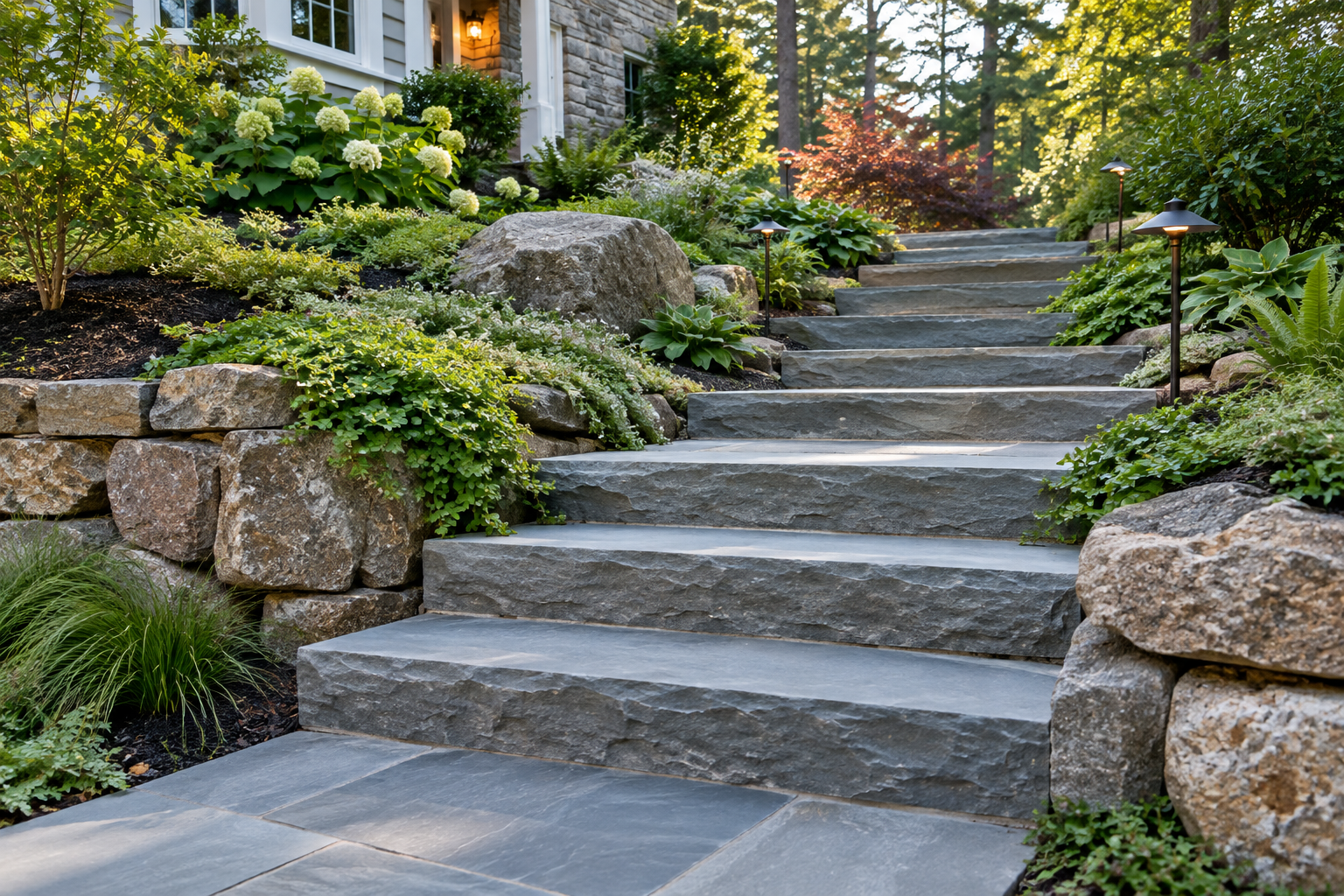
Why Massachusetts Steps Fail (and How to Prevent It)
The number one reason brick steps crack, heave, and separate from the house in Massachusetts is an inadequate foundation. The frost line in our region extends 48 inches below grade. Steps built on a shallow pad, or worse, directly on compacted soil, will move every time the ground freezes and thaws.
Every set of steps we build starts with excavation to undisturbed soil below the frost line, 4-6 inches of compacted drainage gravel, and a reinforced concrete footing with steel rebar. The steps sit on a base that doesn't move, regardless of what the weather does above it.
Step Installation & Repair Services
Whether you need a new set of front entry steps, garden stairs built into a slope, or repair work on an existing structure, we handle the full scope of residential masonry step work across Massachusetts.
Front Entry Steps
The first thing every visitor sees. Brick, stone, or granite entry steps with proper footings, consistent riser heights, and integrated handrails. Built to match your home's architecture.
Garden & Landscape Steps
Steps built into slopes, hillsides, and terraced gardens. Natural stone, fieldstone, or brick risers that connect different levels of your landscape safely and beautifully.
Stone & Bluestone Steps
Natural bluestone, granite, and fieldstone steps for a premium, organic look. Each piece selected and fitted by hand. Naturally slip-resistant and frost-proof.
Step Repair & Repointing
Cracked mortar, loose bricks, spalling faces. We assess whether targeted repair will solve the problem or whether the foundation has failed and replacement is the smarter investment.
Step Replacement
Full demolition of failed steps, new footing poured below frost line, and rebuild with quality materials. We match existing brick or recommend upgrades when the original material contributed to failure.
Handrail Installation
Code-compliant handrails in wrought iron, aluminum, stainless steel, or composite. Anchored into the masonry with through-bolts, not surface-mounted brackets that pull loose.
How We Build Steps That Last
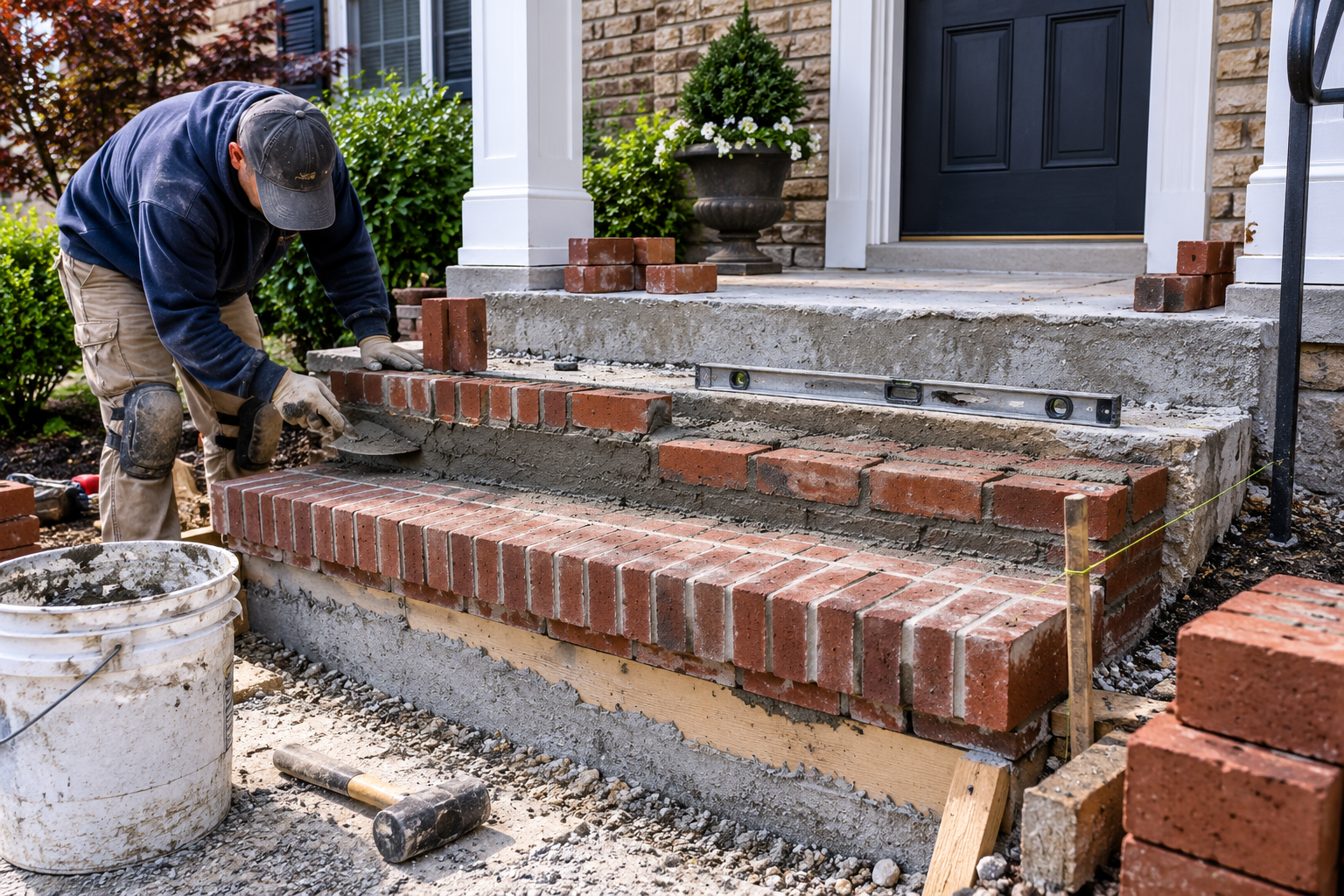
Every step project follows the same structural sequence regardless of material choice: excavation below frost line, compacted gravel drainage layer, reinforced concrete footing with rebar, masonry construction with frost-rated materials and exterior-grade mortar, tooled joints with a concave profile to shed water, and proper grading around the base so water drains away from the structure.
Riser heights are calculated to be consistent within 3/8 inch across the entire set, which is both a code requirement and the difference between steps that feel natural to walk and steps that trip people. Treads are pitched slightly forward for drainage so water runs off instead of pooling and freezing.
Your Front Steps Set the Tone
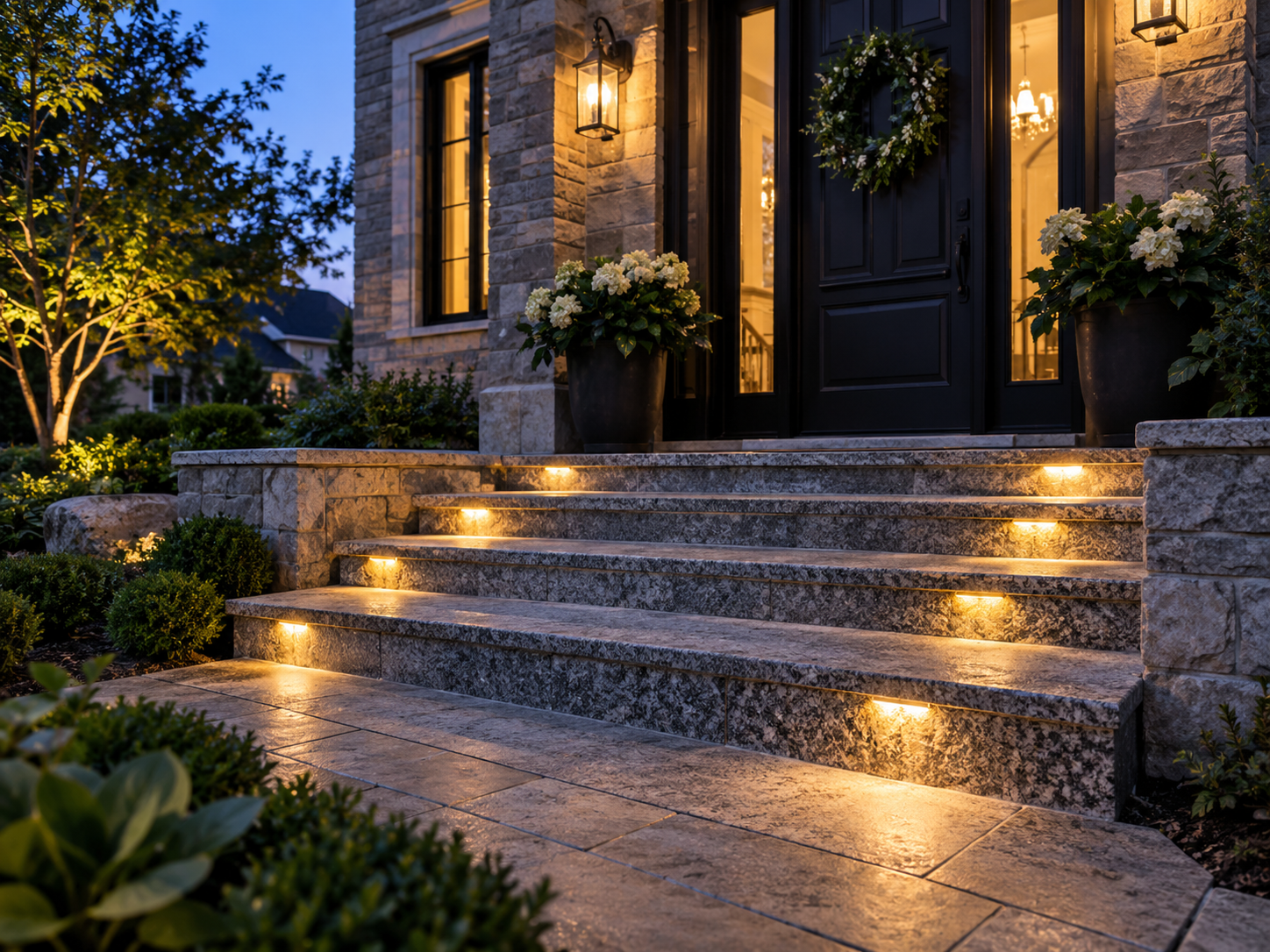
The walkway from the driveway to your front door is the most-traveled path on your property. The steps at the end of that path are the last thing visitors see before they reach the door, and the first thing they step on when they leave. Quality steps with good proportions, clean brick or stonework, and integrated lighting communicate that the rest of the property is equally well maintained.
For homeowners considering resale, front entry improvements including steps, walkways, and plantings consistently rank among the highest-return exterior investments on residential properties in the South Shore market.
Choosing the Right Material
The material you choose affects appearance, durability, maintenance, and cost. Here's how the most common options compare for Massachusetts exterior steps:
- Clay brick (face brick) — classic New England look, excellent freeze-thaw performance when frost-rated, individual bricks replaceable if damaged, wide color range from red to brown to charcoal
- Bluestone — natural cleft surface provides excellent traction, ages with a silver-blue patina, premium appearance suited to traditional and contemporary homes alike
- Granite — the hardest and most durable natural stone option, virtually indestructible in New England weather, available as sawn treads or thermal-finished slabs
- Concrete pavers — manufactured to exact tolerances, widest range of colors and patterns, excellent freeze-thaw performance, most affordable of the premium options
- Natural fieldstone — irregular shapes for a rustic, organic look, best suited to garden and landscape steps rather than formal entries
Repair vs. replacement: how to decide.
If the mortar joints are cracking but the steps are level and haven't shifted, repointing (grinding out old mortar and replacing it) is usually sufficient. If the steps have visibly moved, separated from the house, or are no longer level, the foundation has likely failed and replacement on a proper footing is the right call. We assess the foundation during every site visit and give you an honest recommendation.
What Makes Massachusetts Different
Three conditions make step construction in Massachusetts more demanding than most regions:
- 48-inch frost line — footings must extend nearly 4 feet below grade to sit below the frost action zone. Shallow footings heave.
- Freeze-thaw cycles — Massachusetts typically sees 80-100 freeze-thaw cycles per winter. Every cycle is an opportunity for water to expand inside masonry and cause damage. Material selection and mortar type must account for this.
- Deicing salt exposure — rock salt (sodium chloride) accelerates mortar deterioration. Steps near driveways and sidewalks where salt is applied need salt-resistant materials and sealer protection.
Communities We Serve
SalCorp builds brick and stone steps throughout Norfolk County, Plymouth County, and Greater Boston, including Walpole, Westwood, Norwood, Needham, Wellesley, Dover, Sherborn, Medfield, Sharon, Foxborough, Hingham, Norwell, Cohasset, Weymouth, Braintree, Milton, Canton, Dedham, and surrounding communities.
Ready to discuss your step project? Contact SalCorp for a free on-site evaluation. We'll assess the existing conditions, discuss material options, and provide a detailed estimate.
Twenty Years of Masonry in Massachusetts
20+
Years serving
Massachusetts
In-house
Owner-supervised,
no subcontractors
Licensed
Fully insured &
guaranteed
Walpole
Norfolk County
since 2004
Brick & Stone Steps FAQs
How much does it cost to install brick steps?
Costs depend on the number of steps, foundation requirements, material choice, and site conditions. Factors include demolition of existing steps, new footing depth, brick type, and handrail inclusion. We provide detailed estimates after an on-site evaluation.
Are brick steps more expensive than concrete?
Yes, due to higher material costs and specialized masonry labor. However, brick steps last longer, allow individual brick replacement, and add significantly more curb appeal. For front entries, brick is typically the better long-term investment.
Do brick steps need a foundation?
Yes. In Massachusetts, footings must extend 48 inches below grade (below the frost line). Steps on shallow foundations heave and crack within a few winters. A proper foundation includes excavation, compacted gravel, and a reinforced concrete pad with rebar.
What is the standard height for outdoor steps?
Standard risers are 6 to 7.5 inches with treads 11-12 inches deep. Consistency is critical: every riser should be the same height within 3/8 inch. Uneven risers are the leading cause of trips and falls on stairs.
How long do brick steps last in Massachusetts?
Properly built brick steps with below-frost-line footings and frost-rated materials last 30-50 years or more. Most failures we see are caused by inadequate foundations, not material failure. The brick itself is essentially permanent when the structure under it is sound.
Can you repair brick steps or do they need replacement?
It depends on what's failing. Cracked mortar and loose bricks can be repaired through repointing. If the foundation has shifted or the steps have separated from the house, replacement on a proper footing is the better investment. We assess the root cause and recommend the most cost-effective approach.
What type of brick is best for outdoor steps?
Frost-rated face brick (SW grade) or Class F pavers rated for exterior ground contact. Standard interior brick absorbs water and spalls within a few seasons. Bluestone and granite are naturally frost-resistant natural stone alternatives.
How do you prevent brick steps from cracking in winter?
Four things: a footing below the frost line, frost-rated brick, exterior-grade mortar with concave-tooled joints, and drainage that directs water away from the base. Avoid rock salt for deicing since it accelerates mortar deterioration. Use calcium chloride or sand instead.
Ready to Fix or Replace Your Steps?
Contact SalCorp for a free on-site evaluation. We'll assess the foundation, recommend the right approach, and provide a detailed estimate for your step project.
Get Your Free Estimate