Excavation and Landscaping: Top 2025 Essential Tips!
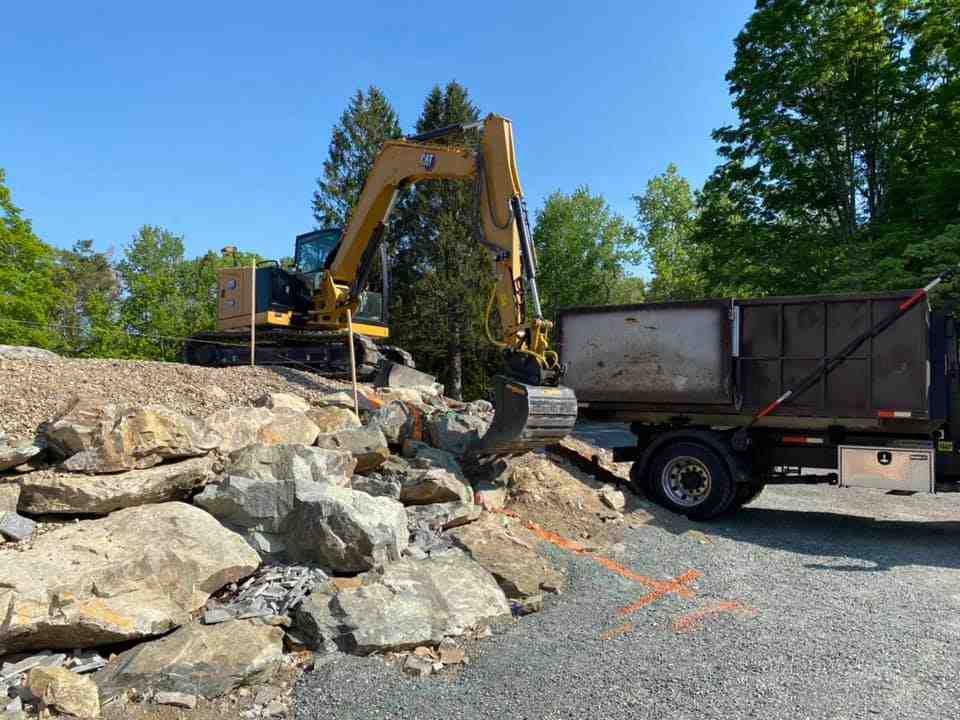
Excavation and landscaping are the cornerstones of changing outdoor spaces from the ground up. These critical steps involve preparing and shaping the terrain through precise removal and addition of earth materials to lay the foundation for a stable and aesthetically pleasing landscape. Whether you’re installing a garden, paving a pathway, or setting up irrigation systems, excavation ensures a strong base for every feature.
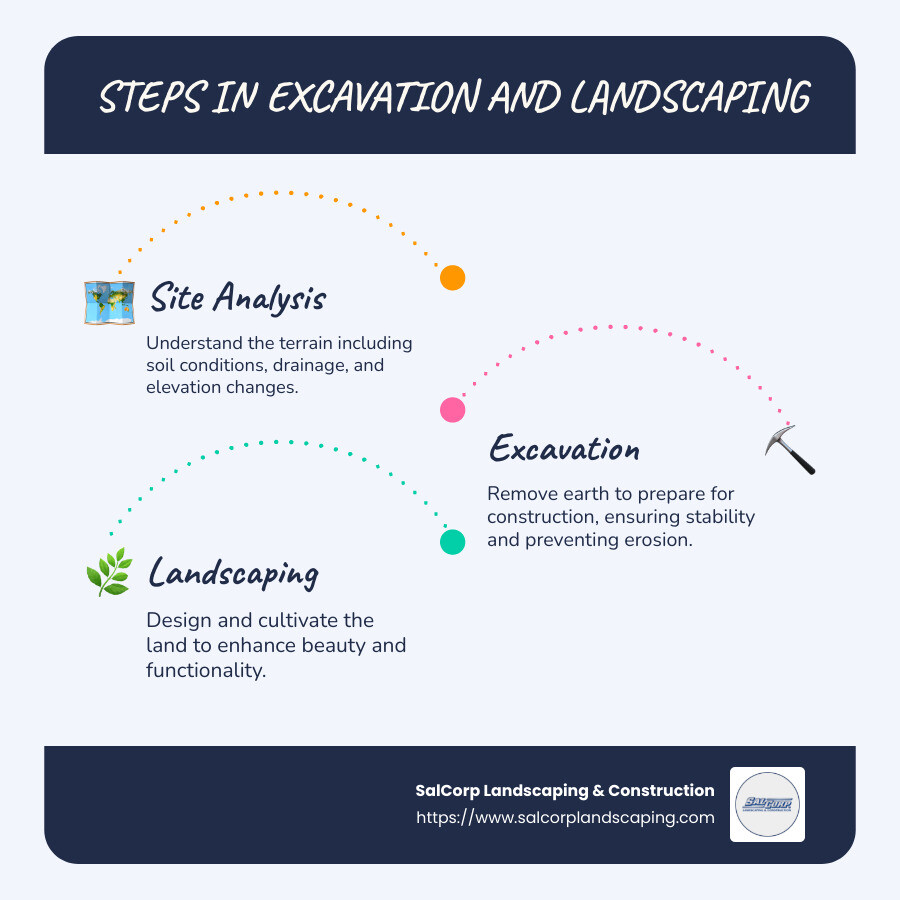
- Excavation: Involves removing earth to prepare for construction, ensuring proper drainage and preventing erosion.
- Landscaping: Involves designing and cultivating the land to improve its beauty and functionality.
Landscape change begins with understanding the land. By carefully analyzing the site, the excavation process addresses soil conditions, drainage issues, and elevation changes to set the stage for a well-crafted outdoor environment. With the right approach, it not only supports construction but also improves the longevity and health of your landscaping efforts.
I’m Sal Musto, with over two decades of experience in excavation and landscaping. My journey in this field has been driven by a passion for changing spaces into beautiful, functional areas that people can enjoy year-round. At SalCorp Landscaping & Construction, we blend craftsmanship with cutting-edge techniques to deliver exceptional results. Stay tuned as we dig deeper into the intricate world of excavation and landscaping.
The Importance of Excavation in Landscaping
Proper excavation is like laying the groundwork for a masterpiece in landscaping. It is the first and most critical step in ensuring that your outdoor space is not only beautiful but also durable and functional.
Stability
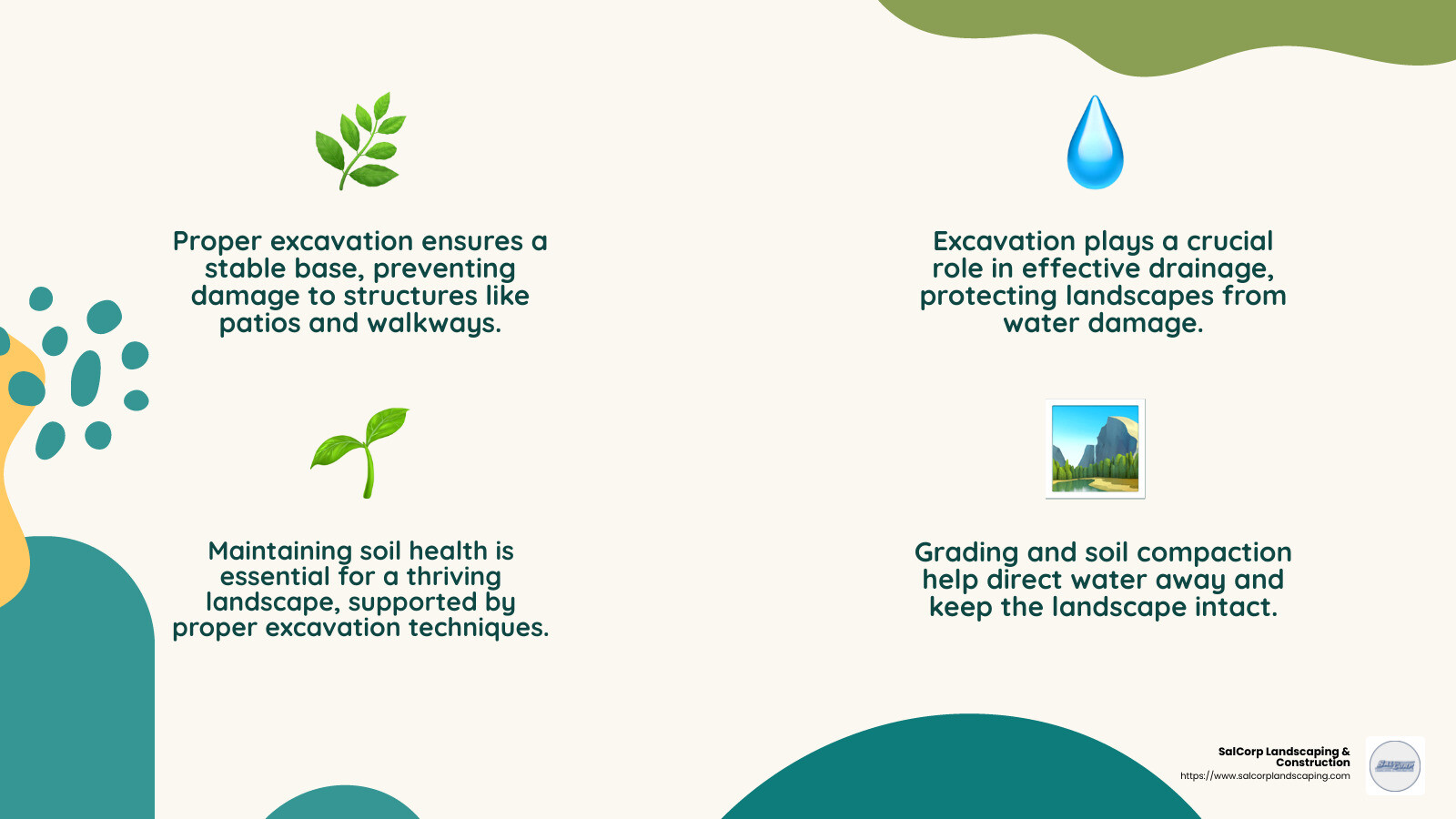
A stable base is vital for any landscaping project. Without it, you risk having patios, walkways, and other structures shift and settle over time. This can lead to uneven surfaces and even structural damage. Proper excavation ensures that the ground is adequately prepared, preventing these common issues. By removing unsuitable soil and compacting the ground, you create a solid foundation for all your landscaping elements.
Imagine a patio that starts sinking on one side after a few months. That’s what inadequate excavation can lead to.
Drainage
Effective drainage is another key benefit of proper excavation. Water pooling and erosion are common problems that can wreak havoc on your landscape. By grading the land and ensuring proper soil compaction, water is directed away from structures, protecting them from water damage.
Think of excavation as setting up a natural water management system that keeps your landscape healthy and intact.
Soil Health
Healthy soil is the backbone of a thriving landscape. Excavation plays a crucial role in maintaining soil health by ensuring the right composition and compaction. This creates an environment where plants can flourish, which in turn stabilizes the landscape and prevents erosion.
Healthy soil means robust plants, and robust plants mean a resilient landscape.
Excavation is not just about digging up dirt. It’s about preparing the land to support a beautiful and lasting outdoor space. By focusing on stability, drainage, and soil health, you set the stage for a landscape that can withstand the test of time.
Next, we will explore the key excavation techniques that make all this possible.
Key Excavation Techniques
When it comes to excavation and landscaping, a few key techniques lay the groundwork for success. These methods ensure your project is not only visually appealing but also structurally sound. Let’s explore trenching, grading, and digging—three pillars of effective excavation.
Trenching
Trenching is essential for laying utilities like drainage systems, electrical wiring, and fiber-optic cables. It involves digging narrow, deep channels to house these utilities safely.
Safety is a top priority in trenching. Cave-ins, gas leaks, and striking underground utilities are real risks. Workers must wear protective gear, conduct thorough soil inspections, and employ proper shoring techniques to ensure stability.
Think of trenching as creating the veins of your landscape, delivering essential services while maintaining safety.
Grading
Grading is all about leveling and shaping the land to ensure proper drainage and stability. This process prevents water accumulation, which can cause erosion and structural damage.
Grading techniques involve cutting or filling the soil, compacting it, and shaping it according to specific elevations and slopes. Using tools like graders and dozers, professionals sculpt the terrain to meet project requirements.
Imagine grading as the art of crafting a smooth canvas where your landscape’s beauty and functionality can shine.
Digging
Digging is the foundation of any landscaping project. Whether you’re creating space for foundations, basements, or hardscape elements like patios and walkways, digging is fundamental.
This process uses tools ranging from shovels and spades to backhoes and mini excavators. The scale and complexity of the project determine the equipment needed.
Safety precautions are crucial during digging operations. Locating underground utilities before excavation prevents damage. Workers should wear helmets, gloves, and steel-toe boots, and follow proper trenching and shoring techniques.
Think of digging as setting the stage for your landscape’s grand performance, ensuring everything is in place for a stunning reveal.
In summary, these techniques—trenching, grading, and digging—are the building blocks of successful excavation and landscaping projects. They ensure your landscape is functional, safe, and visually appealing.
Next, we’ll explore the tools and equipment that make these techniques possible.
Tools and Equipment for Effective Excavation
When tackling an excavation and landscaping project, having the right tools is crucial. From small residential jobs to larger commercial projects, the equipment used can make all the difference. Let’s explore four essential machines: excavators, backhoes, bobcats, and bulldozers.
Excavators
Excavators, often called diggers, are the workhorses of the excavation world. With their ability to rotate 360 degrees, they offer best versatility. Whether you’re digging a foundation or trenching for utilities, an excavator can handle it. These machines come in various sizes, from compact mini excavators ideal for tight spaces to large models for heavy-duty projects.
Excavators are like the Swiss army knife of excavation—adaptable and powerful.
Backhoes
Backhoes are known for their dual functionality. They combine a digging bucket on one end and a loader on the other, making them perfect for both digging and loading materials. Their compact size and articulated design allow them to steer tight spaces easily. They’re ideal for tasks like digging trenches, lifting heavy materials, and even landscaping.
Think of backhoes as the multitaskers of the construction site, seamlessly switching between tasks.
Bobcats
Bobcats, or skid-steer loaders, are compact, agile, and versatile. They excel in small spaces where larger machinery can’t go. With various attachments like buckets, forks, and augers, bobcats can tackle tasks from soil removal to grading and material transport. Their small footprint and maneuverability make them a favorite for urban projects.
Bobcats are the nimble athletes of excavation, darting through projects with precision.
Bulldozers
Bulldozers are the muscle of the excavation team. Equipped with a broad blade, they push, move, and level materials like soil and debris. They’re essential for site preparation, clearing land, and shaping terrain. With their immense power, bulldozers make quick work of even the toughest jobs.
Bulldozers are the heavy lifters, clearing the path for progress.
Each of these machines plays a vital role in excavation and landscaping. Their unique features and capabilities ensure that projects are completed efficiently and effectively. Next, we’ll dig into the safety precautions that keep operators and sites secure during excavation activities.
Safety Precautions in Excavation
Safety is the cornerstone of any successful excavation and landscaping project. Whether you’re working on a small residential site or a large commercial area, adhering to safety protocols is essential. Let’s explore the key safety measures: training, protective gear, and equipment inspection.
Training
Proper training is the first step in ensuring safety on an excavation site. Every worker must be well-versed in operating machinery and understanding safety protocols. Training programs should cover:
- OSHA Regulations: Familiarizing workers with Occupational Safety and Health Administration guidelines ensures compliance and reduces risks.
- Soil Identification: Recognizing different soil types helps prevent cave-ins and other soil-related accidents.
- Emergency Response: Workers should know how to react swiftly in case of accidents or emergencies.
Investing in training not only improves safety but also boosts confidence and efficiency among the crew.
Protective Gear
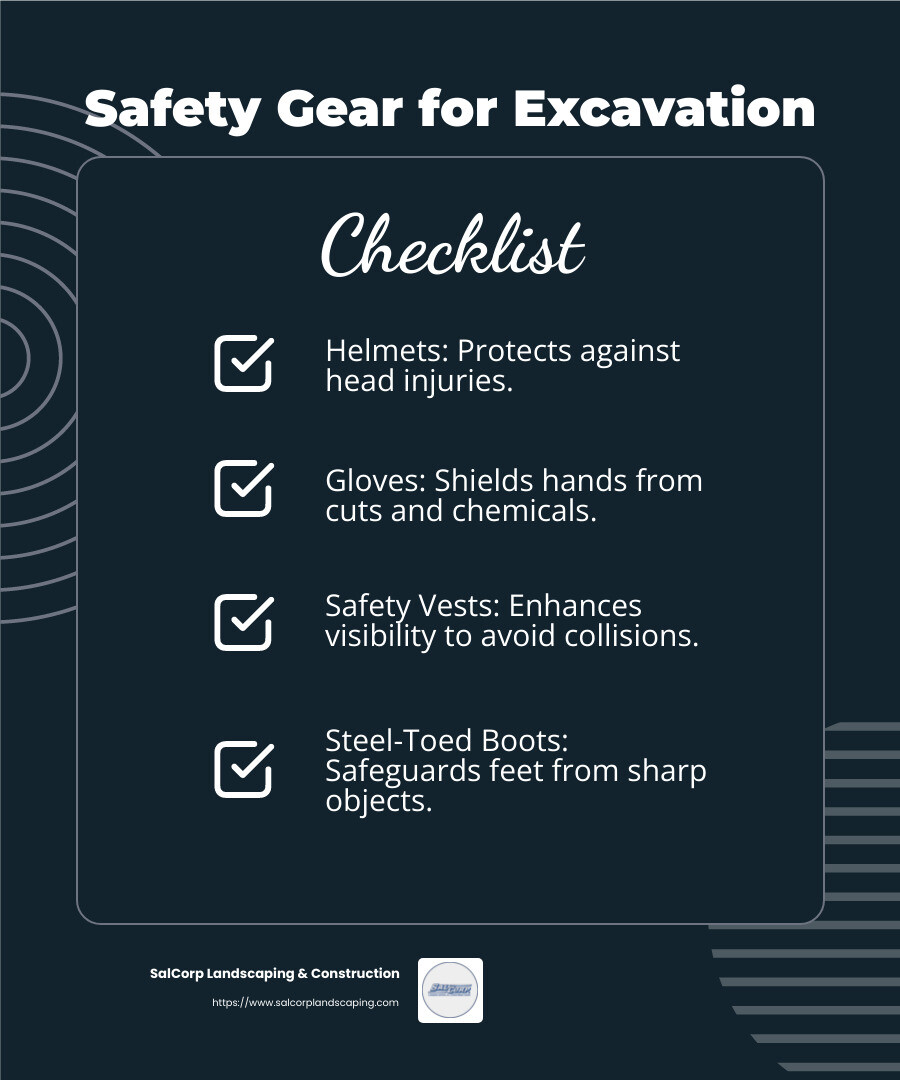
Equipping workers with the right protective gear is non-negotiable. Essential gear includes:
- Helmets: Protects against head injuries from falling objects or accidental impacts.
- Gloves: Shields hands from cuts, abrasions, and chemical exposure.
- Safety Vests: Improves visibility to prevent collisions, especially in busy areas.
- Steel-Toed Boots: Protects feet from sharp objects and uneven terrain.
- Ear and Eye Protection: Guards against noise-related risks and injuries from dust or debris.
Regular gear inspections and proper fitting are crucial to maintain a safe working environment.
Equipment Inspection
Regular inspection of excavation equipment is vital to prevent malfunctions and ensure operational efficiency. Key inspection points include:
- Hydraulic Systems: Check for leaks and ensure fluid levels are adequate.
- Engine and Undercarriage: Inspect for wear and tear, and clear any debris.
- Safety Features: Ensure that all safety mechanisms, like alarms and lights, are functioning correctly.
Conducting routine checks can prevent unexpected breakdowns, keeping the project on schedule and within budget. It also contributes to a safer environment for everyone on site.
By prioritizing training, protective gear, and equipment inspection, excavation projects can proceed smoothly and safely. Next, we’ll discuss the planning and preparation necessary for successful excavation endeavors.
Planning and Preparing for Excavation Projects
Before diving into any excavation and landscaping project, preparation is key. Here’s what you need to know to set the stage for success.
Project Scope
Defining the project scope is your first step. This means understanding exactly what needs to be done, how big the area is, and what the end goal looks like. By outlining specific tasks and desired outcomes, everyone involved stays on the same page. This clarity helps in making informed decisions and ensures that resources are allocated efficiently.
Permits
Excavation projects often require permits, especially if they involve significant changes to the landscape. In Massachusetts, as in many places, you’ll need to check local regulations to determine what permits are necessary. This could include environmental permits or building permits. Proper documentation, like site plans and proof of insurance, is crucial for approval. Obtaining these permits not only ensures compliance but also helps avoid potential legal issues down the line.
Utility Marking
Safety first! Before any digging starts, it’s crucial to mark all utility lines. This prevents accidents and service disruptions. In Massachusetts, you can call 811 to have professionals come out and mark the locations of underground utilities like gas, water, and electricity. This service is often free and can save you from costly damages and safety hazards.
Budgeting
Creating a detailed budget is essential. Include costs for equipment rental, labor, and materials. Consider potential unexpected expenses, such as additional permits or unforeseen site conditions. A well-planned budget helps keep the project on track financially and can prevent overspending. It’s always smart to have a contingency fund for those “just in case” moments.
By carefully planning and preparing for your excavation and landscaping project, you can ensure a smooth and successful execution. Next, we’ll dive into frequently asked questions to clear up any lingering doubts.
Frequently Asked Questions about Excavation and Landscaping
What can I do with excess dirt from excavation?
Excess dirt from excavation and landscaping projects can be a valuable resource if managed properly. Here are some options:
- Landscaping: Use the extra soil to level uneven areas in your yard, create decorative mounds, or fill low spots. This can improve the aesthetic appeal and functionality of your outdoor space.
- Donation: Consider donating the excess dirt to local organizations such as parks, schools, or community gardens. These places often need soil for various projects, and your contribution could be greatly appreciated.
- Disposal: If neither of the above options is feasible, you can look into proper disposal methods. Some areas have specific facilities where you can drop off excess dirt, or you may be able to hire a service to remove it for you.
When do I need an excavation permit?
Obtaining an excavation permit is crucial for ensuring compliance with local laws and regulations. Here’s when you might need one:
- City Right-of-Way: If your excavation work is within the city right-of-way, such as sidewalks, roads, or utility easements, a permit is typically required. This ensures that public land is used responsibly and safely.
- Local Regulations: Permit requirements vary by location. In Massachusetts, you should check with your local building department to understand the specific regulations and permits needed for your project. This might include environmental or building permits, depending on the scope and impact of your work.
What is the difference between excavation and landscaping?
Excavation and landscaping are two distinct but often interconnected activities:
- Excavation: This involves using heavy machinery to dig, move, or remove earth and rocks. It’s typically done to prepare land for construction projects, such as building foundations or installing drainage systems. Excavation focuses on altering the land’s topography and requires specialized equipment and skills.
- Landscaping: This focuses on the design, installation, and maintenance of outdoor spaces. It includes planting trees and shrubs, creating gardens, and installing features like patios or walkways. Landscaping is more about enhancing the aesthetic and functional aspects of a property, often using design principles to achieve a specific look or feel.
Understanding these differences helps in planning projects effectively, ensuring the right combination of skills and equipment is used for successful outcomes.
Next, we’ll explore the comprehensive solutions offered by SalCorp Landscaping & Construction to the communities in Massachusetts.
Conclusion
When it comes to changing outdoor spaces, SalCorp Landscaping & Construction stands out as a leader in the field. With over 20 years of experience, we offer comprehensive solutions that cater to both residential and commercial needs across Massachusetts. Our expertise in excavation and landscaping allows us to provide custom services that improve the aesthetic and functionality of your property.
Our approach is simple yet effective: we combine our extensive industry knowledge with state-of-the-art equipment to deliver results that exceed expectations. Whether you’re looking to create a beautiful garden, install a hardscape feature, or prepare your land for construction, our team is equipped to handle projects of any scale.
Comprehensive Solutions
At SalCorp, we believe in offering a full spectrum of services to meet the diverse needs of our clients. Our capabilities include:
- Landscape Design: We work closely with you to create outdoor spaces that reflect your vision and lifestyle.
- Hardscaping: From patios to walkways, our hardscaping services add both beauty and function to your property.
- Excavation: Our skilled team ensures that your land is properly prepared for any project, ensuring stability and proper drainage.
- Commercial Snow Management: We ensure that your commercial property remains accessible and safe during the winter months.
Serving Massachusetts Communities
Proudly based in Walpole, Massachusetts, we extend our services to various communities throughout the state, including Avon, Boston, and Concord, among others. Our local expertise allows us to understand the unique challenges of the Massachusetts landscape, providing solutions that are not only effective but also environmentally conscious.
Choosing SalCorp means partnering with a company that values quality, customer satisfaction, and community well-being. We invite you to explore our landscaping and construction services and see how we can help you bring your outdoor space to life.
In summary, whether you’re starting on a new project or enhancing an existing space, SalCorp Landscaping & Construction is your go-to partner for exceptional results. Let’s work together to create outdoor spaces that are not just functional but truly breathtaking.