Grass seed installers near me: Top Picks 2025
Why Professional Grass Seed Installation Matters for Your Property
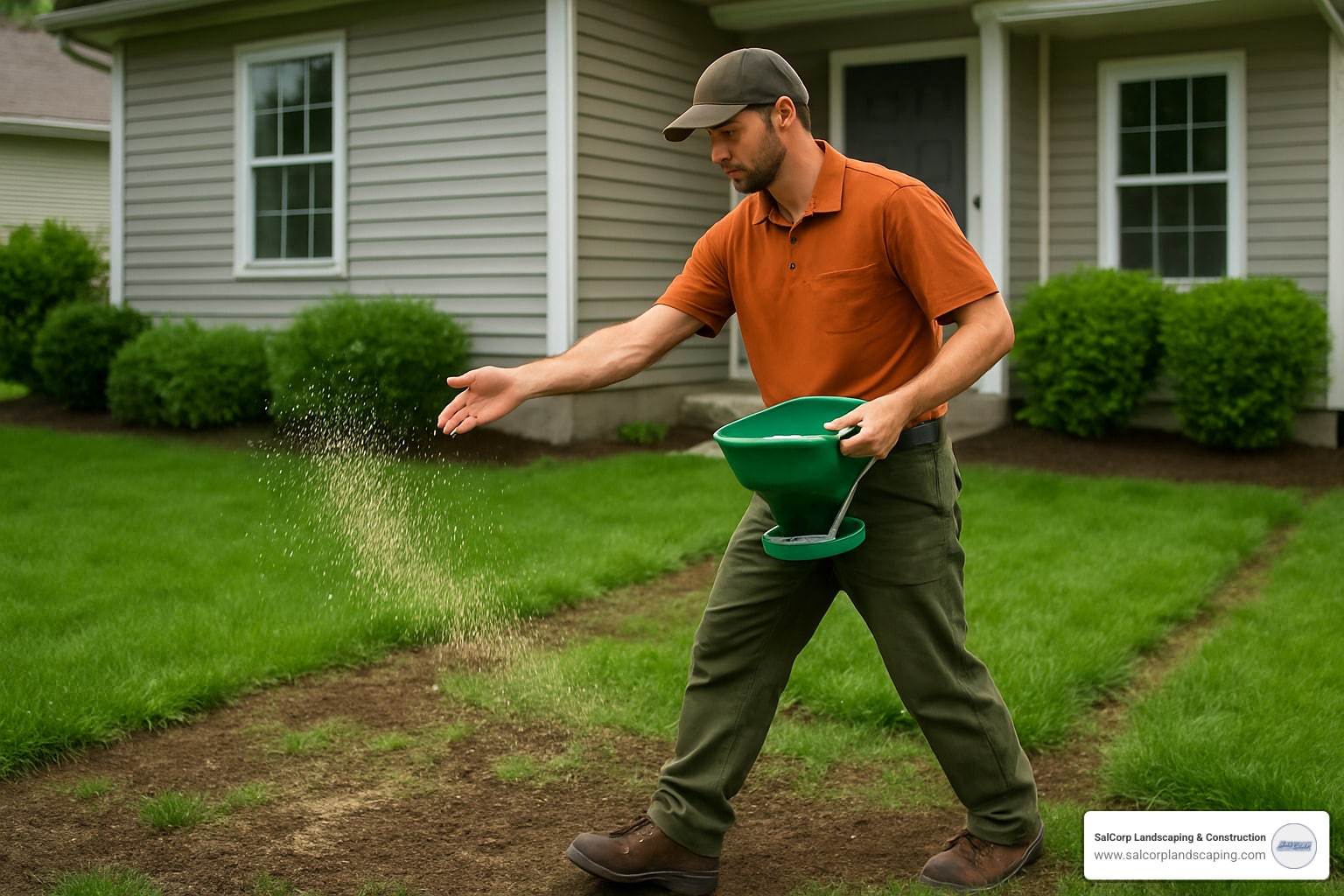
Searching for grass seed installers near me usually means you want a lawn that looks great, establishes quickly, and stays healthy for years. Professional crews deliver that outcome by combining soil science, the right seed blends, and equipment most homeowners don’t have.
Quick facts:
- New seed germinates in 10–14 days when soil and moisture are ideal.
- Hydroseeding can trim that to about a week because the mulch-fertilizer slurry locks in moisture.
- Proper prep (pH testing, aeration, grading) is responsible for most project success or failure.
Top services installers provide:
- Site assessment & pH testing
- Soil amendments (compost, lime, fertilizer)
- Traditional broadcast, slit-seed, or hydroseed application
- Mulch or erosion control on slopes
- After-care plans for watering and mowing
Professional installation costs more than DIY seed from the hardware store, but it almost always costs less than re-doing a failed lawn—and many contractors guarantee germination.
I’m Sal Musto, owner of SalCorp Landscaping & Construction in Walpole, MA. After 20+ years seeding lawns across the state, I’ve learned exactly which grasses thrive in our New England climate and how to get them established fast.
Quick glossary:
Understanding Professional Grass Seeding Services
Professional seeding is more than just sprinkling seed—it’s a step-by-step system that turns tired, compacted, or bare soil into a healthy, resilient carpet of grass. It’s a process rooted in science and executed with specialized equipment.
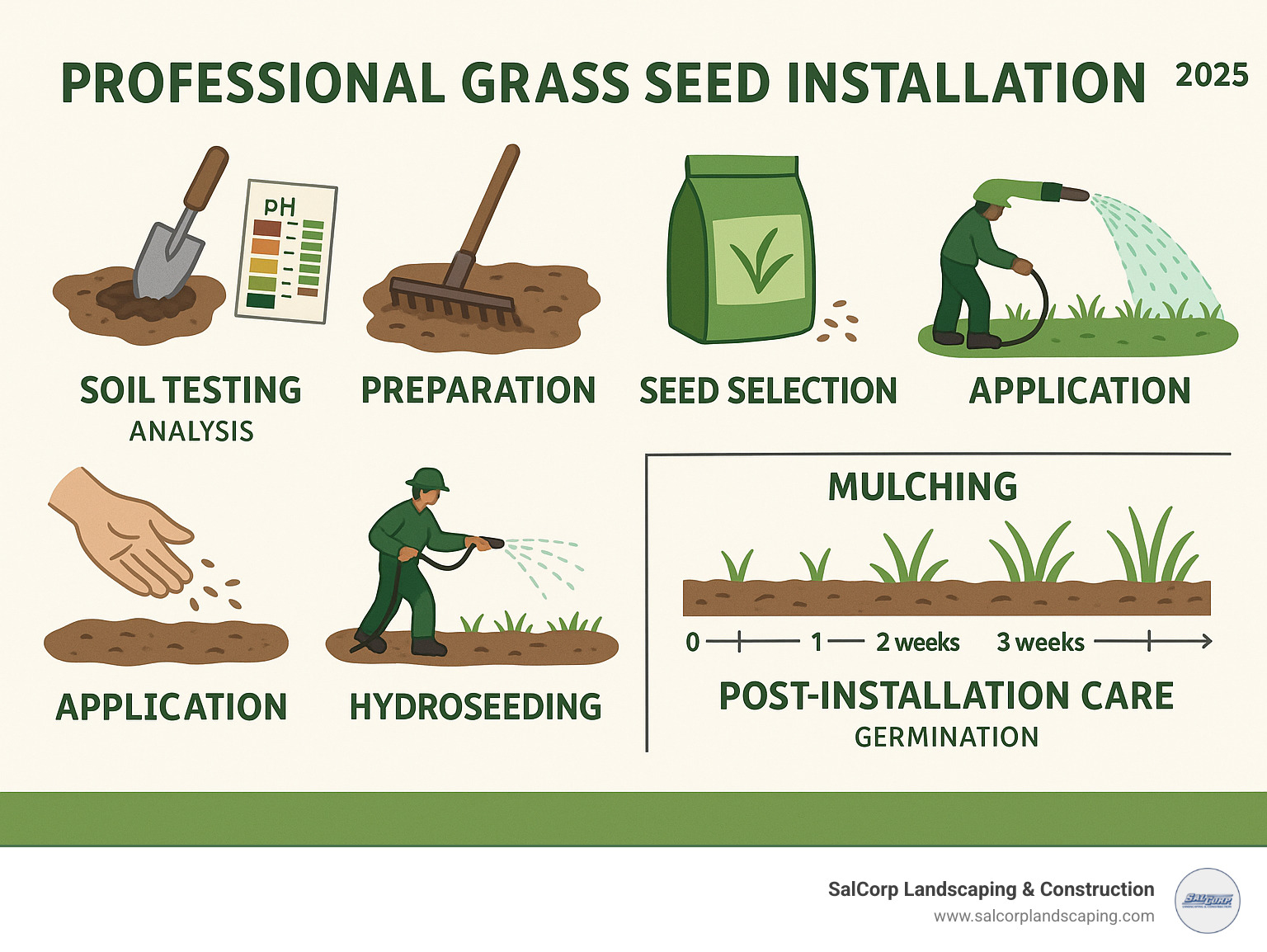
Key steps SalCorp follows:
- Lawn assessment – We don’t just measure the area; we map the sun exposure throughout the day, identify drainage patterns, and analyze the existing soil texture. This tells us if we need a sun-loving Kentucky Bluegrass blend or a more shade-tolerant fescue mix for areas under trees.
- Soil prep – This is the most critical stage. We perform core aeration to relieve compaction and allow air, water, and nutrients to reach the root zone. We also dethatch to remove the layer of dead organic matter that can choke out new seedlings. A professional lab pH test gives us precise data to amend the soil with the exact amount of lime or compost needed for optimal growth.
- Application method – The choice of application is strategic. Broadcast seeding is excellent for large, flat, open lawns. Slit-seeding is our preferred method for overseeding, as it mechanically plants the seed directly into the soil for superior germination rates. Hydroseeding is the ultimate solution for new construction, sloped areas, and customers who want the fastest possible results with built-in erosion control.
- Topdressing & fertilizer – After seeding, we apply a very thin layer of high-quality compost or peat moss. This isn’t to bury the seed, but to help it retain moisture and maintain contact with the soil. A starter fertilizer, high in phosphorus, is applied to fuel rapid root development.
- After-care coaching – Our job isn’t done when we leave. We provide you with a detailed, easy-to-follow watering and mowing schedule. We explain exactly how to transition from light, frequent sprays for the first two weeks to deeper, less frequent soaks as the lawn matures. This guidance is crucial for long-term success.
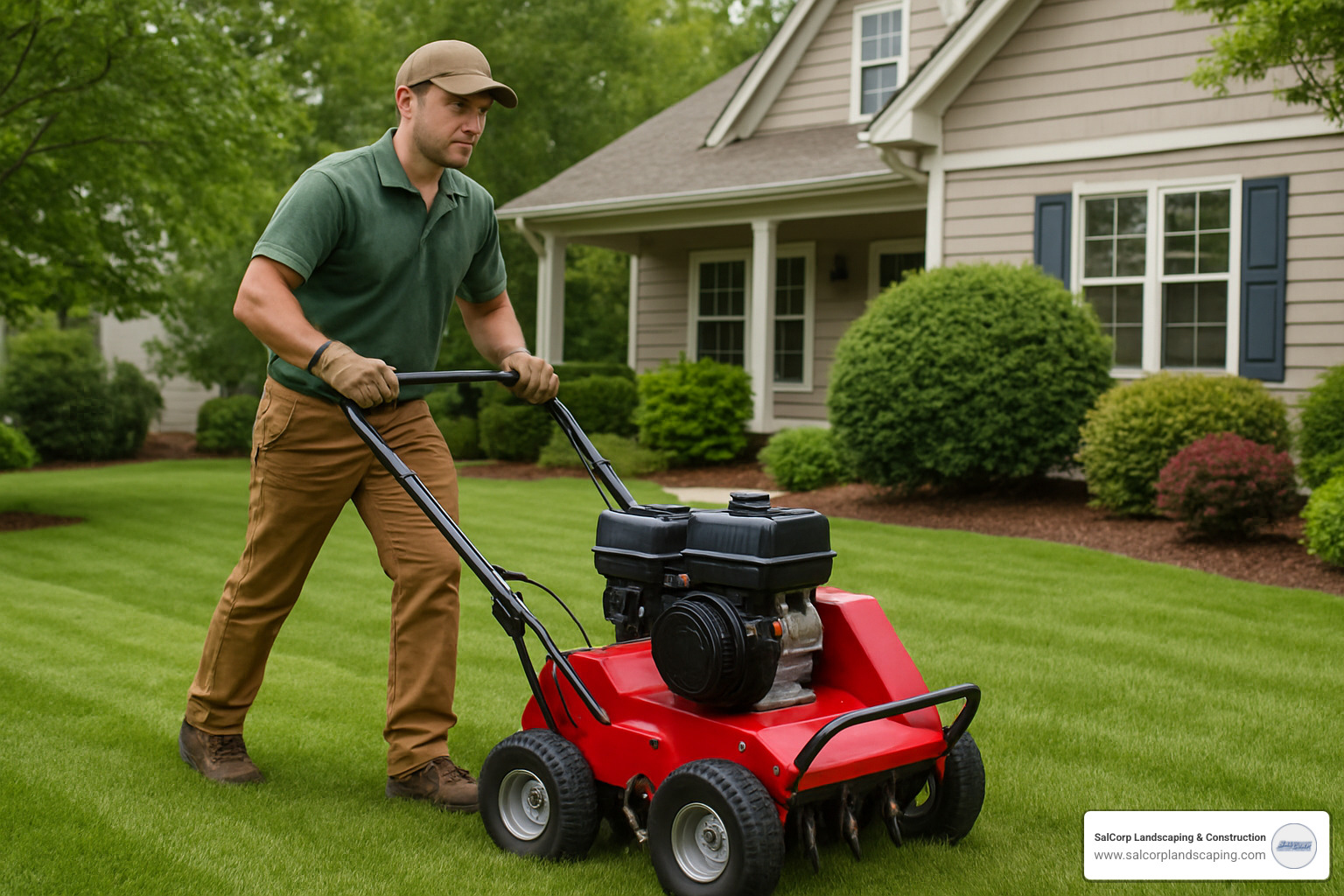
Why go pro?
- Even seed distribution & perfect seed-to-soil contact
- Fewer weeds because dense turf out-competes invaders
- Commercial equipment cuts weeks off a DIY timeline
- Workmanship guarantees provide peace of mind
Interested? Explore our Grass Seed Installation services for details.
A Deep Dive into Hydroseeding
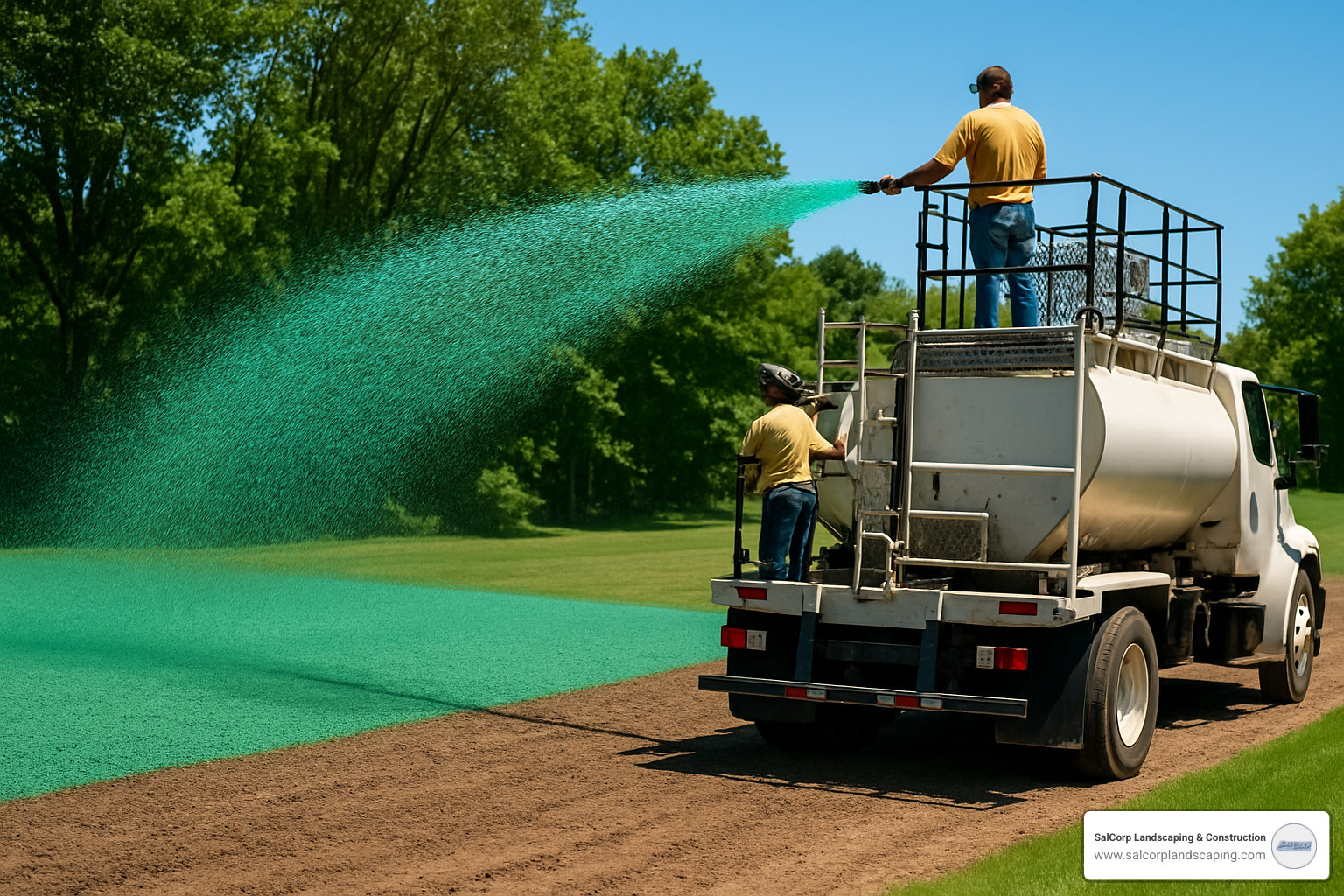
Hydroseeding combines seed, water, fertilizer, tackifier, and wood-fiber mulch into a spray-on “growth blanket.” It’s my favorite choice for new lawns or slopes because:
- Rapid germination – Moisture-retaining mulch speeds sprouting (often < 7 days).
- Uniform coverage – Pressurized spray coats every square foot identically.
- Built-in erosion control – Tackifier locks seed to soil until roots form.
- Large-area efficiency – Crews can finish acres in a single day.
How it works:
- Load the slurry into a tank.
- Pump applies mixture through a hose or cannon.
- Mulch dries to a green crust, holding moisture.
- Seed germinates, mulch decomposes, and grass takes over.
Traditional broadcast seeding still has a place—especially for overseeding small lawns—but if you need speed, slope protection, or one-step convenience, hydroseeding wins. Curious? See our full Hydro Grass Seed overview.
Cost and Timing: Budgeting for Your New Lawn
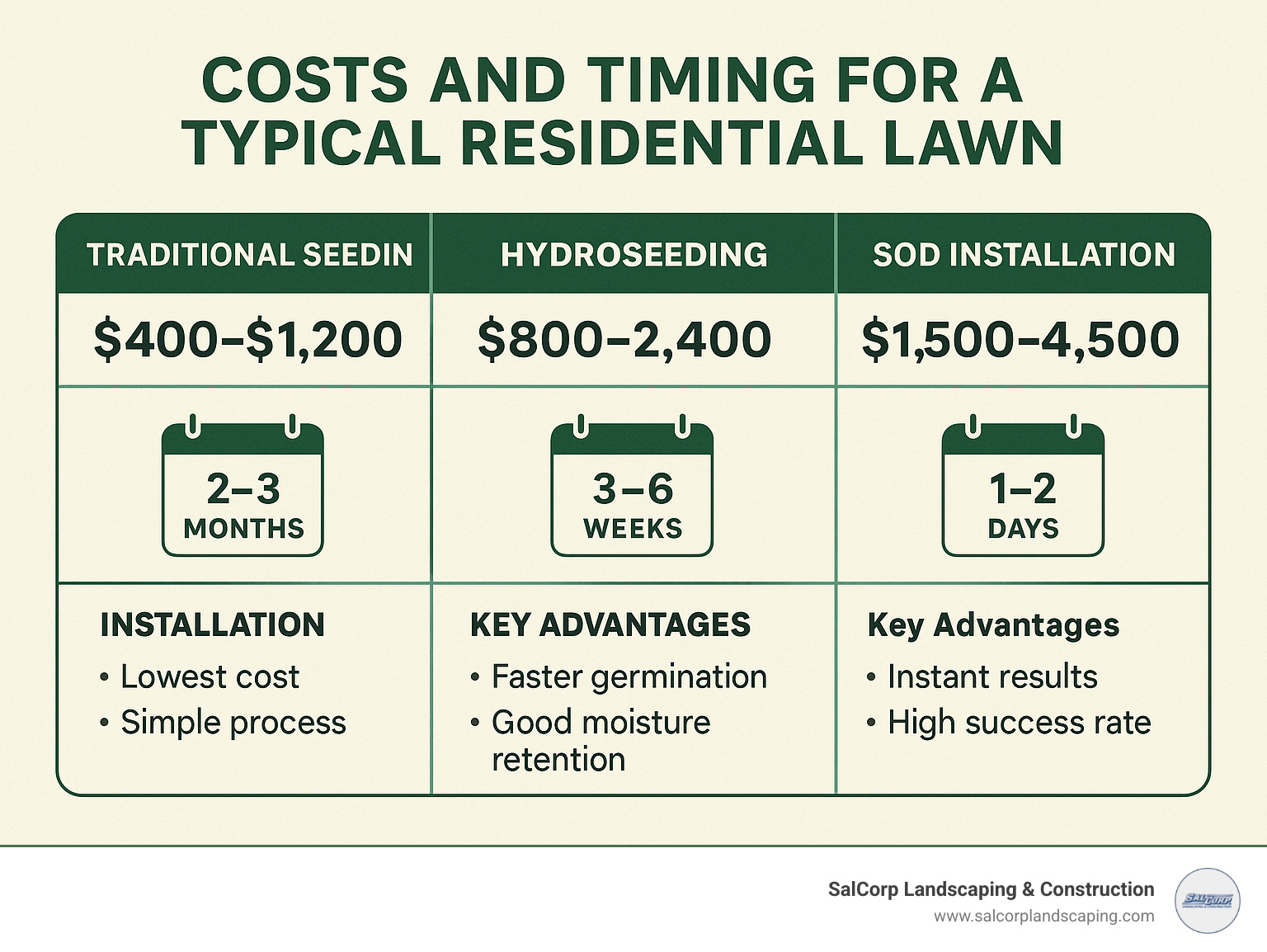
All pricing below is based on national averages found online—not quotes from SalCorp—and can swing widely with site conditions, lawn size, and local labor rates.
Average installed cost per square foot:
- Traditional seeding: $0.10–$0.30
- Hydroseeding: $0.12–$0.40
- Sod: $1.00–$2.00+ (for comparison)
A 6,000 sq ft yard might therefore run:
- $600–$1,800 for traditional seeding
- $720–$2,400 for hydroseeding
- $6,000–$12,000+ for sod
Factors that move the needle:
- Prep work – This is the biggest variable. A simple overseed is inexpensive. A full renovation that requires removing old turf, bringing in several yards of loam, and re-grading the property to fix drainage issues can easily double the total project cost.
- Seed blend – A bag of generic seed from a big-box store is cheap. A professional, certified seed blend customized for your property’s specific sun, shade, and traffic conditions will cost more upfront but will establish better and save on water and frustration later.
- Access & slope – A flat, open front yard is easy to work on. A fenced-in backyard with tight gates or a steep, difficult-to-access slope requires more labor and specialized machinery, which increases the cost.
Timing tips for Massachusetts:
- Late-summer/early-fall (Aug–Oct) offers warm soil and cooler air—ideal for cool-season grasses. This is the #1 best time to plant.
- Mid-spring (Apr–early Jun) is the second-best window, but you’ll battle more aggressive weed growth and the lawn will have less time to mature before facing summer heat and drought stress.
Need deeper numbers? Check our guides to How Much Are Lawn Care Services and Sod Installation Cost Per Square Foot.
How to Choose the Right Grass Seed Installers Near Me
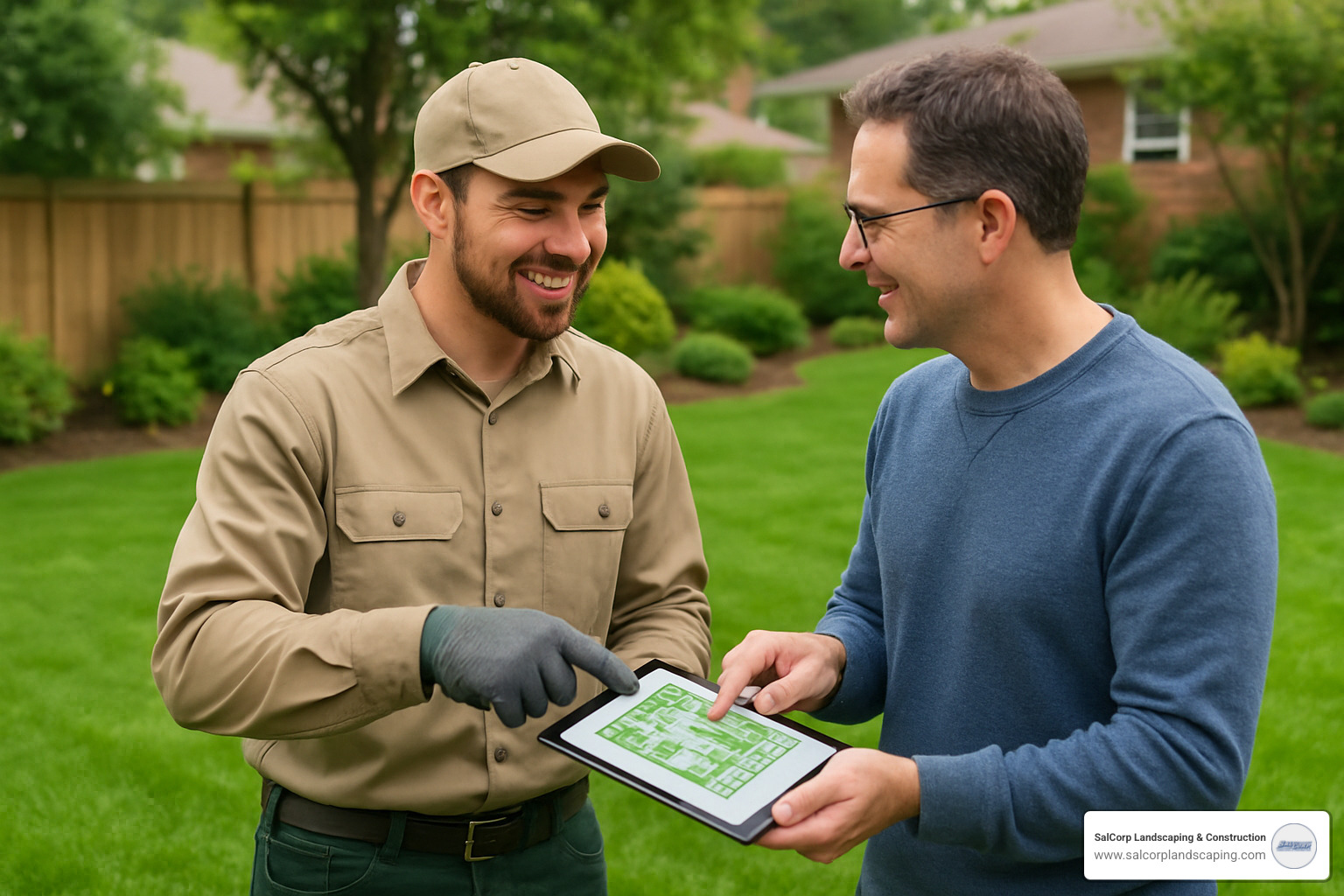
Your lawn investment is only as good as the crew installing it. A beautiful lawn starts with a knowledgeable and reputable contractor. Vet candidates with these critical questions:
- Are you licensed & insured? This is the first question you should always ask. Ask for a certificate of insurance. If an uninsured worker gets hurt on your property, you could be held liable. A professional company will always carry full liability and workers’ compensation insurance.
- Do you test soil before seeding? A “yes” here is non-negotiable. Any installer who wants to just “spray and pray” without understanding your soil’s pH and nutrient levels is guessing, not planning. A proper soil test is the foundation of a successful lawn.
- What equipment will you use? Ask if they use commercial-grade, hydraulic-powered core aerators, dedicated slit-seeders, and professional hydroseeding rigs. This level of equipment shows a serious commitment to quality results and is far more effective than smaller, less powerful rental machines.
- Can I see nearby projects? Reputable installers will be proud to share addresses of lawns they’ve completed in your area. Driving by to see a 1-year-old and a 3-year-old project gives you a real-world look at the quality and longevity of their work.
- What is included in your written quote? A professional quote should be itemized. It should clearly break down the costs for soil preparation, amendments like lime or compost, the specific type of seed blend being used, labor, and any after-care services or guarantees.
Top traits of quality installers:
- Deep local experience (they know MA soils from Avon to Weymouth)
- Clear communication and prompt follow-up
- A detailed after-care plan so you’re not guessing once crews leave
- A portfolio of successful local projects
For more information on best practices for lawn renovation, you can review resources like these according to UMass Extension guidelines. Use our Turf Landscapers Near Me resource to connect with vetted pros.
Your Lawn’s Foundation: Seed Types and Aftercare
Picking the right seed and babying it for the first two months makes or breaks your entire lawn project. A professional will select a blend customized for your yard’s unique conditions.
Popular cool-season grasses for Massachusetts:
- Kentucky Bluegrass (KBG) – The gold standard for a classic, dark green, carpet-like lawn. It spreads via underground rhizomes, allowing it to self-repair from minor damage. However, it is slower to germinate (14–21 days) and requires more sun and water.
- Perennial Ryegrass – The sprinter of the grass world. It sprouts incredibly fast (5–7 days), making it great for quick results and erosion control. It stands up well to foot traffic but grows in bunches and doesn’t spread, so it’s almost always used in a blend.
- Fine Fescue – A group of grasses (like Creeping Red, Chewings, and Hard Fescue) that are champions of difficult conditions. They tolerate shade, drought, and poor soil better than other types, making them essential for lawns with large trees or low-input maintenance plans.
Blends labeled Sun & Shade or High-Traffic from a professional installer will contain certified varieties of these grasses, balanced to provide the best possible performance for your specific yard. See local recommendations on our New Lawn Westwood MA page.
After-care essentials:
- Watering – This is your most important job. For the first 2-3 weeks, the goal is to keep the top inch of soil consistently moist, like a wrung-out sponge. This usually means misting the area 2–3 times a day for 10-15 minutes. Once the grass is about an inch tall, you can shift to deeper, less frequent soaks to encourage deep root growth.
- First mow – Be patient. Wait until the new grass reaches 3–4 inches in height. Make sure your mower blade is sharp (a dull blade rips and damages new grass) and mow on a high setting. Never cut more than 1/3 of the blade height at one time. This is known as the one-third rule and is critical for lawn health.
- Stay off – Limit all foot traffic, including pets and children, for at least 4–6 weeks. The tender new seedlings need time for their roots to anchor firmly into the soil without being compacted or disturbed.
- Fertilize – A light starter fertilizer is usually included at installation. A follow-up feeding with a balanced lawn fertilizer about 4–6 weeks later will provide the nutrients needed to keep the momentum going and help the lawn mature before winter or summer stress.
More prep tips: How To Prepare Lawn For Hydroseeding.
Frequently Asked Questions about Grass Seed Installation
How much does professional grass seeding cost?
Based on national online data (not SalCorp quotes):
- Traditional: $0.10–$0.30 / sq ft
- Hydroseed: $0.12–$0.40 / sq ft
Total projects often range $400–$4,000+ depending on lawn size, access, and the amount of soil preparation required.
Is hydroseeding better than traditional seeding?
For new, bare, or sloped sites—yes. It germinates faster, provides more uniform coverage, and includes a mulch that controls erosion and retains moisture. Traditional seeding or slit-seeding is a very effective and budget-friendly option for overseeding and thickening an existing lawn.
How long until I have green grass?
With ideal conditions, you’ll see the first green sprouts (often ryegrass) in 7–14 days, sometimes as fast as 5 days with hydroseeding. A fuller, more established look will take about a month. Plan on 6–8 weeks before the lawn is mature enough for normal use and regular mowing.
Can you seed over an existing, patchy lawn?
Absolutely. This process is called overseeding or slit-seeding. It’s an excellent way to introduce better grass varieties, thicken up thin turf, and improve the overall health and appearance of your lawn without the cost of a full renovation.
What’s the difference between seeding and sod?
Sod provides an “instant lawn” and is immediately green, but it’s significantly more expensive ($1.00-$2.00+ per sq ft) and offers limited grass type choices. Seeding costs much less, allows for custom seed blends perfectly matched to your site, and encourages deeper, healthier root system development from the start, though it requires a few weeks of patience.
Will the green dye in hydroseed stain my house or walkways?
No. The green or blue colorant in the hydroseed slurry is a non-toxic, water-soluble dye. It serves as a visual aid for the installer to ensure even coverage. It will not permanently stain your house, fences, or walkways and will fade away naturally with sunlight and watering after a few days.
Conclusion
Hiring professional grass seed installers near me is the fastest route to the thick, healthy lawn you picture. From soil testing through after-care, SalCorp’s owner-operated team brings two decades of Massachusetts know-how and the right equipment to get it done right—whether you choose traditional seeding or fast-track hydroseeding.
Ready to love your lawn? Explore our full lawn installation services and request an on-site assessment today.