

Hydroseed over existing lawn: 2025 Guide for a Lush Yard
Understanding Your Options for Lawn Restoration
Hydroseed over existing lawn is a viable option for improving thin or patchy grass, but it requires careful preparation. Here’s a quick overview:
- Is It Possible? Yes, using a modified overseeding approach. The hydroseed slurry must be thinner than standard to avoid smothering existing grass.
- Key Steps: Mow the lawn short (1.5-2 inches), aerate or dethatch to expose soil, remove debris, and use a matching seed type.
- When It Works: Best for lawns with thin spots or patchy areas (less than 50% bare) where a full renovation isn’t needed.
- When to Start Fresh: If your lawn has more bare spots than grass, severe weed problems, or poor soil conditions.
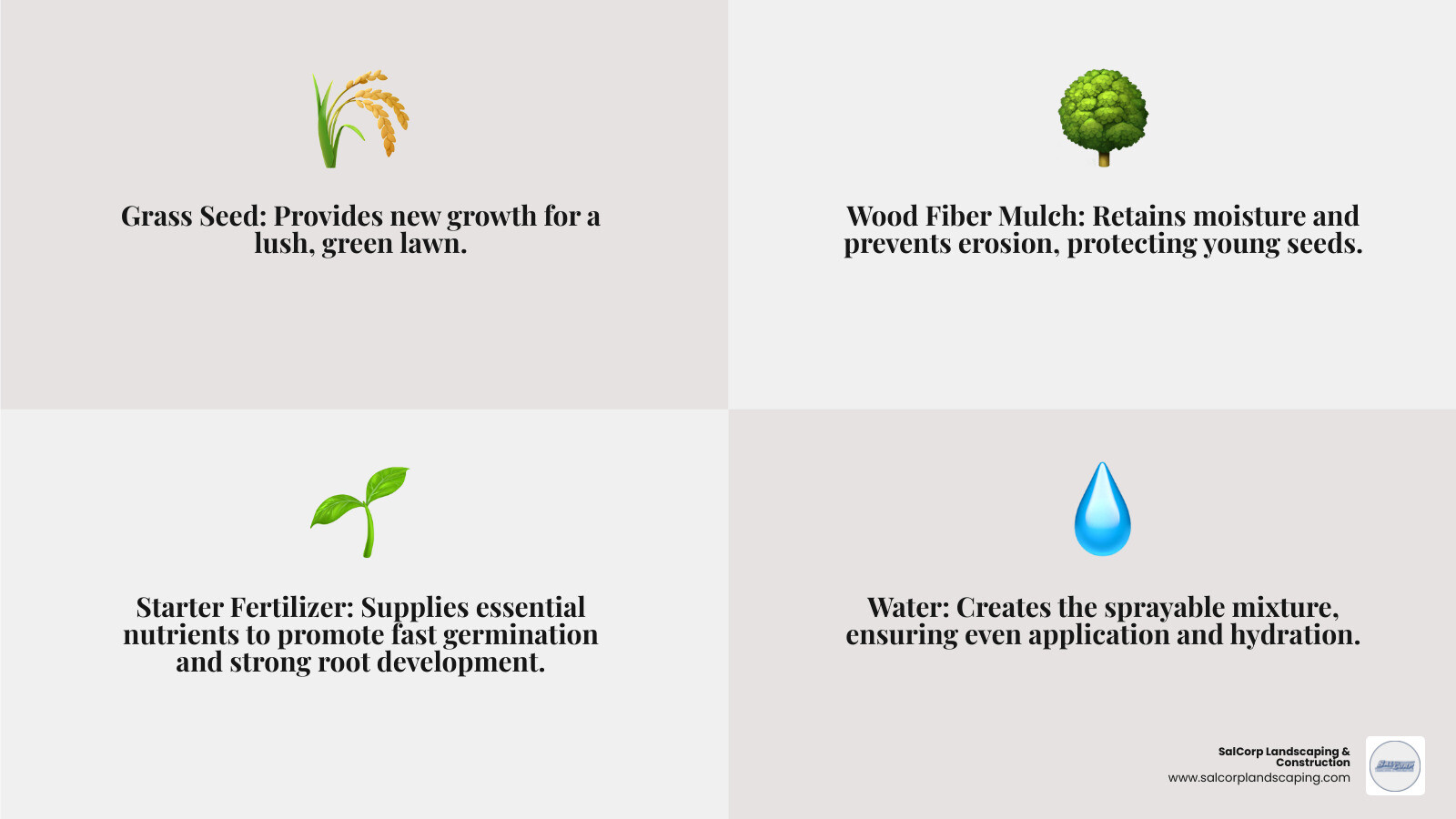
Hydroseeding sprays a mix of grass seed, mulch, fertilizer, and water onto your lawn. This slurry creates an ideal environment for germination by retaining moisture and providing nutrients.
For Massachusetts homeowners, hydroseeding is a middle ground between hand seeding and starting over. It’s faster than traditional seeding and more affordable than sod. However, it’s easy to do wrong. A thick mixture can suffocate existing grass, and poor prep work prevents seeds from reaching the soil. These risks are why professional guidance is often recommended.
I’m Sal Musto of SalCorp Landscaping & Construction. With over 20 years of experience, I’ve helped many Massachusetts property owners decide whether to hydroseed over existing lawn or start fresh. This guide will help you make the right call based on your lawn’s condition, budget, and timeline.
The Complete Guide to Hydroseeding Over an Existing Lawn
We’re often asked if you can hydroseed over existing lawn, and the answer is, “Yes, but…” This technique is essentially overseeding, where new grass seed is introduced into an established turf. The hydroseed mixture gives new seeds a boost, but it requires a strategic approach. For fundamentals, see our guide on What is Hydroseeding.
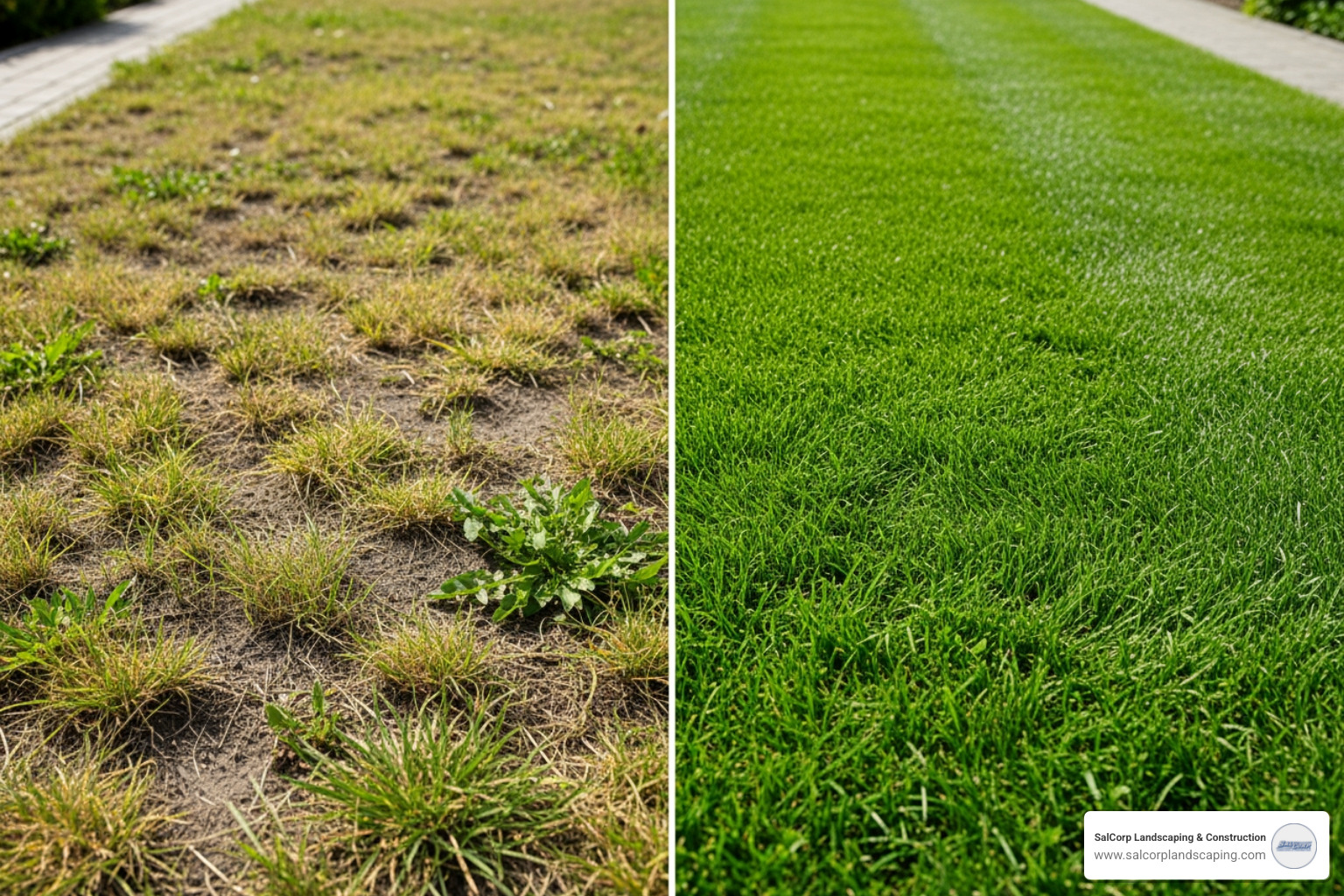
Can You Hydroseed Over an Existing Lawn? The Pros and Cons
Pros:
- Rapid Results: Grass can sprout in as little as 5-7 days, offering a quick turnaround for curb appeal in towns like Reading.
- Budget-Friendly: It’s more affordable than a complete renovation since you’re improving what you already have.
- Uniform Coverage: The slurry ensures an even application, blending new growth seamlessly.
- Erosion Control: The mulch layer helps protect sloped areas from water runoff.
Cons:
- Risk of Smothering: A standard, thick hydroseed mix can suffocate existing grass, creating more bare spots.
- Competition: New seeds must compete with established grass for water and nutrients.
- Requires Expertise: Getting the slurry thickness, seed-to-soil contact, and seed type right is crucial. Incorrect application can damage your turf and defeat the purpose.
Essential Ground Preparation for Hydroseeding an Existing Lawn
Proper preparation is what separates a successful project from a disappointing one. Seeds need to touch soil to germinate, so skipping these steps will lead to failure. For a complete walkthrough, see our guide on How to Prepare Lawn for Hydroseeding.
- Mow Very Short: Cut your lawn down to 1.5-2 inches and bag the clippings. This allows seeds to reach the soil instead of getting caught in tall grass.
- Clear Debris: Remove all rocks, sticks, leaves, and other physical barriers from the lawn. Deal with any invasive weeds by pulling them or using an herbicide several weeks prior.
- Dethatch: If the spongy thatch layer between the grass and soil is over half an inch thick, it must be broken up. Dethatching opens pathways for seeds, water, and air to reach the soil.
- Aerate: For compacted soil, core aeration is essential. It creates channels for water, nutrients, and seeds to penetrate deeper, which is especially important in our Massachusetts climate.
- Test Your Soil: New England soil is often acidic. A simple soil test will tell you if you need to add lime or other amendments to achieve the ideal pH (6.0-7.0) for grass growth.
Starting Fresh vs. Overseeding: Making the Right Decision
This is a critical decision for your lawn. Should you hydroseed over existing lawn, or is it time for a full renovation?
| Feature | Hydroseeding Over Existing Lawn (Overseeding) | Starting from Scratch (Full Renovation) |
|---|---|---|
| Cost | More budget-friendly for moderate improvements | Higher upfront investment, but builds a better foundation |
| Labor | Less intensive—mowing, aeration, dethatching | Significant work—tilling, topsoil addition, grading |
| Time | Quick results (sprouts in 5-7 days), established in 4-6 weeks | Longer process overall, but often stronger long-term outcome |
| Success Rate | Good for minor issues, but limited by existing grass competition | Higher success rate for uniform, healthy growth from day one |
| Soil Health | Improves surface conditions only | Complete opportunity to fix deep soil problems |
| Weed Control | Existing weeds remain a challenge | Fresh start lets you eliminate weeds before seeding |
Choose overseeding when your lawn has good bones but needs a boost. If you have thinning grass or some bare patches (less than 50% damage), this is a fast, cost-effective way to improve density and color.
Choose to start fresh when your lawn is beyond repair. If more than half your yard is bare, overrun with weeds, or has serious soil issues like poor drainage, a complete do-over is the best long-term solution. This involves removing the old lawn, tilling the soil, adding quality topsoil, grading for drainage, and then hydroseeding. It’s more work, but it builds a healthy lawn from the ground up.
Learn more about application methods on our Spray on Grass Seeding page.
Timing and Growth: What to Expect After Application
Once the prep work is done, knowing the timeline helps you care for your new lawn without accidentally causing damage.

Best Timing in Massachusetts:
- Early Fall (Late August – September): This is the ideal window. Warm soil encourages germination, while cooler air reduces stress on new grass.
- Spring (Mid-April – Early June): Also a good time, but be mindful of late frosts and the approaching summer heat.
Germination is fastest when soil temperatures are between 65-75°F. Avoid hydroseeding in the peak of summer or dead of winter.
Growth Timeline:
- 5-7 Days: The first green sprouts will appear. Perennial ryegrass is often first, while Kentucky bluegrass can take 14-21 days.
- 3-4 Weeks: The lawn will begin to thicken noticeably.
- 4-6 Weeks: The grass is considered established and ready for its first mowing and light foot traffic.
Watering is crucial. For the first few weeks, keep the hydroseed mulch constantly moist with light, frequent watering (2-3 times daily for 10-20 minutes). Once the grass is established, you can switch to deeper, less frequent watering. For region-specific advice, see our Hydroseeding Boston, MA page.
Common Mistakes and How to Ensure Success When You Hydroseed Over an Existing Lawn
After 20+ years, we’ve seen most of the common hydroseeding mistakes. Most are avoidable if you know what to look for when you hydroseed over existing lawn.
- Using a Slurry That’s Too Thick: This is the #1 mistake. A standard mix designed for bare soil will suffocate existing grass. The slurry must be thinned for overseeding.
- Mismatched Grass Seed: Using a seed blend with a different color or texture will create a patchy, uneven look. Always match the new seed to your existing turf.
- Improper Watering: Too little water will kill seedlings, while too much can cause washouts and fungal disease. Consistency is key.
- Walking on New Grass: Foot traffic on seedlings before they are 3 inches tall (around 5-6 weeks) can crush and kill them. Keep off the lawn.
- Ignoring Soil Problems: If your soil has poor drainage, pH imbalances, or nutrient deficiencies, new grass will struggle. Address these issues before seeding.
The key to success is avoiding these pitfalls, which is why professional help is often the best choice. For detailed post-application care, see our How to Care for Lawn After Hydroseeding guide and this authoritative guide on hydroseeding from Bob Vila.
Cost Considerations and Making the Right Choice
Understanding the costs of hydroseeding over existing lawn helps you make a smart decision for your property.
The following average costs are based on internet data and not actual costs for SalCorp Landscaping & Construction. Pricing varies widely, but online research may show costs around $0.08 to $0.25 per square foot. For a quarter-acre lawn (10,890 sq. ft.), this could range from $750 to $2,500 or higher.
Several factors influence the final price:
- Lawn Size and Accessibility: Larger areas may have a lower per-square-foot cost, but slopes or hard-to-reach spots can increase it.
- Level of Preparation: Extensive dethatching, aeration, weed removal, or soil amendments will add to the total cost.
- Seed and Slurry Type: Standard cool-season grass mixes are most common, but specialty blends or additives cost more.
While some homeowners consider Do It Yourself Hydroseeding, the specialized equipment and expertise required make professional services more reliable. A DIY mistake can end up costing more to fix than hiring a pro from the start. The best approach is to get a detailed estimate based on your lawn’s specific needs.
Conclusion: Achieve a Lush Lawn with Expert Help

So, can you hydroseed over existing lawn? Absolutely. It’s a fast, cost-effective way to achieve the uniform, lush coverage you want, with sprouts appearing in as little as a week.
However, success isn’t automatic. It hinges on proper technique. The slurry must be thinned correctly, the ground properly prepared through aeration and dethatching, and the seed blend must match your existing turf. Without this expertise, you risk smothering your lawn or getting patchy results.
For homeowners across Massachusetts, from Walpole to Needham, you don’t have to steer this alone. At SalCorp Landscaping & Construction, we bring over 20 years of owner-operated experience to every project. We understand our region’s unique climate and soil, and we have the specialized equipment to get the job done right.
Whether you need to overseed thin spots or require a complete lawn renovation, we can guide you to the best solution for your property and budget. A beautiful lawn is an investment in your home and family’s enjoyment.
Ready to transform your lawn? Contact us for professional hydroseeding services and let’s give your outdoor space the fresh start it deserves.
