

lawn sprinkler system setup: 10 Powerful Tips for Success 2025
Transform Your Lawn with a Professional Irrigation System
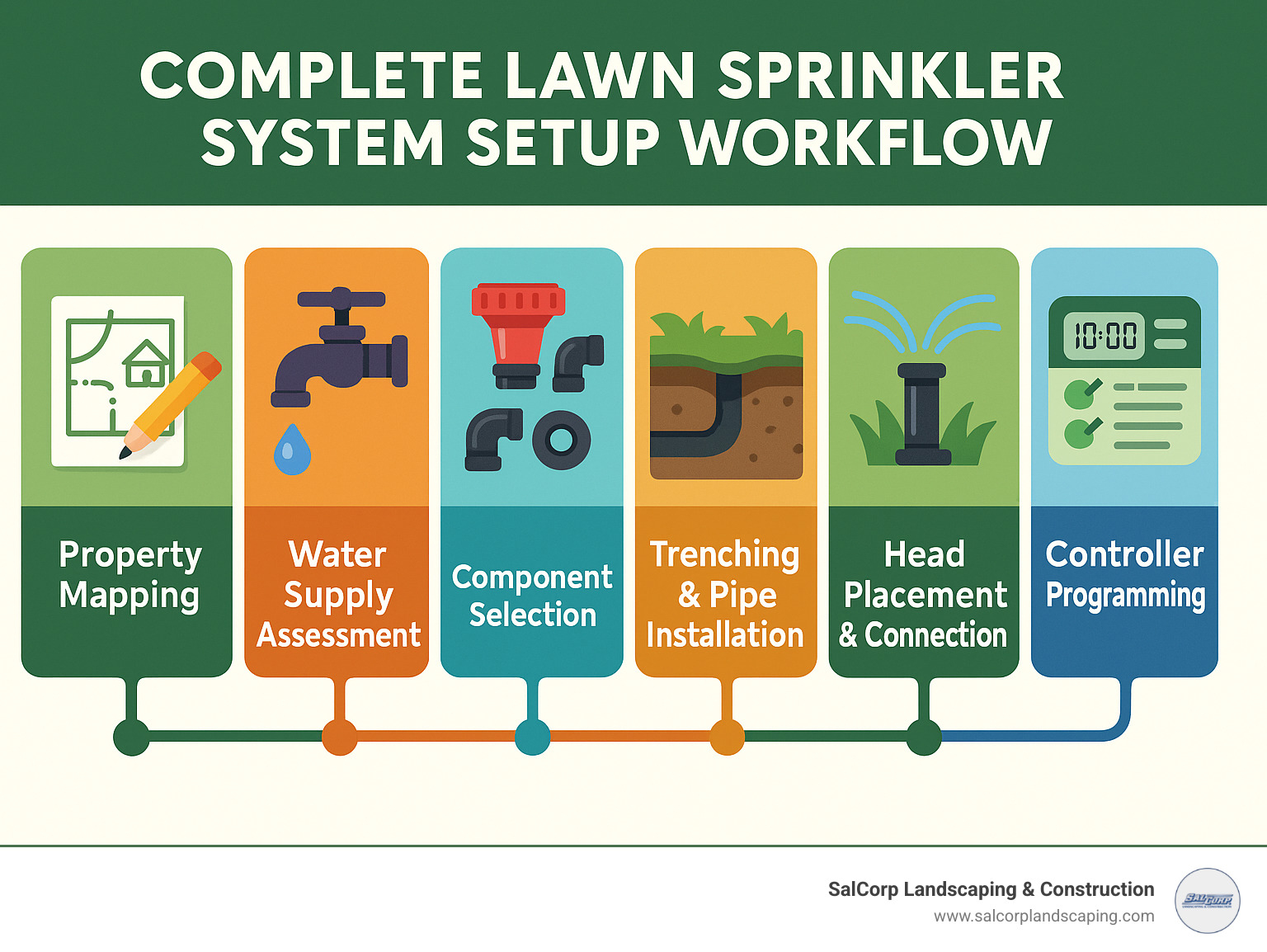
A complete lawn sprinkler system setup involves these key steps:
- Planning: Sketch your property, mark utilities, obtain permits
- Measuring: Test water pressure (40-60 PSI) and flow rate (10+ GPM)
- Designing: Map sprinkler head locations and create watering zones
- Installing: Dig trenches (6-12″ deep), lay pipes, install valves and heads
- Programming: Set up controller and adjust for optimal coverage
- Maintaining: Regular inspections and seasonal winterization
A lawn sprinkler system setup is one of the smartest investments you can make for your property’s health and appearance. When properly installed, an automatic irrigation system delivers precise amounts of water exactly where and when your lawn needs it, eliminating the hassle of manual watering while conserving resources and promoting lush, green growth.
“Automatic sprinklers are the best way to maintain a luxuriant setting while minimizing water use,” according to landscape professionals. Unlike haphazard manual watering, a well-designed sprinkler system ensures consistent coverage without waste.
While professional installation is always an option, many homeowners with basic DIY skills can tackle this project themselves. A typical two-zone system requires about 16-20 hours of work and provides years of reliable service when properly installed.
I’m Sal Musto, owner of SalCorp Landscaping & Construction, and I’ve overseen hundreds of lawn sprinkler system setup projects throughout Massachusetts, helping property owners achieve beautiful, efficiently-watered landscapes that thrive through every season.
Lawn sprinkler system setup terms simplified:
– designing underground sprinkler system
– installing underground irrigation systems
– lawn installation services
Getting Started with Your Lawn Sprinkler System Setup
Ready to transform your yard with a professional irrigation system? Let’s get you prepared for success! At SalCorp Landscaping & Construction, we’ve seen how a little planning saves homeowners from headaches down the road.
Before you dig that first trench, check with your local Massachusetts building department about permits. Most towns require them because you’re connecting to your home’s drinking water supply. This isn’t just red tape—it’s about keeping your family’s water safe with proper backflow prevention.
I remember a customer in Walpole who told me, “I thought permits were optional until the inspector spotted my half-finished system. That delay cost me weeks!” Don’t let that be you.
Your lawn sprinkler system setup scope will vary depending on your property size and features. For most homes, you’re looking at 2-4 watering zones, 10-20 sprinkler heads, a controller, backflow preventer, and valve manifold. Think of zones as different “rooms” in your yard—each with its own watering needs.
While professional installation guarantees expertise (and we’re happy to help!), many homeowners successfully tackle this project themselves. The average DIY cost typically ranges from $1,500-$4,500 for materials, compared to $3,000-$9,000 for professional installation based on internet estimates. The benefits are substantial: perfectly timed watering, water conservation, and that enviable lush, green lawn that makes neighbors stop and stare.
As one DIY enthusiast shared in a lawn care forum: “I had to remove the sprinkler guts to flush the system zone by zone. It was a bit of work, but it ensured no debris clogged the heads.” Little insights like these can make all the difference in your project.
Lawn Sprinkler System Setup Checklist
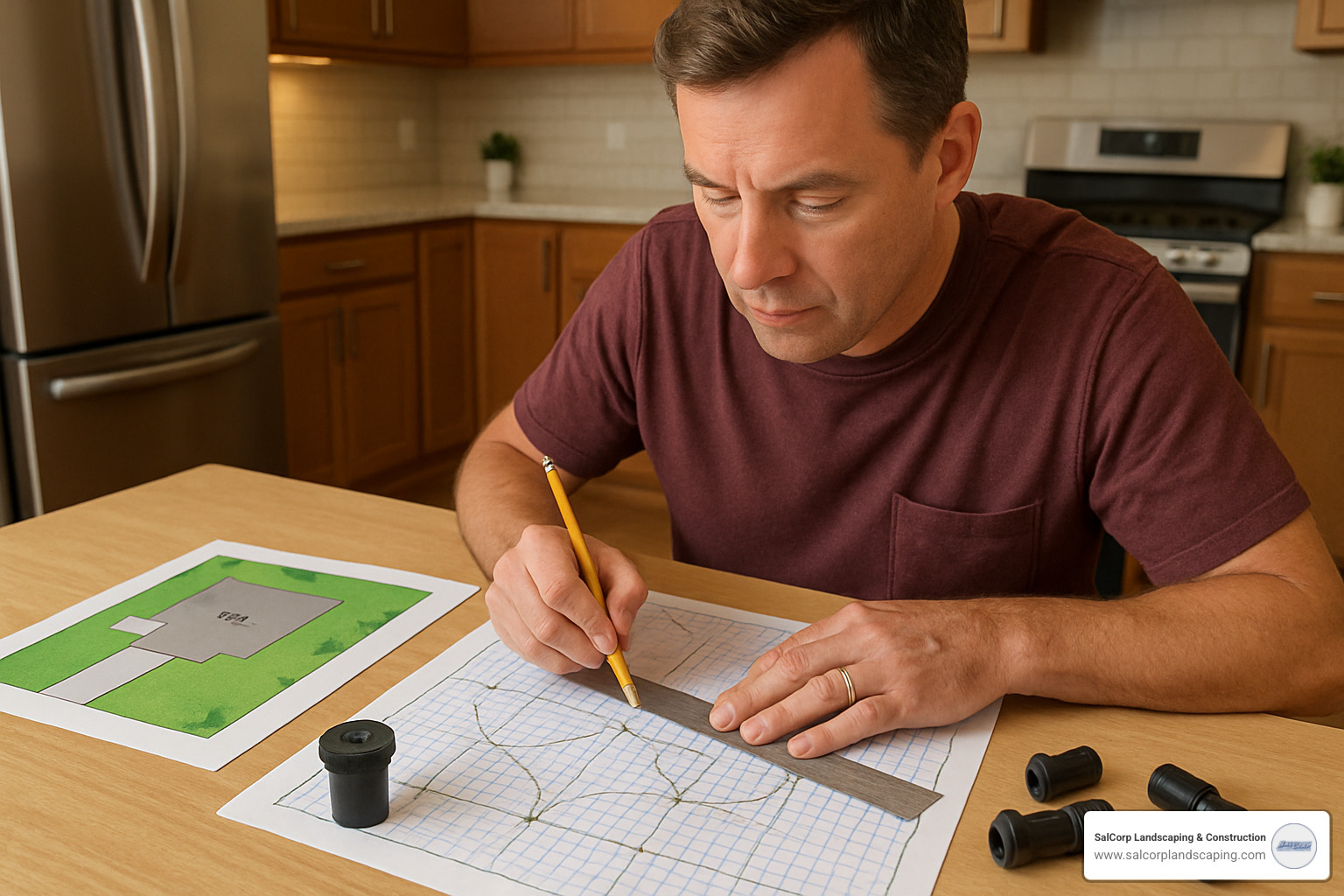
Start by creating a detailed property sketch on graph paper (1 inch = 10 feet works well). This becomes your blueprint for the entire project. Mark all landscape features, existing structures, and plant areas.
Next, determine your zone count based on your water pressure limitations and different landscape needs. Those hydrangeas need different watering than your Kentucky bluegrass!
For a successful lawn sprinkler system setup, gather essential tools: a trenching shovel or machine rental, PVC cutter, tape measure, pipe primer and cement, basic hand tools, wire strippers, and a pressure gauge. Most homeowners complete a two-zone system in 16-20 hours of work time, usually spread across a weekend or two.
Your materials list should include PVC or polyethylene pipe, fittings, sprinkler heads, valve boxes, a controller, valve wire, and that critical backflow preventer. Not sure exactly what you need? “Many manufacturers will custom-design a system layout based on a user-submitted sketch of property boundaries,” which can save you significant planning time.
Lawn Sprinkler System Setup Safety Tips
Safety isn’t just a suggestion—it’s essential for a successful installation. Always call 811 before digging. This free service marks underground utilities to prevent dangerous accidents. One homeowner in Walpole learned this lesson the hard way: “I skipped calling 811 and ended up hitting a buried cable. The repair cost more than my entire irrigation budget would have been.”
Follow local backflow codes carefully. These devices protect your drinking water from contamination—something we take very seriously at SalCorp.
In Massachusetts, where winter frost is a reality, dig trenches 8-12 inches deep to protect your system from freezing. Always wear protective gear including gloves, safety glasses, and sturdy footwear during installation.
When connecting your controller, follow proper electrical safety procedures and use waterproof wire connectors for underground connections. Water and electricity are a dangerous combination, so take your time and do it right.
With careful planning and attention to safety, your DIY lawn sprinkler system setup will provide years of trouble-free operation and a lawn that’s the envy of your neighborhood. And remember, if you hit a snag or decide you’d rather leave it to the professionals, SalCorp Landscaping & Construction is just a phone call away.
Planning & Design Essentials
Thoughtful planning is the foundation of an effective lawn sprinkler system setup. At SalCorp Landscaping, we start every irrigation project with a comprehensive yard evaluation.
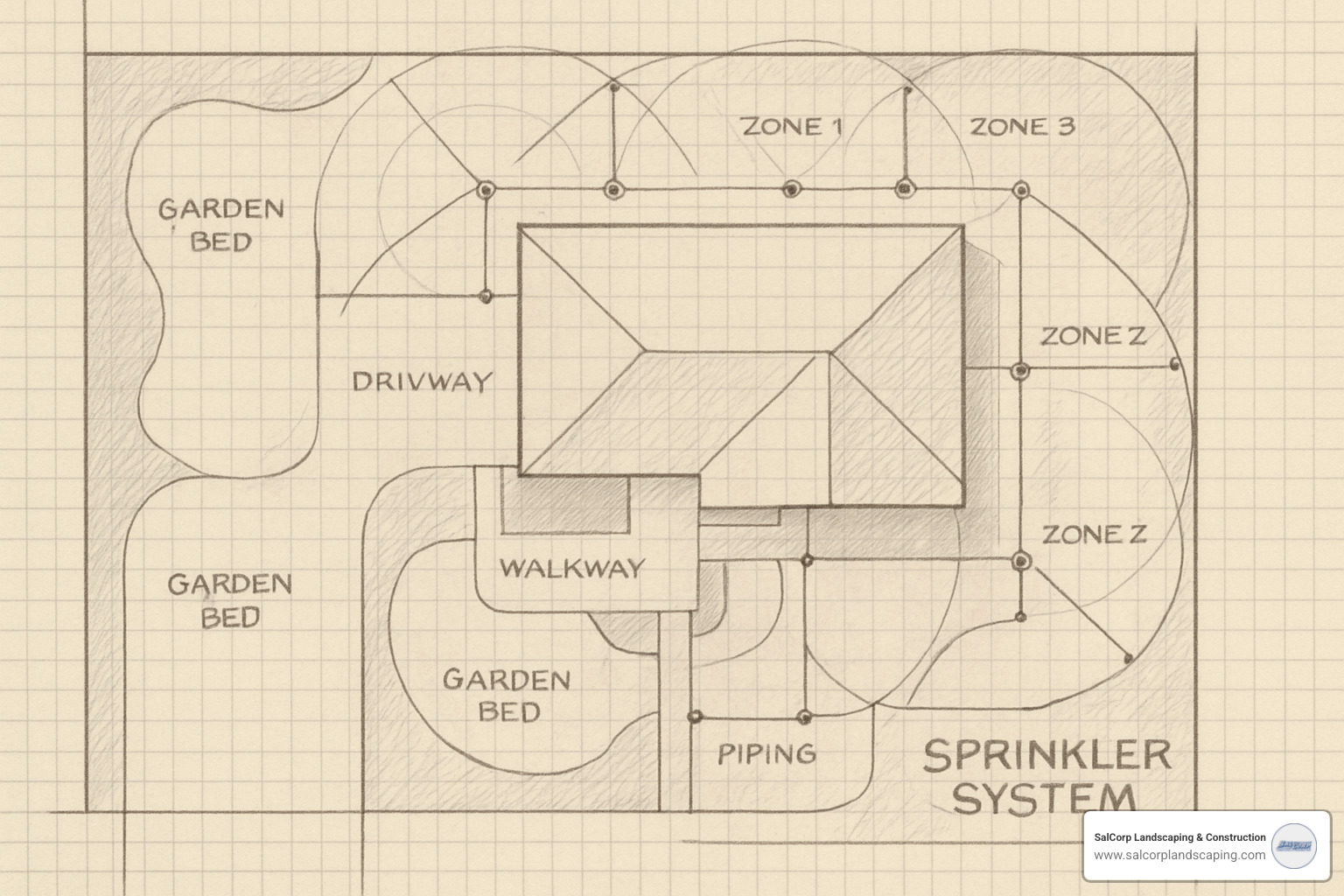
Begin by evaluating your property’s unique characteristics. Your yard shape and size is the canvas we’re working with, so take time to measure and sketch everything from your property boundaries to the house footprint and garden beds. Think about creating hydrozones – areas where plants with similar thirst levels live together. Your thirsty lawn and those drought-tolerant shrubs shouldn’t be on the same watering schedule!
Pay attention to sun/shade patterns across your yard. That sunny south-facing section bakes all day while the north side might barely see direct sunlight. Each needs different water amounts. Your soil type matters too – sandy soil drains faster than clay, which means different watering frequencies and durations. And don’t forget about slopes – water runs downhill (shocking, I know!), so sloped areas need special planning to prevent runoff.
For sprinkler placement, remember the “head-to-head” rule – each sprinkler should spray far enough to reach neighboring heads. This prevents those embarrassing brown patches that scream “amateur irrigation job!”
“I created multiple map versions on graph paper before trenching,” one Massachusetts homeowner told us. “The time spent planning saved me countless hours of rework during installation.”
Many homeowners find Rain Bird’s free design worksheet incredibly helpful. It guides you through creating a professional-quality plan without the professional-quality price tag. For more in-depth guidance, check out our guide on Installing Underground Irrigation Systems.
Measuring Water Pressure & Flow
Your water supply has limits, and knowing them is crucial to your lawn sprinkler system setup. Think of it like this: trying to run too many sprinklers with insufficient water pressure is like trying to feed ten hungry teenagers with one pizza – nobody’s happy and everything’s dry.
To measure water pressure, grab a pressure gauge from any hardware store (they’re inexpensive) and attach it to the outdoor faucet closest to your water meter. Make sure all water in your home is off, then turn the faucet on fully and note the PSI reading. For sprinkler happiness, you want between 40-60 PSI. Outside that range? You might need a pressure regulator or booster pump.
Water flow is just as important. The bucket test is delightfully simple: time how long it takes to fill a 5-gallon bucket from your outdoor faucet. If it takes 30 seconds, your flow rate is 10 GPM (gallons per minute). Most homes need at least 10-13 GPM for a typical system.
Your static pressure (water not flowing) will drop by 10-15% when the system runs. It’s like the difference between your resting heart rate and when you’re chasing your dog who stole your sandwich – things change when the system is working!
Mapping Zones & Head Layout
Now for the fun part – dividing your yard into irrigation zones. Each zone should contain sprinkler heads that play well together – similar water needs and coverage patterns.
When planning your lawn sprinkler system setup, space your pop-up spray heads about 10-18 feet apart depending on the nozzle. For larger lawns, rotor heads can stretch 25-35 feet apart. Your flower beds and vegetable gardens will thank you for drip irrigation – it’s like giving them a slow, efficient drink instead of a wasteful shower. And those awkward corners? Variable arc nozzles are your best friends.
A Massachusetts homeowner shared this gem: “I had to swap the nozzles on two of the 42SA’s on zone 3 because the low-angle nozzles couldn’t get across the ditch.” This highlights how important the right nozzle is for each unique situation.
Good zones don’t exceed your available GPM, use similar types of sprinkler heads, water similar plants, and account for sun/shade variations. One helpful trick is converting curved lawn edges into straight-line segments in your planning – your future self will thank you during installation.
Proper planning might feel tedious now, but it prevents the much more tedious task of digging up and relocating sprinkler heads later. As we like to say at SalCorp, measure twice, dig once!
Choosing Components That Last
When it comes to your lawn sprinkler system setup, the quality of components you select today determines how many headaches you’ll have tomorrow. At SalCorp Landscaping & Construction, we’ve seen how cutting corners on materials can lead to frustrating leaks and failures down the road.
Think of your irrigation system as a long-term investment in your property. The main components you’ll need to carefully select include sprinkler heads, pipes, valves, controllers, backflow preventers, and possibly drip irrigation components for garden areas. Each plays a crucial role in creating a system that works reliably season after season.
The irrigation pros I know have a saying: “Buy once, cry once.” While budget brands might look tempting at the register, experienced installers recommend sticking with established names like Rain Bird, Toro, or Hunter. The modest upfront savings from bargain components rarely justify the headaches and repair costs that often follow.
Picking the Right Sprinkler Heads
Sprinkler heads are the business end of your irrigation system, and selecting the right type makes all the difference in coverage quality and water efficiency.
Fixed spray heads are the workhorses of smaller lawn areas, typically covering 8-15 feet in radius. They pop up 2-4 inches when operating and deliver water in fixed patterns – full circle, half-circle, quarter-circle, or adjustable patterns. These are perfect for most standard residential lawns in Massachusetts communities.
For larger open spaces, rotor heads are your best friend. These clever devices rotate streams of water over a 25-40 foot radius, distributing water more efficiently across expansive areas. Most homeowners find these ideal for their main lawn areas, as they require fewer heads to cover the same space.
Your garden beds deserve special attention, which is where micro-spray and drip emitters shine. These low-volume precision tools deliver water right at the soil level, dramatically reducing evaporation and runoff while discouraging weed growth. One Massachusetts gardener told me, “My water bill dropped by 30% after switching my perennial beds to drip irrigation.”
For those tricky areas like narrow side yards or oddly-shaped corners, consider specialty nozzles like MP Rotators, which combine the efficiency of rotors with the flexibility of spray heads. Bubbler heads work wonderfully for tree wells, while strip nozzles are designed specifically for those challenging narrow spaces.
One DIY enthusiast shared a valuable lesson: “I had to remove the sprinkler guts to flush the system zone by zone. It was a bit of work, but it ensured no debris clogged the heads.” This highlights why choosing heads with easy maintenance access is so important, especially in our Massachusetts climate where seasonal maintenance is essential.
Key Valves, Backflow & Controllers
The control center of your lawn sprinkler system setup might not be the most glamorous part, but it’s certainly the brains of the operation.
Your valve manifold is where the magic happens – it’s the collection of valves that direct water to each irrigation zone. We recommend grouping these valves together in a valve box, ideally in an inconspicuous spot with the lid sitting flush with your lawn surface. Leave yourself at least 6 inches of clearance around each valve for future maintenance access, and make sure your valve box has proper drainage to prevent water pooling.
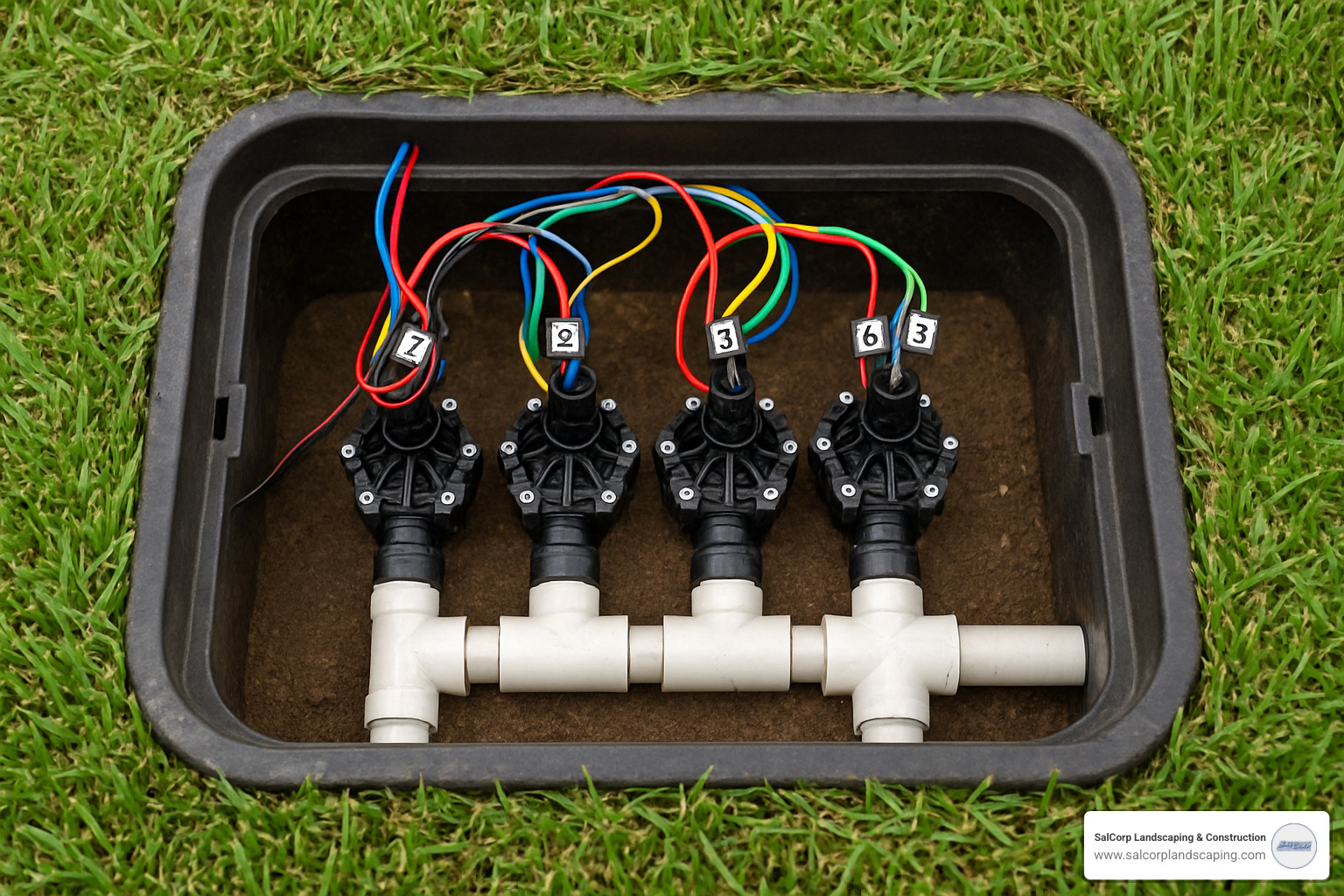
Backflow prevention isn’t optional in most Massachusetts towns – it’s required by law to protect your drinking water supply from potential contamination. Common types include Pressure Vacuum Breakers (PVB), Double Check Valve Assemblies (DCVA), and Reduced Pressure Principle Assemblies (RPZ). Each has specific installation requirements, so be sure to check your local plumbing codes before proceeding.
When it comes to controllers or timers, you have options ranging from basic to brilliant. Simple controllers allow programming of start times and durations for each zone. Smart controllers take things further by adjusting watering schedules based on weather data and soil moisture readings – many can reduce water usage by 20-30% compared to traditional timers. Wi-Fi enabled models let you control everything from your smartphone, even when you’re away from home.
A rain sensor is a small but mighty addition that automatically skips scheduled watering when Mother Nature is already handling the job. As one Walpole homeowner put it, “Nothing looks sillier than sprinklers running during a downpour – plus it’s a total waste of water.”
When wiring your controller, take a tip from the pros: label each zone wire clearly and leave extra wire length coiled in the valve box for future adjustments. Always use waterproof wire connectors for underground connections – the few extra dollars spent here can prevent frustrating electrical issues down the road.
Step-by-Step DIY Installation
Rolling up your sleeves for a lawn sprinkler system setup project can be incredibly rewarding. With your plans in hand and components selected, it’s time to bring your irrigation system to life. Most homeowners find that a small system takes a dedicated weekend, while larger properties might require several days of work.
The satisfaction of completing this project yourself is matched by the significant cost savings. According to industry estimates, a typical two-zone in-ground sprinkler system costs about $1,000 to $1,400 as a DIY project—considerably less than professional installation.
Think of your installation as a series of manageable steps: dig the trenches, install the control components, connect to your water supply, lay the pipes, install the sprinkler heads, wire everything together, and then test and adjust. Taking it one step at a time makes the project much less daunting.
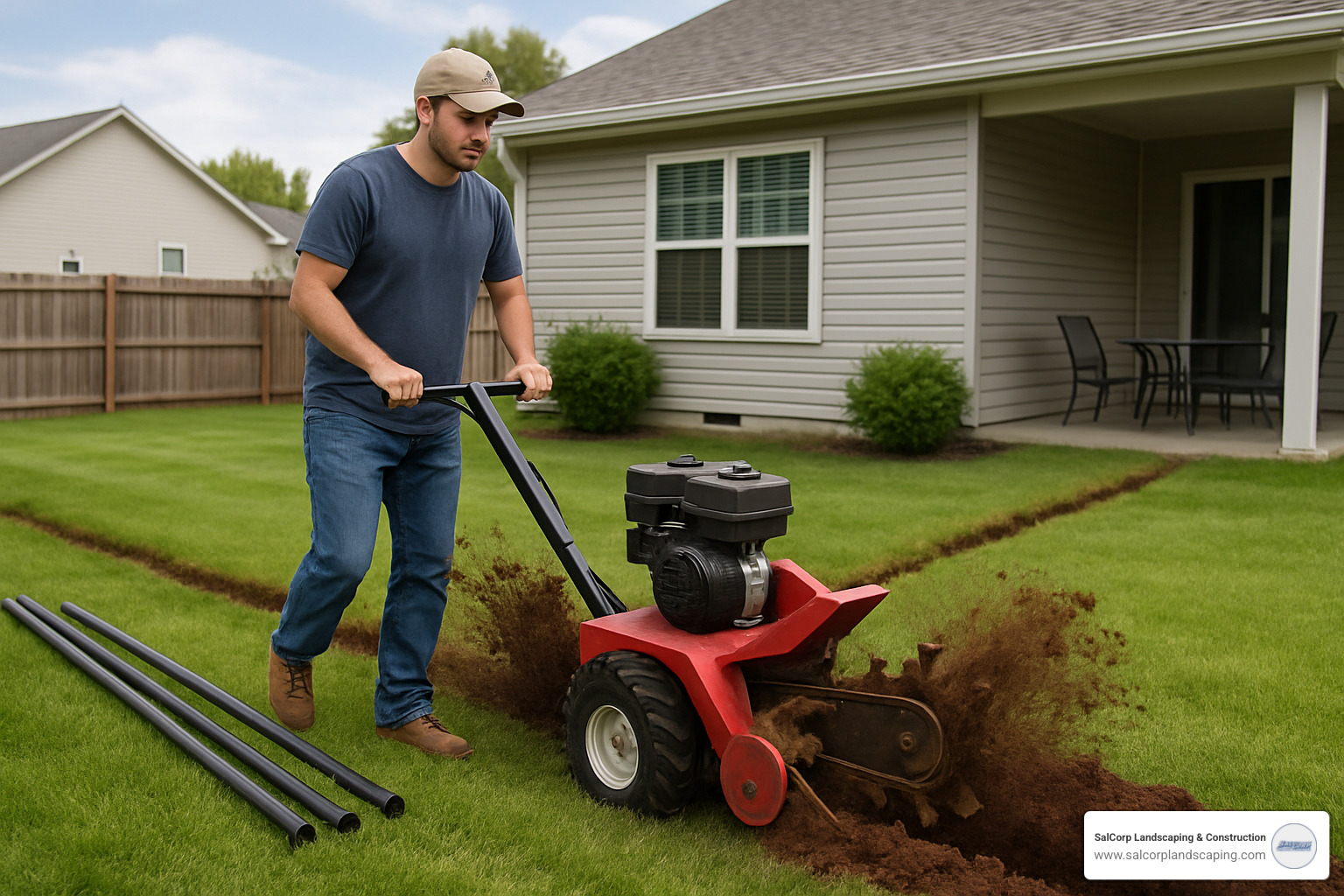
“I saved nearly $2,000 by installing my own system,” shared one Foxborough homeowner we worked with. “The trencher rental was worth every penny—most rental dealers will even drop off and pick up the machine for a small additional charge.”
Digging & Laying Pipe
Let’s be honest—trenching is the most physically demanding part of a lawn sprinkler system setup, but doing it right ensures your system will last for years to come.
For most DIY installers, renting a mechanical trencher makes the most sense. These machines can dig clean, consistent trenches in a fraction of the time it would take manually. For small areas or tight spots, a trenching shovel works well as a complement to the machine.
Here in Massachusetts, where winter freezing is a fact of life, we recommend trenching 8-12 inches deep to protect your investment from frost damage. This might seem excessive on a hot summer installation day, but you’ll thank yourself come January!
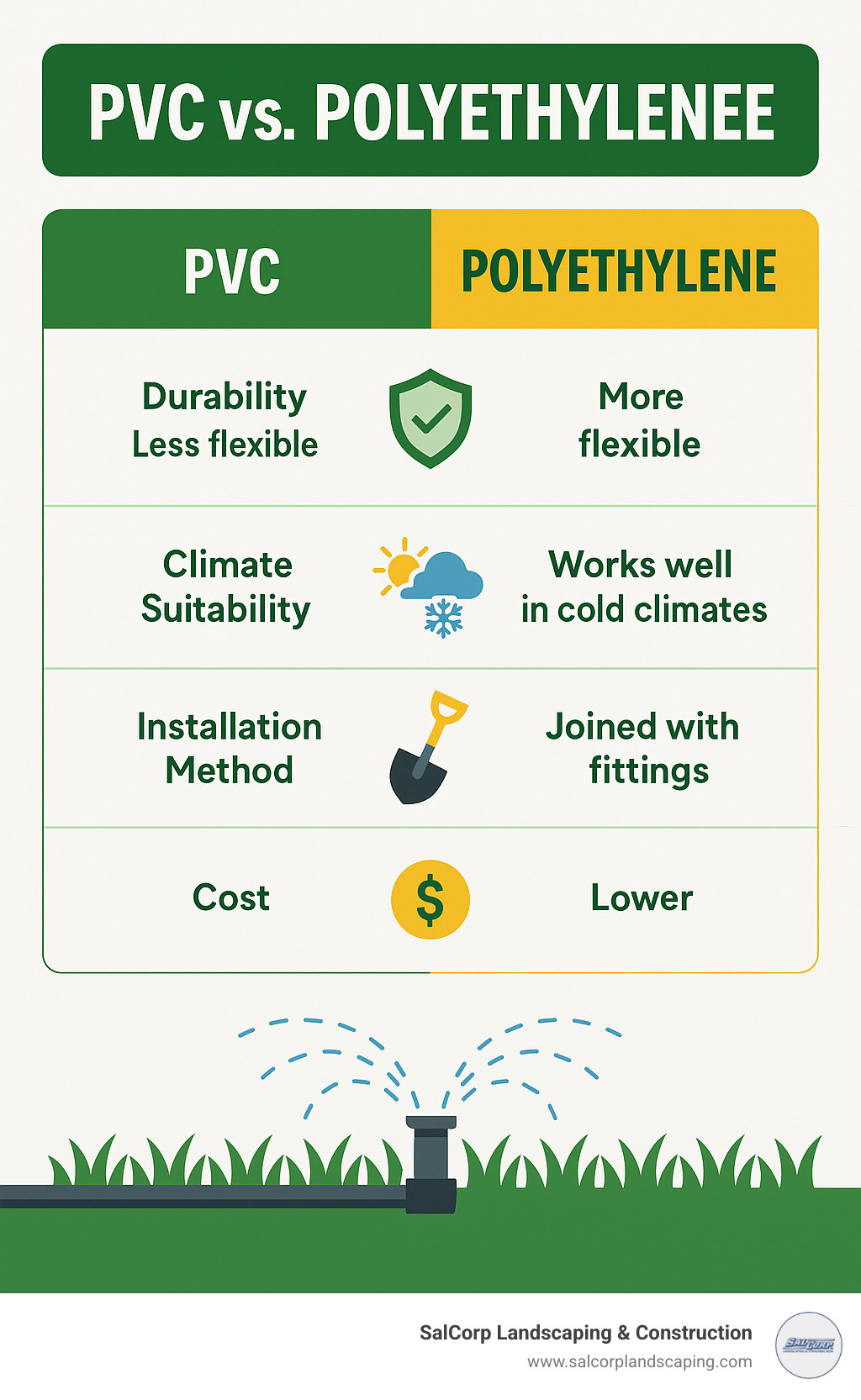
When it comes to pipe installation, schedule 40 PVC is our go-to recommendation for most Massachusetts installations. Working with PVC is straightforward—cut your pipes cleanly, apply primer to both pipe and fitting (the purple color shows inspectors you’ve done it right), then quickly apply PVC cement and join with a quarter turn. Hold the connection for about 20 seconds to ensure a proper bond.
“I placed a piece of landscape fabric under my pipes before backfilling the trenches,” shared a Walpole customer. “Three years later, I had to dig up one section to add a head, and there wasn’t a single weed root that had grown through the pipes.”
Don’t forget to install “swing joints” at each sprinkler head location. These flexible connections allow for adjustment during installation and prevent breakage if someone steps on a head later. It’s a small detail that makes a big difference in system longevity.
Connecting to Water Supply Safely
Tapping into your home’s water supply can feel intimidating, but with proper preparation, it’s manageable for most DIYers with basic plumbing experience.
You have two main options: connecting to an outdoor faucet (simplest but limits pressure and flow) or tapping directly into your main water line (provides maximum performance but requires more skill).
Many of our Massachusetts customers opt for a hybrid approach—handling most of the installation themselves but calling in a professional plumber for the water supply connection. This compromise still saves significant money while ensuring the critical connection is done properly.
If you’re connecting to the main line yourself, start by shutting off your home’s main water supply. Cut into the water line with appropriate tools, then install a brass tee fitting compatible with your existing plumbing. Always include a dedicated shut-off valve for your irrigation system—you’ll appreciate this when winterizing or making repairs.
From there, install your backflow prevention device according to local Massachusetts codes. This is non-negotiable and often subject to inspection, so don’t cut corners here. The device prevents irrigation water from flowing back into your drinking water supply.
“The plumber charged me $200 to tap into my main line,” one Medfield homeowner told us. “Considering the peace of mind and time saved, it was money well spent—and I still completed the rest of the system myself.”
Flushing, Testing & Fine-Tuning
Before you close up those trenches, proper testing is essential to ensure your lawn sprinkler system setup operates efficiently. Think of this as the quality control phase of your project.
Begin by flushing debris from the system. This simple step prevents countless headaches later. Before installing your sprinkler heads, cap all but the furthest opening on each zone, then run water through the pipes for 2-3 minutes. You’ll be surprised at the amount of dirt and debris that comes out!
Once you’ve installed all heads, run each zone while carefully inspecting all connections for leaks. Small drips now can become major problems later, so mark any issues with flags and repair them immediately. Check that each head pops up properly and retracts fully when the water stops.
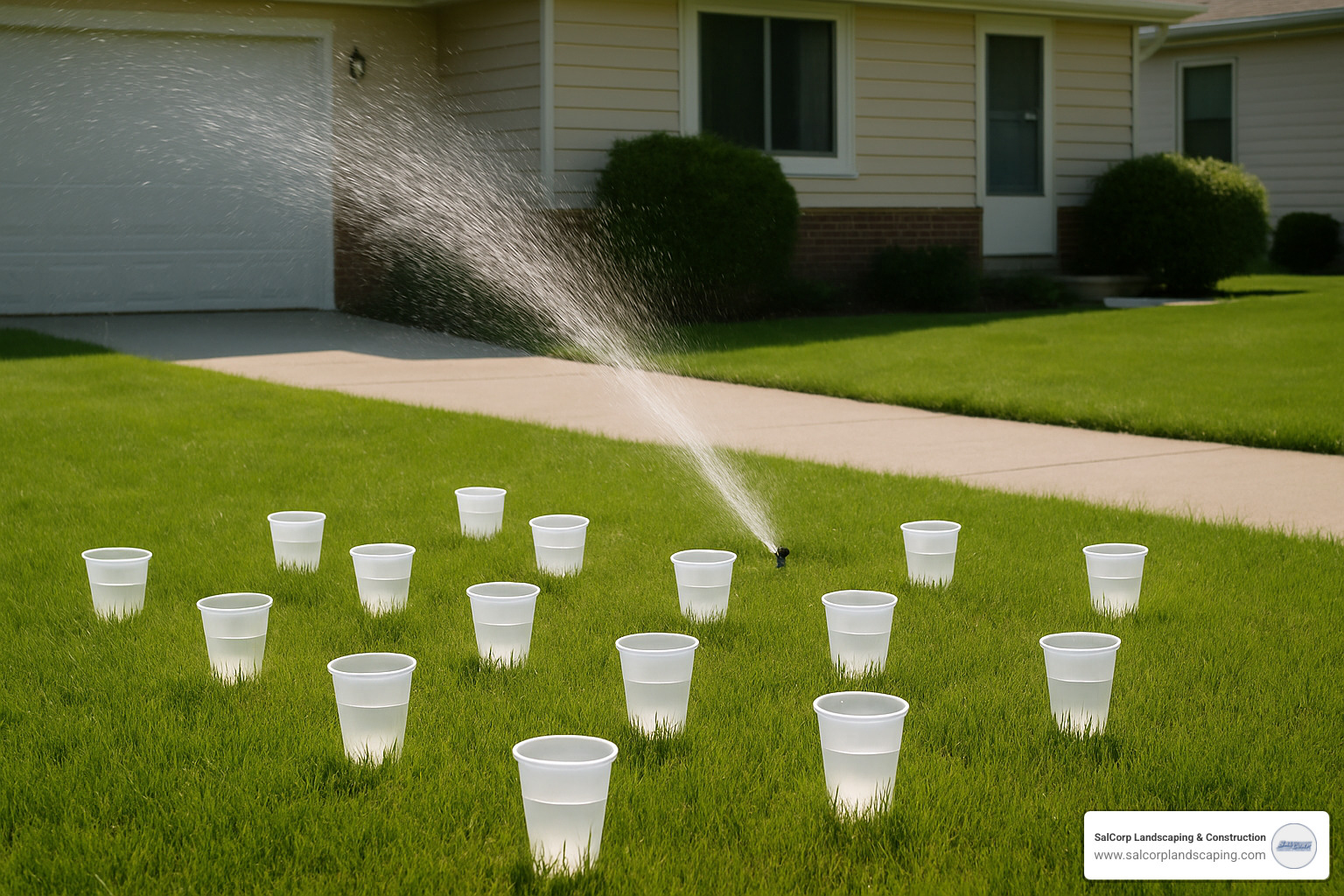
Fine-tuning your coverage is where art meets science. Adjust each head’s arc and radius to ensure consistent watering without wasteful overspray onto hardscapes. Most heads adjust easily with a small screwdriver or specialized tool included with your heads.
“I placed plastic cups across my lawn and ran the system for 15 minutes,” shared a customer from Sharon. “Measuring the water in each cup showed me exactly where I needed to adjust my sprinkler heads for more even coverage.”
For truly optimal results, make these adjustments:
– Position spray patterns to avoid watering sidewalks and driveways
– Confirm rotors are set to the appropriate arc for their location
– Ensure pop-up heads rise fully above your grass height
– Check for head-to-head coverage without excessive overlapping
Once everything is properly adjusted, backfill your trenches carefully, tamping the soil gently as you go to prevent future settling. Water the filled trenches lightly to help the soil settle naturally before adding the final layer of topsoil and seed.
Programming, Maintenance & Seasonal Care
Proper programming and regular maintenance are essential to maximize the benefits of your lawn sprinkler system setup. In Massachusetts, our distinct seasons require adjustments throughout the year.
Basic programming guidelines:
– Water deeply but infrequently to encourage deep root growth
– Program early morning watering (4-7 AM) to minimize evaporation
– Adjust watering duration based on:
– Season (less in spring/fall, more in summer)
– Precipitation
– Soil type
– Plant needs
Most residential controllers allow you to set:
1. Start times (when watering begins)
2. Run times (how long each zone operates)
3. Days to water (which days of the week)
“Smart WiFi controllers substantially simplify programming for sun and shade variations,” allowing automatic adjustments based on weather data without manual reprogramming.
Annual maintenance checklist:
– Spring: System activation and testing
– Summer: Monthly head cleaning and adjustment
– Fall: System winterization before first freeze
– Winter: Controller and component inspection
For Massachusetts properties, proper winterization is critical to prevent freeze damage. This typically involves:
1. Shutting off the water supply to the irrigation system
2. Blowing out all water from pipes using an air compressor
3. Setting the controller to “rain” or “off” mode for winter
Boosting Water Efficiency
An efficient lawn sprinkler system setup conserves water while maintaining a healthy landscape. These strategies can significantly reduce water consumption:
- Implement hydrozones: Group plants with similar water needs together and create dedicated irrigation zones for each.
- Install drip irrigation: Convert spray zones to drip irrigation in garden beds and around trees to deliver water directly to plant roots.
- Use cycle-soak programming: Instead of one long watering session, program multiple shorter cycles with soak time in between to prevent runoff.
- Apply mulch: Cover drip irrigation lines and plant beds with at least 4 inches of bark mulch to reduce evaporation.
- Install smart technology:
- Weather-based controllers
- Soil moisture sensors
- Rain sensors
- Flow sensors to detect leaks
“Low-volume drip irrigation is a great solution for delivering the right amount of water to varied plant types,” according to irrigation experts. This approach can reduce water usage by up to 50% compared to traditional sprinklers for non-turf areas.
In Massachusetts communities with water restrictions, these efficiency measures can help maintain your landscape while complying with local ordinances.
Troubleshooting Common Issues
Even well-designed irrigation systems occasionally encounter problems. Here are solutions to common issues with your lawn sprinkler system setup:
Dry spots in lawn:
– Check for obstructed spray patterns
– Verify head-to-head coverage
– Adjust head alignment and arc
– Consider adding heads if coverage is inadequate
Low pressure/poor spray:
– Look for leaks in the system
– Check for too many heads per zone
– Clean clogged nozzles or filters
– Verify proper water pressure at source
Clogged sprinkler heads:
– Remove the nozzle and clean with water
– Check and clean internal filters
– Flush the system to remove debris
– Replace damaged heads
Valve problems:
– Listen for “chattering” valves that don’t fully open
– Check solenoid connections
– Look for debris preventing proper valve closure
– Inspect diaphragms for damage
Electrical issues:
– Test controller output with a multimeter
– Check for cut or damaged wires
– Verify proper grounding
– Replace faulty solenoids
“I had to swap the nozzles on two of the 42SA’s on zone 3 because the low-angle nozzles couldn’t get across the ditch,” shared one homeowner, demonstrating how simple adjustments can often solve coverage problems.
Regular inspection and prompt repairs prevent small issues from becoming major problems that could damage your landscape.
Frequently Asked Questions about Lawn Sprinkler System Setup
What permits or inspections do I need?
Navigating the permit process is often the most confusing part of a lawn sprinkler system setup for homeowners. Here in Massachusetts, most towns and cities require some form of official paperwork before you start digging.
Typically, you’ll need a plumbing permit for the backflow prevention device—this protects your drinking water from contamination, so towns take it seriously. You might also need an electrical permit if you’re hardwiring your controller rather than using a plug-in model.
Many Massachusetts communities require a post-installation inspection of the backflow preventer to ensure it’s properly installed. Some water districts even mandate annual testing of these devices to verify they continue working correctly.
“I skipped getting permits for my system and ended up with a stop-work order halfway through installation,” shared one Framingham homeowner. “The delay and re-inspection fees cost me more than if I’d just done it right from the start.”
Before purchasing a single component, I always recommend calling your local building department. Some towns allow DIY installation of everything except the backflow preventer, which must be installed by a licensed plumber. A quick phone call can save you significant headaches down the road.
How much does a typical DIY system cost?
The investment for a lawn sprinkler system setup varies widely depending on several factors. Property size, zone count, component quality, and special features like smart controllers all impact your total cost.
For a typical Massachusetts home with a 2,500 square foot lawn needing two irrigation zones, you might expect these approximate costs:
Your basic components—pipes, fittings, valves, and sprinkler heads—generally run $400-600. Controllers range widely from $50 for a basic model to over $350 for advanced smart systems that adjust watering based on weather forecasts. A quality backflow preventer typically costs $75-200, and you’ll need about $100-250 for tools and miscellaneous supplies if you don’t already have them.
All told, most DIY systems for average-sized properties fall between $625-1,400 in materials. Professional installation through a company like ours includes not just materials but also expert design, professional-grade components, and labor—making it a different value proposition entirely.
“I saved about two-thirds the cost by installing myself,” one Walpole resident told me, “but it took me three weekends instead of the one day professionals would have needed.” Consider both your budget and your time when deciding between DIY and professional installation.
How deep should I bury sprinkler lines?
Here in Massachusetts, proper burial depth for irrigation lines is crucial because of our freeze-thaw cycles. Installing lines too shallow can lead to cracked pipes when winter temperatures plunge.
For main supply lines carrying water to your valve manifolds, aim for 12-18 inches below grade. These carry water constantly when the system is active and are most vulnerable to freezing damage. Lateral lines—those running from valves to individual sprinkler heads—can be installed at 6-12 inches deep in most Massachusetts communities.
Your valve boxes should be installed with their lids flush to the grass surface—deep enough to avoid damage from lawn mowers but accessible enough for maintenance.
“I buried my lines at 8 inches in Sharon and never had a freeze issue in 15 years,” one longtime customer told me. “The key is proper winterization each fall.”
Indeed, if you’re planning to winterize your system by blowing it out with compressed air each fall (which is absolutely essential in our climate), standard depths are generally sufficient. When in doubt, go deeper rather than shallower—the extra digging effort provides peace of mind through our unpredictable New England winters.
Different soil types may have different requirements. Clay soils transmit frost deeper than sandy soils, so consider your property’s specific conditions when planning your lawn sprinkler system setup.
Conclusion
A properly executed lawn sprinkler system setup transforms your property while saving time, water, and effort. The satisfaction of watching your lawn thrive with minimal hands-on watering is truly one of the great joys of homeownership. When your system is dialed in perfectly, you’ll wonder how you ever managed without it.
The benefits extend far beyond just convenience. Your landscape will flourish with consistent, even watering that promotes deeper root growth and healthier plants. Those automatic timers ensure watering happens in the early morning hours when it’s most effective—something most of us aren’t willing to do manually! Plus, your carefully designed zones deliver precisely the right amount of water to different areas of your yard, eliminating both wasteful overwatering and stressed, underwatered plants.
Here in Massachusetts, we face unique challenges with our climate swings. From scorching summer days to deep winter freezes, your irrigation system needs to be thoughtfully designed for our specific conditions. That’s where experience really matters.
I’ve seen countless homeowners transform their struggling yards into lush, vibrant landscapes thanks to properly installed sprinkler systems. The pride that comes from a beautifully maintained property is hard to overstate—and the water savings over manual watering can be substantial when using modern, efficient components.
If you’re considering professional installation or just need some guidance on your DIY project, SalCorp Landscaping & Construction has been serving communities throughout Massachusetts for over 20 years. As an owner-operated business, you’ll work directly with experienced professionals who understand local conditions and codes—not a rotating crew of unfamiliar faces.
We take pride in providing personalized attention to every project, whether it’s a simple sprinkler system or a complete landscape change. Our expertise ensures your system will perform reliably year after year, through all our New England seasons.
For more information about professional lawn installation services, visit our lawn installation services page or contact us for a consultation. We’re your single call for professional guidance in Massachusetts, from Boston to Cape Cod and throughout the communities we serve.
