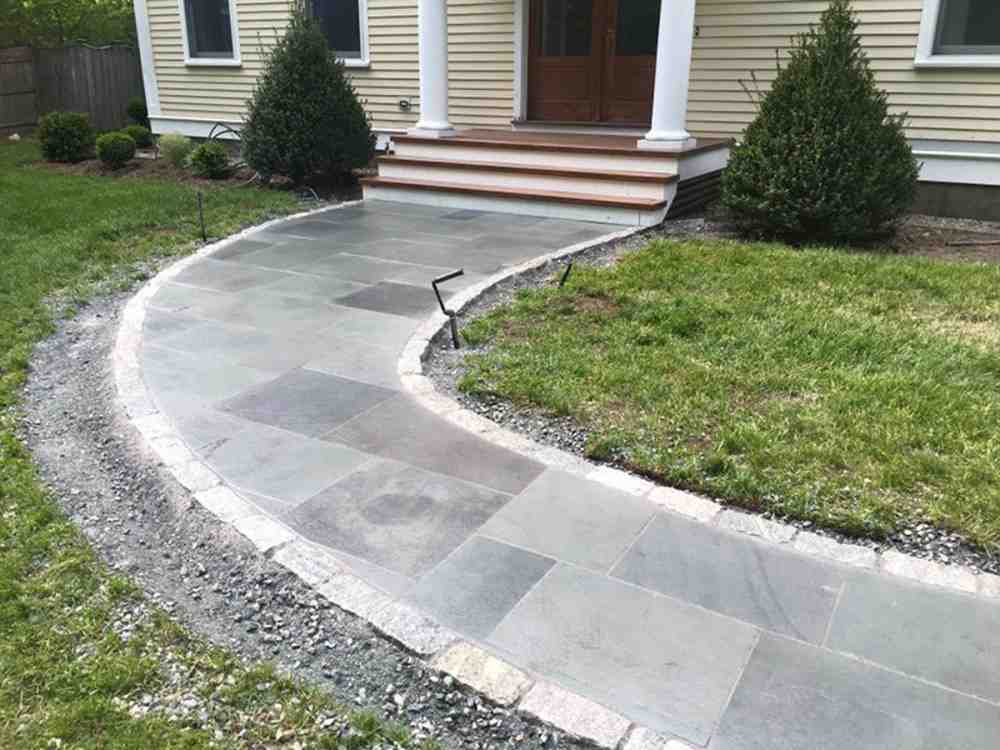
Retaining Wall Blocks: Best Options 2025
More Than Just a Wall: The Foundation of Your Landscape
Retaining wall blocks are more than just barriers; they’re the foundation of functional landscape design. These versatile units create usable outdoor spaces, prevent erosion, improve property aesthetics, and can significantly boost your property value.
Key Functions of Retaining Wall Blocks:
- Soil Retention – Hold back earth on sloped terrain
- Space Creation – Transform unusable slopes into level areas
- Erosion Control – Protect your landscape from water damage
- Property Improvement – Add structure and visual appeal
- Structural Support – Enable construction on challenging sites
Whether you’re dealing with a steep backyard or need to add an outdoor kitchen to a sloped area, the right retaining wall blocks make these projects possible. Modern block systems offer incredible versatility, from simple gravity walls under 4 feet to engineered reinforced systems that can reach heights of 50 feet or more when properly designed.
The key is choosing blocks that match your specific needs. Concrete modular blocks offer cost-effective versatility, while natural stone provides best beauty but requires a higher investment.
As Sal Musto, owner of SalCorp Landscaping & Construction, I’ve spent two decades installing countless retaining wall blocks across Massachusetts. I know that the right block choice and proper installation are the difference between a wall that lasts for decades and one that fails within years.
Must-know retaining wall blocks terms:
A Roundup of the Best Retaining Wall Blocks by Material
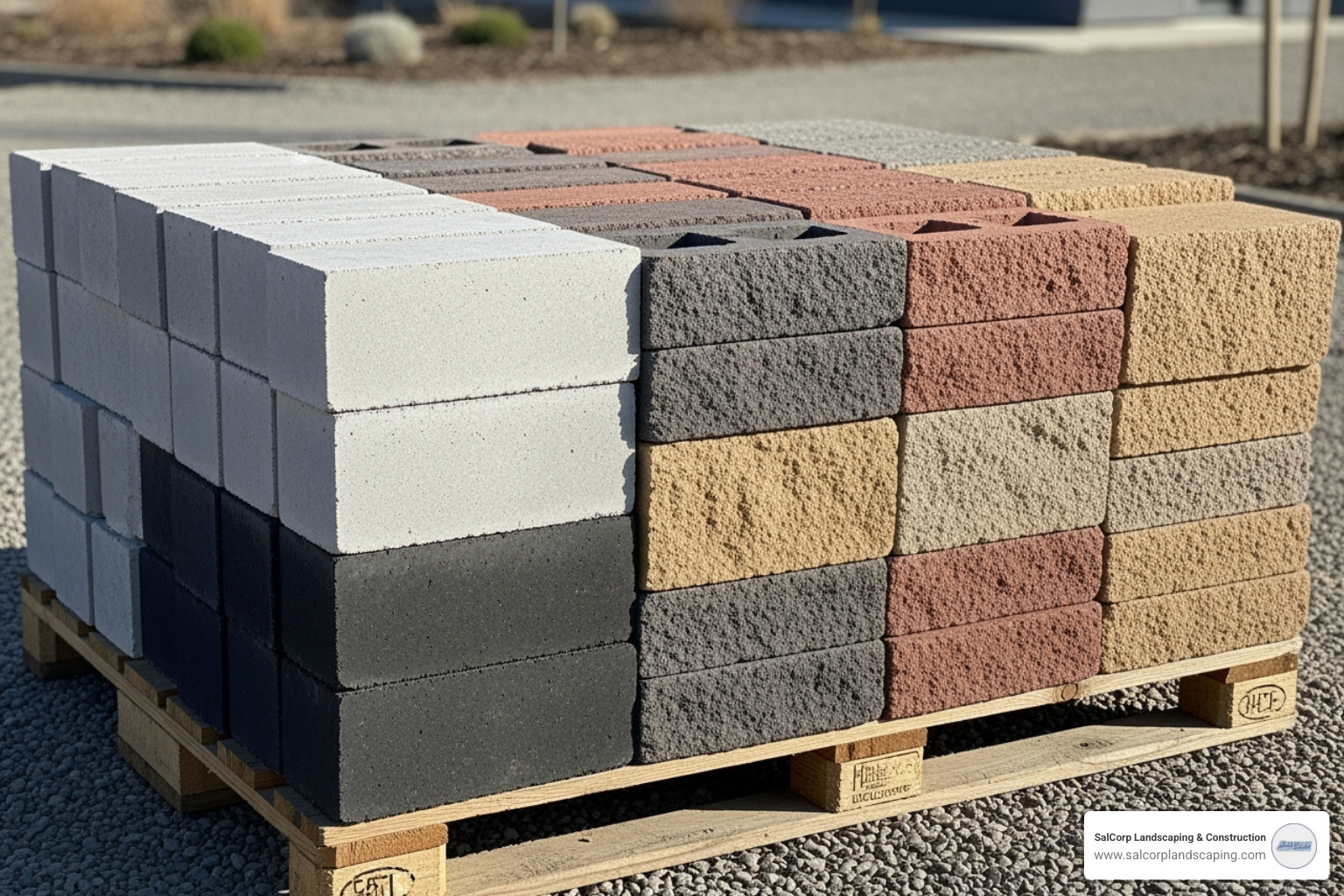
With two decades of experience installing walls in Massachusetts, I know that your choice of retaining wall blocks is crucial. The right material creates a beautiful, lasting feature that boosts property value.
Your choice depends on three main factors: durability, aesthetics, and project suitability. A simple garden terrace has very different needs than a tall commercial retaining wall. Whether you prefer the precision of concrete or the timeless beauty of natural stone, let’s review the most popular options we use in Massachusetts.
To dive deeper into matching wall types to your specific needs, check out our comprehensive guide: The Different Types of Retaining Walls and How to Choose the Right One.
Concrete Modular Blocks

Concrete modular retaining wall blocks are my top recommendation for versatility and reliability. These engineered blocks feature smart designs that make installation faster and more precise.
Their connection systems are key. Interlocking systems lock blocks together without mortar. Pinned systems use pins to connect courses and set the wall angle. Rear-lip systems have molded lips that create the correct setback automatically.
These blocks are cost-effective, especially for large projects, and highly versatile. They come in many colors, textures, and sizes that can mimic natural stone. Their easy installation is a major benefit for professionals and ambitious DIYers.
Performance-wise, they offer high compressive strength (often over 5000 PSI) and the freeze/thaw resistance needed for Massachusetts winters. The main drawback is that they can look manufactured, but modern texturing makes many nearly indistinguishable from real stone at a lower cost.
For detailed guidance on working with these versatile systems, visit our Block Wall Builder resource page.
Natural Stone Blocks
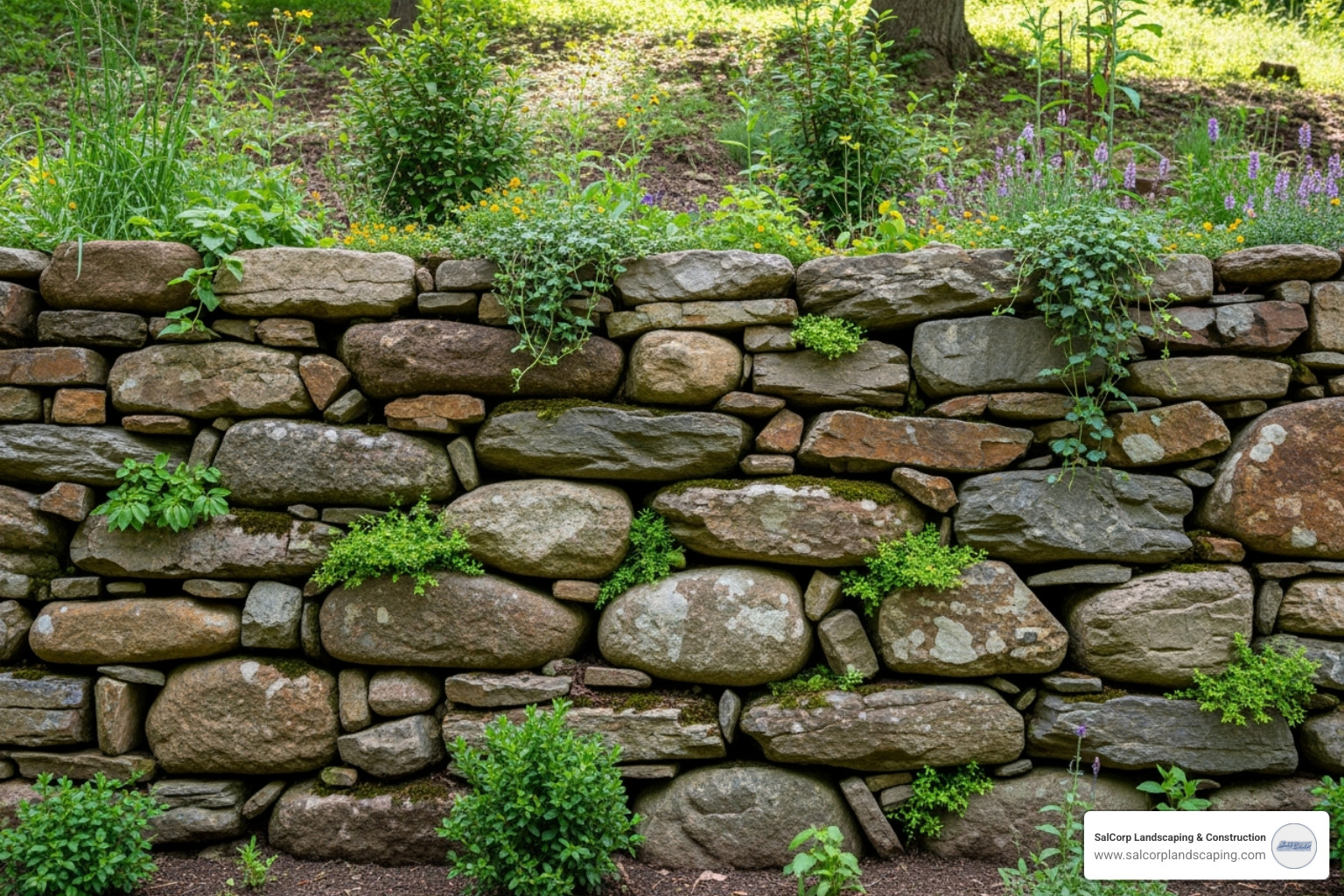
For timeless elegance, nothing beats natural stone retaining wall blocks. They provide an authentic beauty that looks like it has been part of the landscape for generations. Granite offers hardness and varied colors. Sandstone provides earthy tones and natural texture. Fieldstone delivers rustic charm with its irregular shapes.
The pros include unique beauty, as no two walls are identical, and extreme durability that can last for centuries. Its timeless appeal only improves with age. Stone walls also blend seamlessly into landscapes, which is ideal for naturalistic settings.
The cons are higher costs for materials and labor. The irregular shapes require skilled, intensive labor, making installation more challenging and time-consuming.
Despite these considerations, natural stone creates heirloom-quality walls. See examples of our natural stone work on our Landscape Walls page.
What to Consider with Retaining Wall Blocks Aesthetics
The aesthetics of your retaining wall blocks go beyond material choice. Texture, color, and pattern can turn a functional wall into a stunning centerpiece.
Texture defines a wall’s personality. Split-face offers a rugged look, tumbled finishes create a weathered appearance, and smooth faces provide clean, modern lines.
Color options are vast. Earth tones suit traditional homes and blend with the landscape. Gray palettes are sophisticated and versatile. Blended colors mimic the natural variations of quarried stone.
Patterns add another design layer. Alternating colors or textures, adding accent bands, or building curves and columns can lift a simple wall into an architectural feature.
The goal is selecting retaining wall blocks that perform structurally while enhancing your property’s visual appeal. For inspiration, explore our Landscape Walls Hopkinton MA showcase.
Understanding the Cost of Retaining Wall Blocks
Budgeting for a retaining wall involves more than just the cost of the retaining wall blocks. Material cost is only one part of the equation.
- Material costs: Standard concrete blocks are the most budget-friendly, while premium and natural stone blocks cost more.
- Labor costs: Covers excavation, base prep, block laying, and drainage. Natural stone is more labor-intensive than modular concrete systems.
- Site preparation: Costs increase with difficult site conditions like rocky soil or tight access.
- Engineering fees: Required for taller walls (often over 3-4 feet) to ensure structural integrity and code compliance.
- Permit costs: Vary by town and are usually required for walls over a certain height.
Please note: Prices mentioned are national averages based on internet data and are not actual costs for SalCorp Landscaping & Construction. For accurate quotes custom to your specific Massachusetts project, contact us directly.
Nationally, installed retaining wall blocks typically range from $30 to over $100 per square foot. This wide range reflects the diverse options and complexities involved, from simple garden walls to tall, engineered walls with premium materials.
For large-scale projects, explore our Commercial Retaining Walls capabilities.
Understanding Retaining Wall Systems
Choosing the right retaining wall blocks is only the first step. Understanding the different retaining wall systems is the key to success, as each is designed for specific situations.
Your choice of system depends on wall height, soil type, and site conditions. Structural integrity is paramount when holding back tons of earth. Understanding these systems upfront saves time and money, as each is engineered to handle specific lateral earth pressures.
For a deeper dive into the technical aspects of these systems, learn about retaining wall systems from industry experts.
Gravity Walls
Gravity walls are simple and effective systems that rely on the mass of the blocks to resist soil pressure. Their simplicity means no reinforcement is needed, making them ideal for shorter walls (typically under 4 feet). This leads to simple construction, faster installation, and lower costs.
Most systems use a batter setback, a slight backward lean that increases stability and helps resist overturning forces. They are excellent for landscape applications like garden beds and small terraces and are often suitable for DIY projects.
Reinforced Walls
For taller walls, reinforced systems are the solution. They combine retaining wall blocks with geogrid fabric, a high-strength polymer mesh that acts as a soil anchor. The geogrid creates a reinforced soil mass, an integrated unit that is much stronger than the wall alone.
This increased strength allows walls to reach heights of 50 feet or more when properly engineered. This makes them ideal for commercial projects and major grade changes. These tall walls require professional engineered design to ensure structural integrity and are not suitable for DIY projects.
Retaining Walls vs. Freestanding Walls
It’s important to understand the difference between retaining walls and freestanding walls to avoid over- or under-building a project.
Retaining walls are structural, designed to hold back soil on one side. They require robust foundations, drainage, and often engineering for taller installations.
Freestanding walls are primarily decorative, built on flat ground to define spaces or create seating walls. Both sides are visible, and they only need to support their own weight.
Construction differs significantly. Retaining walls need extensive drainage and deep foundations, while freestanding walls have simpler requirements. Use a retaining wall to hold back a slope and a freestanding wall for decoration on flat ground. Both can use the same beautiful retaining wall blocks, but their engineering is different.
Critical Design & Installation Factors for a Wall That Lasts
A beautiful retaining wall needs a solid foundation to last. Proper installation is vital for longevity, effectiveness, and safety. At SalCorp, we’ve seen the results of cutting corners. We emphasize professional engineering and meticulous construction with retaining wall blocks to guarantee a wall that stands for decades.
Foundation and Leveling Pad
The most important step in building a stable retaining wall is creating a solid foundation.
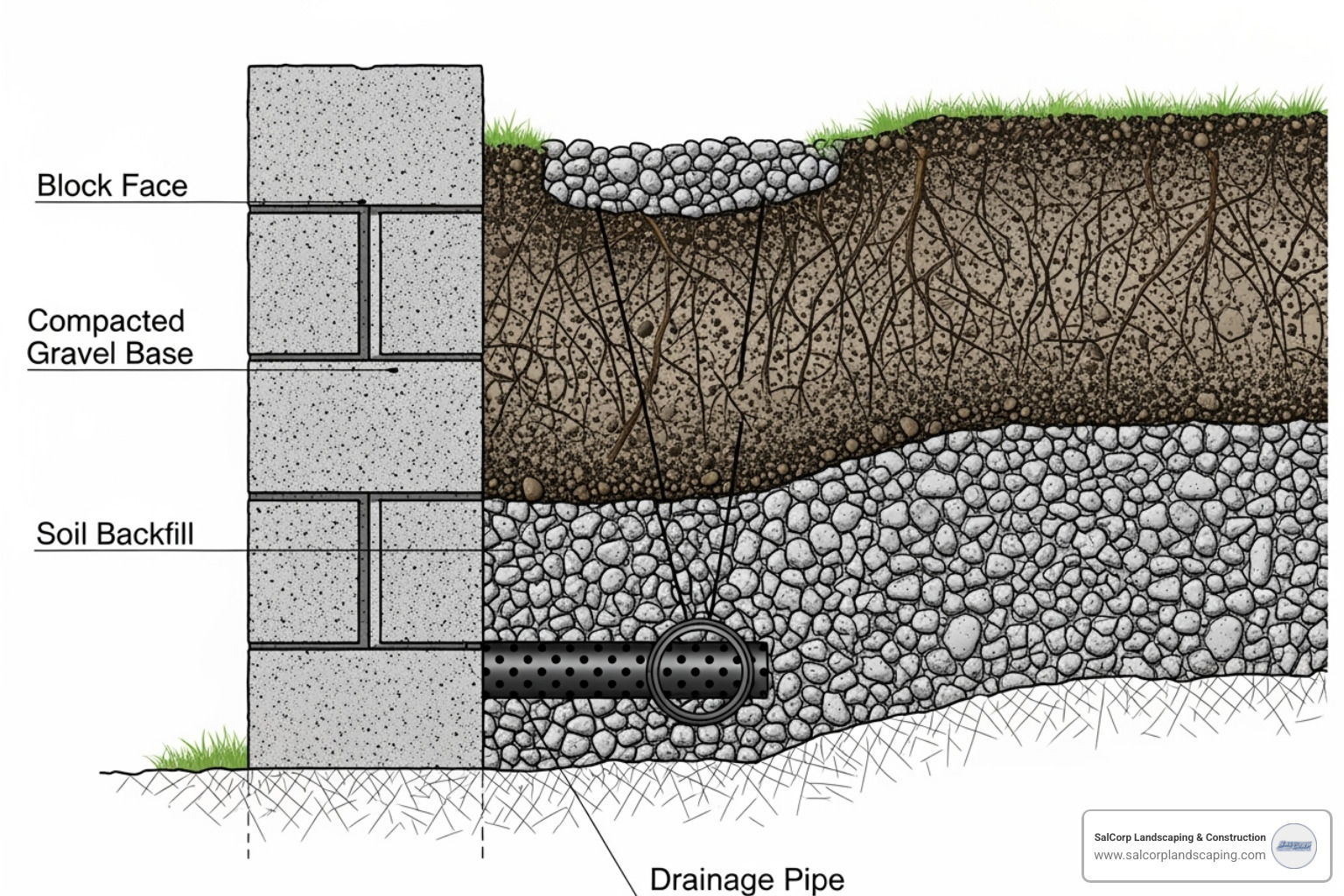
Excavation to the correct depth is the first step. This allows room for the foundation and for burying the first course of blocks, which adds stability. Next, a 6- to 12-inch compacted gravel base is installed in the trench. This creates a firm, level, and well-draining base to prevent settling.
The first course of blocks is then laid on the compacted gravel. It must be perfectly level, as any imperfection will be magnified in subsequent courses, leading to instability. A proper foundation ensures even support and safely transfers the wall’s load to the ground.
Want to learn more about preparing your site? Check out our guide on How to Build a Retaining Wall on a Slope.
Drainage and Backfill
Water is the enemy of retaining walls. Unmanaged water creates hydrostatic pressure, which can cause bulging, cracking, or collapse. Effective drainage is essential.
A perforated drain pipe is installed behind the base of the wall to collect water. Clean gravel backfill (at least 12-18 inches deep) is placed behind the blocks and around the pipe. This allows water to drain quickly to the pipe instead of saturating the soil.
Permeable filter fabric is placed between the gravel and the native soil. It prevents soil from clogging the drainage system while allowing water to pass through. This complete system channels water away, reducing pressure and ensuring the wall’s stability and longevity.
The Importance of Professional Engineering
While small walls (under 3-4 feet) can sometimes be a DIY project, most retaining walls require professional engineering, especially larger, complex ones.
- Walls over 4 feet high typically require design by a civil engineer to ensure they can handle the forces involved.
- Surcharges (extra weight) from driveways, pools, or buildings must be accounted for by an engineer.
- Poor soil conditions require an engineer to specify the correct foundation and drainage solutions.
- Local building codes vary by town and are strictly enforced in Massachusetts. An engineer ensures the design complies with these rules for public safety.
An engineer’s role is ensuring safety and stability. Their expertise prevents failures like bulging, cracking, or collapse. Our team at SalCorp Landscaping & Construction works with engineers to ensure every wall we build, including our Builder Retaining Wall projects, meets the highest standards.
Beyond the Basics: Creative Project Ideas

At SalCorp, we see retaining wall blocks as more than just barriers; they are versatile building blocks for creating a personalized outdoor haven. Clever design can transform a functional structure into a beautiful landscape feature, turning a challenge into an opportunity. If you’re looking for some fresh ideas, our guide on Retaining Wall Ideas for Sloped Backyard is packed with creative solutions.
Let’s explore some inspiring ways you can use retaining wall blocks that go way beyond simply holding back soil:
- Transform a steep slope into beautiful, accessible tiered garden beds for planting. This controls erosion, maximizes planting space, and creates stunning visual interest.
- Use retaining wall blocks to build a raised patio or pool deck on sloped ground. This creates a level, defined space for relaxing and entertaining.
- Integrate low walls into your patio design to serve as built-in seating around a fire pit. This saves space on furniture and creates a cozy, inviting gathering spot.
- Build the base of an outdoor kitchen and bar structure with retaining wall blocks. Their strength can easily support countertops and grills, creating a durable foundation for outdoor entertaining.
- Create grand staircases integrated into the terrain to connect different levels of your landscape. Retaining wall blocks can form the sturdy risers and sides, creating a dramatic and functional pathway.
These examples show the versatility of retaining wall blocks. They solve practical problems while helping you build stunning, multi-functional outdoor spaces that improve your lifestyle and property value.
Frequently Asked Questions about Retaining Walls
It’s normal to have questions about retaining walls. At SalCorp, we believe an informed homeowner is a happy one. Here are answers to some common questions about retaining wall blocks and their installation.
How high can I build a retaining wall myself?
While DIY projects are appealing, safety and structural limits are critical. Generally, retaining wall blocks are suitable for DIY walls under 4 feet in height. These are perfect for garden beds or landscape borders, as their structural demands are less complex.
For walls over 4 feet, or those supporting a driveway, foundation, or significant slope, professional engineering and installation are essential. Taller walls exert immense pressure and require precise calculations for stability, drainage, and reinforcement. Building a tall wall without expertise is a safety hazard and can lead to costly failure.
Do I need a permit for a retaining wall?
The answer is very likely, yes. Permit requirements vary significantly by municipality, so it’s crucial to check with your local building department before starting any project.
Permits are typically required for walls over 3 to 4 feet, but sometimes for shorter walls near property lines or supporting a slope. Skipping the permit can lead to fines or an order to tear down the wall. Working with a professional contractor like SalCorp Landscaping & Construction who understands local permitting is the safest approach.
How long do concrete retaining wall blocks last?
A properly designed and installed wall using high-quality concrete retaining wall blocks can last 50 to 100 years or more. Modern blocks are engineered to withstand environmental stress, including Massachusetts’ freeze/thaw cycles and heavy soil loads.
The key to this longevity is proper installation techniques. This includes a solid, compacted base, effective drainage to prevent hydrostatic pressure, and correct backfill. A poorly installed wall will fail prematurely, regardless of block quality. Professional installation ensures a durable, long-term solution that adds lasting value to your landscape.
Conclusion: Build Your Perfect Wall with Confidence
Choosing the right retaining wall blocks is about creating a lasting, transformative landscape solution. We’ve covered the key choices, from versatile concrete modular blocks to timeless natural stone.
Success depends on matching the system to your needs. Gravity walls are great for shorter projects, while reinforced systems are needed for taller walls up to 50 feet. Your site conditions will determine the best choice.
Our two decades of experience have taught us that even the best retaining wall blocks fail without proper installation. A solid foundation, effective drainage, and professional engineering are not optional—they are essential for a wall that lasts a lifetime.
Once the basics are covered, the creative possibilities are endless. Your wall can become built-in seating, an outdoor kitchen base, or tiered garden beds, forming the foundation for your ideal outdoor lifestyle.
For homeowners across Massachusetts, SalCorp Landscaping & Construction brings over 20 years of expertise. As an owner-operated business, we understand your project is an important investment in your home. We use our own equipment and crews to ensure quality from start to finish.
Ready to turn that sloped challenge into your landscape’s greatest asset? Your dream retaining wall is closer than you think.
Contact a professional retaining wall contractor today!