

Stone steps outside: #1 Premier, Lasting Choice
Why Natural Stone is the Premier Choice for Outdoor Steps
Stone steps outside represent the gold standard for enhancing your property’s entrance and outdoor spaces. Whether for a grand front entrance or a functional landscape pathway, natural stone delivers benefits that synthetic materials cannot match.
Key Benefits of Natural Stone Steps:
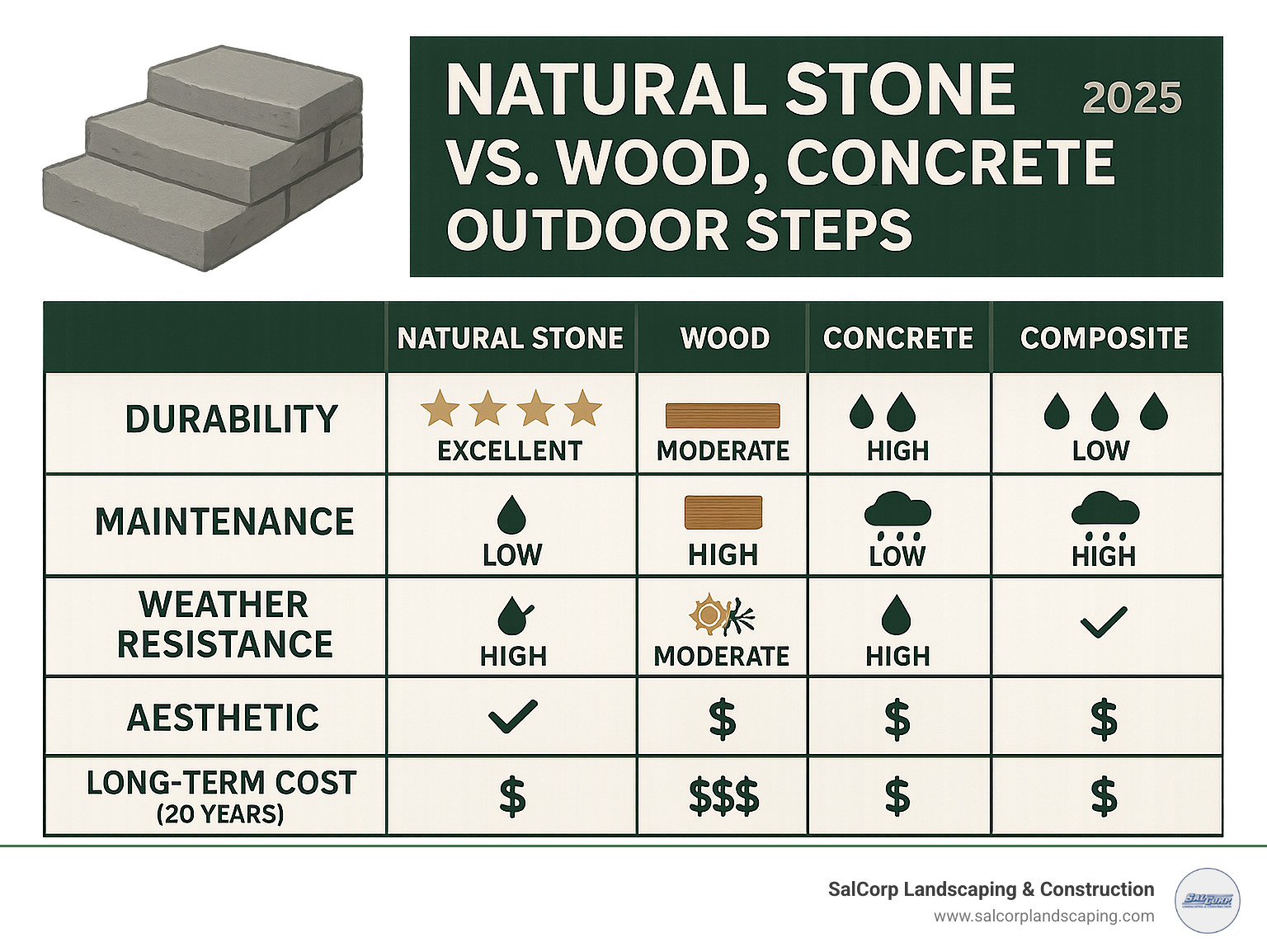
- Durability – Last decades with minimal maintenance, unlike wood or composite materials
- Weather Resistance – Withstand Massachusetts winters, freeze-thaw cycles, and heavy foot traffic
- Aesthetic Appeal – Timeless beauty that complements any architectural style
- Property Value – Significant return on investment compared to other materials
- Safety – Natural slip-resistance and stable footing in all weather conditions
- Low Maintenance – Require minimal upkeep beyond occasional cleaning
An investment in quality stone steps pays dividends through increased curb appeal, improved safety, and long-term durability that outlasts alternatives like concrete, wood, or manufactured materials by decades. From the refined elegance of granite to the rustic charm of fieldstone, each stone type brings unique characteristics to complement your property’s style.
As Sal Musto, owner of SalCorp Landscaping & Construction, I’ve spent over two decades helping Massachusetts property owners create stunning stone steps outside that improve both beauty and functionality. My hands-on approach ensures every stone step installation meets the highest standards of craftsmanship and durability our clients expect.
Designing and Selecting Your Perfect Stone Steps Outside

This section covers choosing the right stone and style to complement your home and landscape, ensuring a beautiful and cohesive look.
When we start a project involving stone steps outside, we consider how the steps can improve the beauty and functionality of your entire outdoor living space. They are a fundamental element of landscape design, not just a way to get from point A to point B.
A Guide to Popular Natural Stone Types
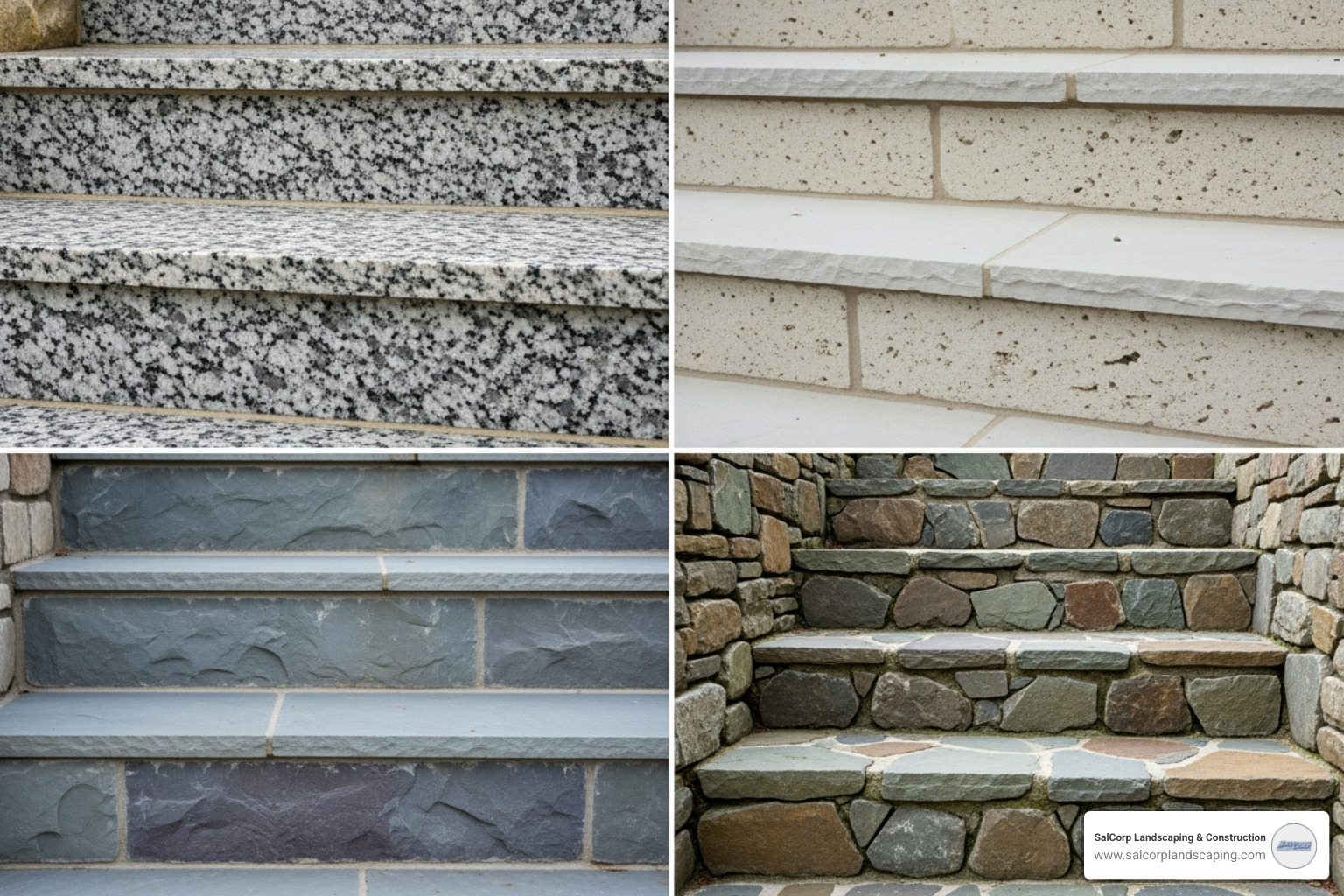
The selection of stone for outdoor steps is vast, each offering unique characteristics. Here’s a look at popular choices for the Massachusetts climate:
- Granite: A top choice for its exceptional strength and weather resistance. Available in many colors, its dense composition is incredibly durable and ideal for high-traffic areas.
- Limestone: A durable choice when sealed properly. Softer than granite, it allows for intricate designs. Its natural, earthy tones lend a sophisticated character to any landscape.
- Sandstone: This durable stone offers a wide range of colors and natural textures. Known for its rugged beauty, it withstands significant wear and blends well with many landscape styles.
- Bluestone: A type of sandstone prized for its durability and distinctive blue-grey hues. Thermal Bluestone is treated with high heat to create a slip-resistant texture, making it an excellent choice for steps in moist areas.
- Fieldstone: Offers a rustic, natural aesthetic with its irregularly shaped stones. It integrates seamlessly into informal garden designs, creating a unique look, though it requires skilled installation.
- Slate: Sturdy slate offers a refined, layered look in various colors. Its natural cleft surface provides good slip resistance, making it ideal for contemporary or formal settings.
- Basalt: Dark, dense, and durable, basalt provides a sleek, modern look. Its uniform color and fine grain are perfect for minimalist or contemporary designs.
- Pebble Stones: Can be used as decorative accents or to create unique, textured surfaces on larger stone steps, adding a distinct visual and tactile element.
For our Massachusetts climate, we recommend stone types with low porosity and high density, such as granite and bluestone, as they are less susceptible to cracking from freeze-thaw cycles.
Key Factors for Selecting the Perfect Steps
Choosing the right stone steps outside blends practical and aesthetic factors. We guide clients through these key considerations:
- Aesthetics: Consider the existing architectural style of your home. Do you prefer the ‘worn’ look that natural stone acquires over time, or a pristine, uniform appearance?
- Matching Home Architecture: Stone steps should complement your home’s design. A classic bluestone or granite might be ideal for a traditional colonial, while a modern home may benefit from sleek basalt.
- Landscape Style (Modern, Rustic, Formal): Rough fieldstone is perfect for a rustic garden, while precisely cut granite suits a formal design. For a modern landscape, we might explore floating steps or wide treads with clean lines.
- Safety (Non-slip finish): Safety is paramount. We recommend stone types and finishes that offer good slip resistance, like thermal finishes or natural cleft surfaces. Consistent riser height and tread depth are also critical.
- Maintenance Needs: Understanding the cleaning and sealing requirements of your chosen stone will help ensure its longevity and beauty.
- More info about professional hardscape design
Design Trends, Finishes, and Dimensions
Modern landscape design accepts creativity and functionality. We stay current with the latest trends to offer innovative solutions:
- Floating Steps: Use large stone slabs to create a dramatic, contemporary look, appearing to float above the ground. They pair well with integrated lighting.
- Wide Treads: Offer a comfortable, luxurious feel and provide space for decorative elements like plants or lighting.
- Integrated Lighting: Improves safety at night and highlights the beauty of the stone, creating a captivating ambiance.
- Rock-faced finish: This traditional finish involves chiseling the stone edges to create a rough, natural appearance, adding character and depth.
- Thermal finish: This flame treatment roughens the stone’s surface, providing excellent slip resistance.
- Natural Cleft: The natural surface of stones like slate as they’re quarried, offering a unique, irregular texture.
Standard depths for stone treads are typically 16″ or 18″, with a rise of 6″ or 7″. We can source or custom-cut stones to various lengths to suit your project, including common sizes like 16”x72”, 16″x36″, 16″x48″, 16″x60″, and 16″x96”.
Inspirational stone garden step ideas
The Installation Process for Lasting Durability
The longevity of stone steps outside depends on professional installation. Our 20+ years of experience are critical, especially in the challenging New England climate.
- Proper Site Preparation: A successful project starts with a solid, stable foundation. We ensure this through proper excavation and soil compaction.
- Solid Gravel Foundation: A compacted gravel base is essential to prevent shifting from freeze-thaw cycles. It provides drainage and stability for the heavy stone treads.
- Adequate Drainage: Proper drainage is crucial to prevent frost heave and material degradation. We design solutions to guide water away, protecting the steps’ integrity.
- Professional Stone Setting: Our skilled masons set each stone with precision for a beautiful, stable, and safe finish, using appropriate materials to bond them securely.
- Waterproofing: For steps integrated into structures, we add waterproofing systems beneath treads and into adjacent walls to prevent water penetration and protect your investment.
- Reconfiguring Heights: We can reconfigure step heights and path levels to improve aesthetics, functionality, and safety.
For permanent, load-bearing stone steps outside, consulting with experienced hardscaping professionals is highly recommended for personalized design and flawless installation.
Why hiring expert masonry contractors is crucial
Budget, Maintenance, and Building Your Vision

This section details the practical aspects of cost and long-term care, helping you protect your investment and bring your project to life.
Clients often ask about the cost and maintenance of stone steps outside. With over two decades in this business, I understand these concerns. Investing in quality stone steps is a smart decision. While there’s an upfront cost, they can last 50 years or more with minimal care, making them a compelling long-term value compared to concrete or wood.
What Do Stone Steps Outside Cost?
Stone step costs vary dramatically based on the project, property, and client preferences. Several factors influence the final price:
- Stone Type: This significantly impacts cost. Basic bluestone is often more economical, while exotic granite or custom limestone pieces represent a higher investment.
- Project Complexity: This is a major cost driver. Curved staircases, integration with retaining walls, or challenging terrain requiring extensive excavation will increase the investment.
- Size and Dimensions: Standard sizes are more economical than custom-cut stones.
- Site Preparation: Needs can range from minor grading to major excavation and drainage work, influencing the final cost.
Internet Data Disclaimer: Please note that the following are average costs based on internet data from various suppliers and not actual costs for SalCorp Landscaping & Construction. Our pricing is customized to each unique project we undertake in Massachusetts.
Industry averages show stone steps outside typically range from $80 to $350+ per linear foot, with some premium installations reaching even higher. Individual stone pieces often start around $160-$170 for standard sizes, but can vary significantly.
The choice between pre-fabricated and custom-cut steps is a key decision. Pre-fabricated steps are consistent and cost-effective. Custom-cut stones offer unlimited design flexibility but at a higher investment due to the craftsmanship involved.
Think long-term: quality stone steps outside save money over time by avoiding the rot, cracking, and fading common with wood, concrete, or composite materials.
Long-Term Care for Stone Steps Outside
Stone steps outside are remarkably low maintenance, a fact that often surprises our clients after installation.
- Routine cleaning: Sweep off debris and occasionally wash with mild soap and water. Avoid harsh chemicals or pressure washers, which can damage the stone.
- Occasional sealing: More porous stones may benefit from sealing every few years. We will advise if this is necessary for your chosen stone.
- Stain removal: Address stains from oil or leaves promptly with appropriate cleaners to prevent them from setting.
- Moss and weed control: In damp areas, control moss with a simple vinegar-water solution and pull weeds before their roots can cause damage.
- Winter care: For winter care in Massachusetts, avoid rock salt and harsh de-icers that can damage stone. Use sand for traction, as aggressive de-icing products can cause significant damage.
The reality is that properly installed stone steps outside require less maintenance than most other materials. While wood steps need annual staining and concrete often cracks, your stone steps will look great year after year with minimal effort.
At SalCorp Landscaping & Construction, we’re not just building steps – we’re creating lasting value for your property. Our commitment extends far beyond installation day. We want your stone steps outside to provide decades of beauty and functionality.
Contact us to build your lasting masonry stairs
