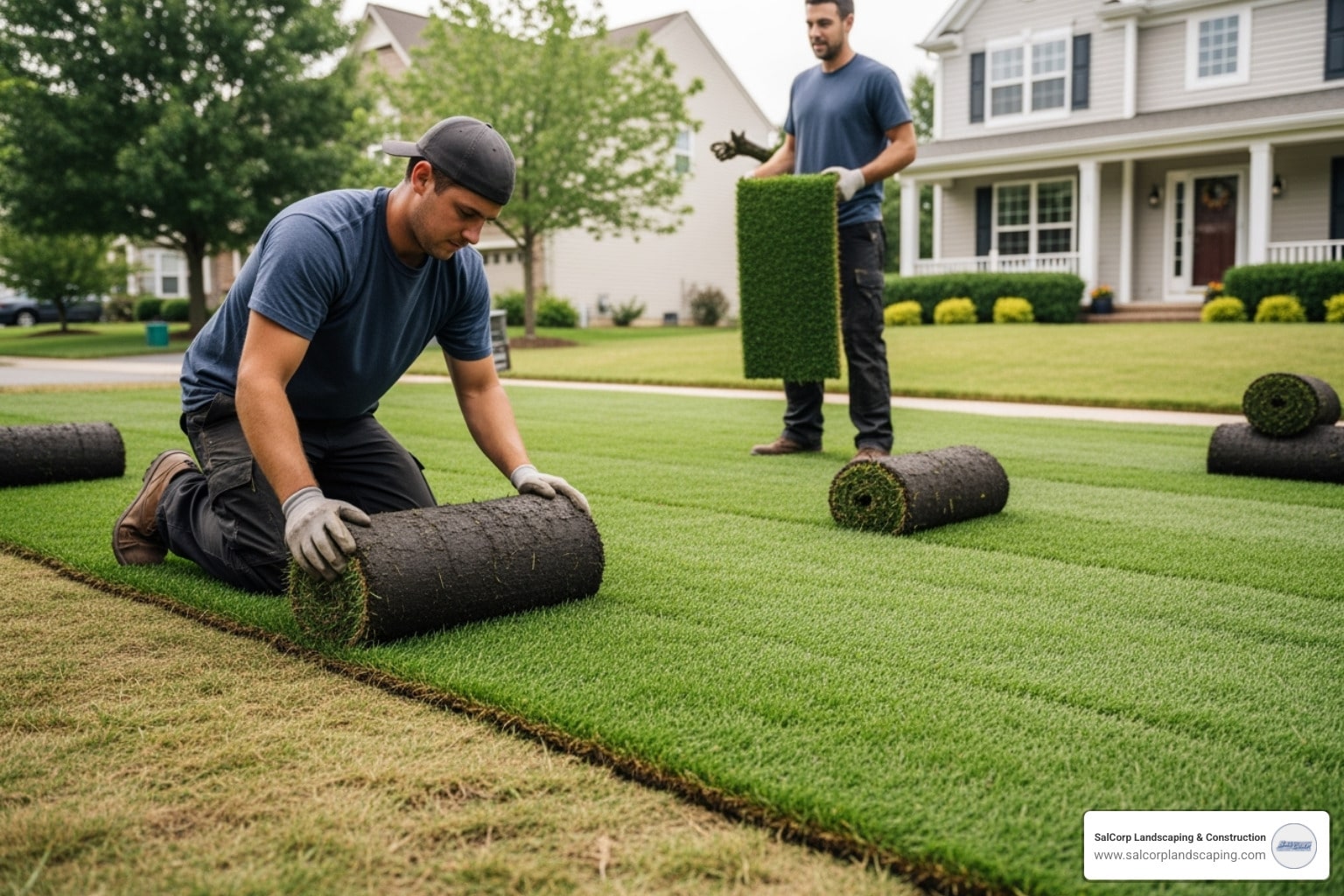
Turf Grass Installation Cost 2025: Smart Savings!
Understanding Turf Grass Installation Cost in Massachusetts
Turf grass installation cost can vary dramatically depending on your project needs and location. Here’s what Massachusetts property owners can expect:
Quick Cost Overview:
- Artificial turf: $6.50 – $15.00 per square foot installed
- Natural sod: $1.00 – $4.00 per square foot installed
- Hydroseeding: $0.50 – $1.00 per square foot
- Total project costs: $2,500 – $25,000+ depending on size and complexity
Note: These are average costs based on internet data and not actual costs for SalCorp Landscaping.
Whether you’re a busy commercial property manager dealing with high-traffic areas or a homeowner tired of brown patches and constant watering, understanding installation costs helps you make the right choice for your property.
The biggest cost drivers include material quality, site preparation needs, and labor complexity. Projects requiring extensive grading, drainage work, or curved installations can easily triple the base price.
Massachusetts weather adds another layer to consider. Our harsh winters and variable seasons make artificial turf increasingly popular for properties that need year-round appeal without the maintenance headaches.
As Sal Musto, owner of SalCorp Landscaping & Construction, I’ve helped hundreds of Massachusetts property owners steer turf grass installation cost decisions over the past two decades. My hands-on approach ensures clients understand exactly what drives their project costs and get the best value for their investment.
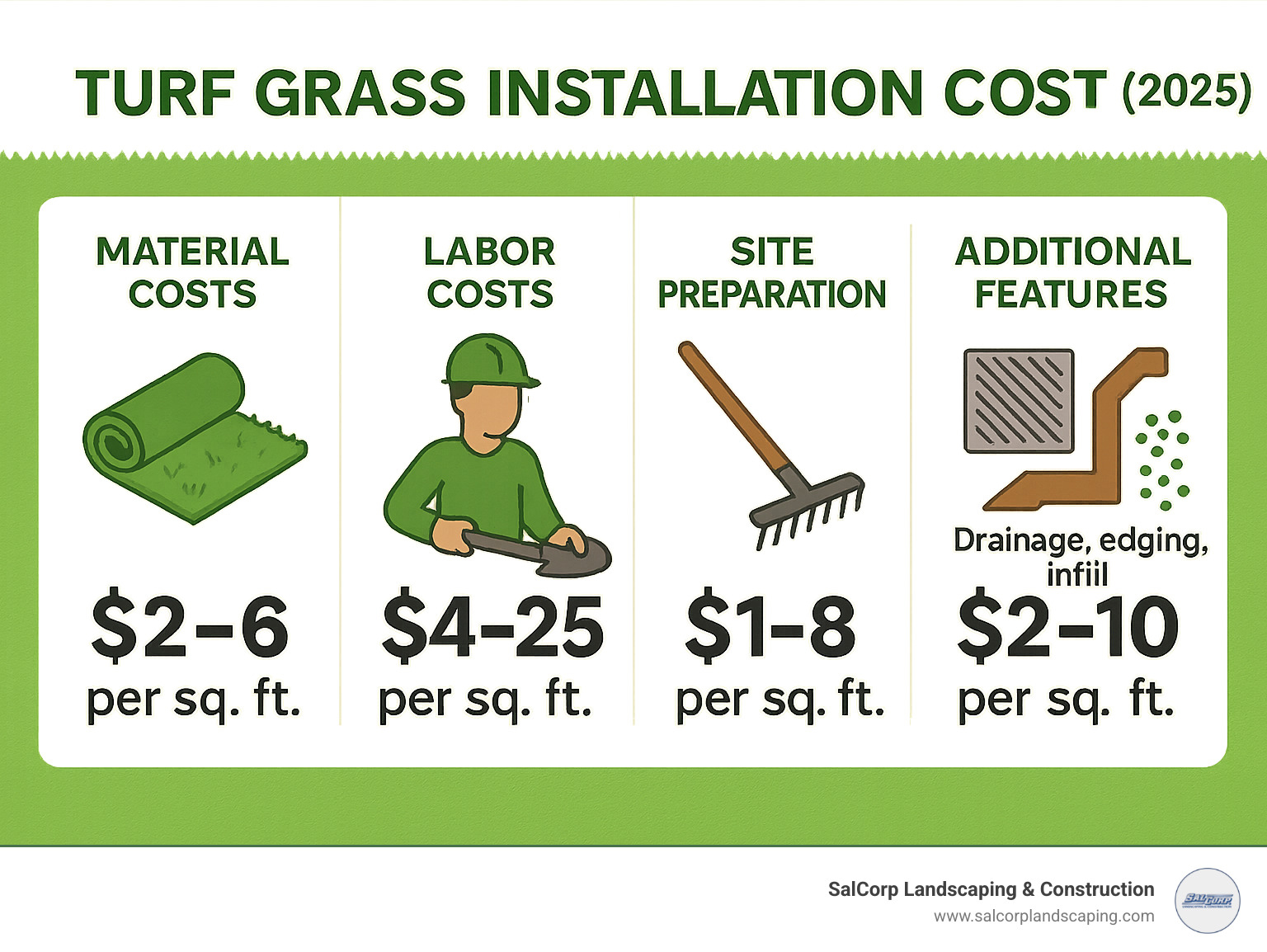
Turf grass installation cost definitions:
Average Artificial Turf Installation Cost
Planning for artificial turf means understanding you’re making a substantial investment in your property’s future. The turf grass installation cost for artificial grass typically ranges from $6.50 to $25.00 per square foot across the country, with most projects falling around $10.75 per square foot.
These figures represent average costs based on internet data and are not actual costs for SalCorp Landscaping.
For a typical Massachusetts homeowner, total project costs usually run between $2,500 and $10,000, though premium installations can easily reach $15,000 to $25,000 or more. The wide range reflects the dramatic differences between a simple, flat installation and a complex project with challenging terrain.
Think of it this way: a basic rectangular backyard with easy access and minimal prep work will land on the lower end of the spectrum. But if you’re dreaming of premium turf with custom curves, extensive drainage solutions, or dealing with steep slopes, you’re looking at the higher end of pricing.
The beauty of artificial turf is its longevity – when you spread that initial investment over 15 to 25 years of use, the numbers start looking much more reasonable. Compare this with natural grass options by checking out our Cost of Sod Per Sq Ft guide.
Understanding the Turf Grass Installation Cost Per Square Foot
The turf grass installation cost per square foot varies dramatically based on your specific project needs. While basic installations might start around $6.50 per square foot, complex projects with premium materials and challenging conditions can reach $25.00 or more per square foot.
Here’s where it gets interesting: larger projects often cost less per square foot. It’s the same principle as buying in bulk at the grocery store. A small 300-square-foot pet area might cost $15 per square foot, while a sprawling 2,000-square-foot backyard could come in at $8 per square foot.
Why? Because certain costs stay the same regardless of project size. Equipment delivery, initial site setup, and waste disposal don’t change much whether we’re installing 300 or 3,000 square feet. When these fixed costs spread across a larger area, your per-square-foot price drops significantly.
This economy of scale means that total project costs can range from $2,500 for smaller installations to well over $50,000 for large, complex commercial projects.
What’s Included in a Standard Installation Quote?
A professional artificial turf installation involves much more than just rolling out grass and calling it done. When you receive a comprehensive quote, you should see several essential components that ensure your new lawn looks great and lasts for decades.
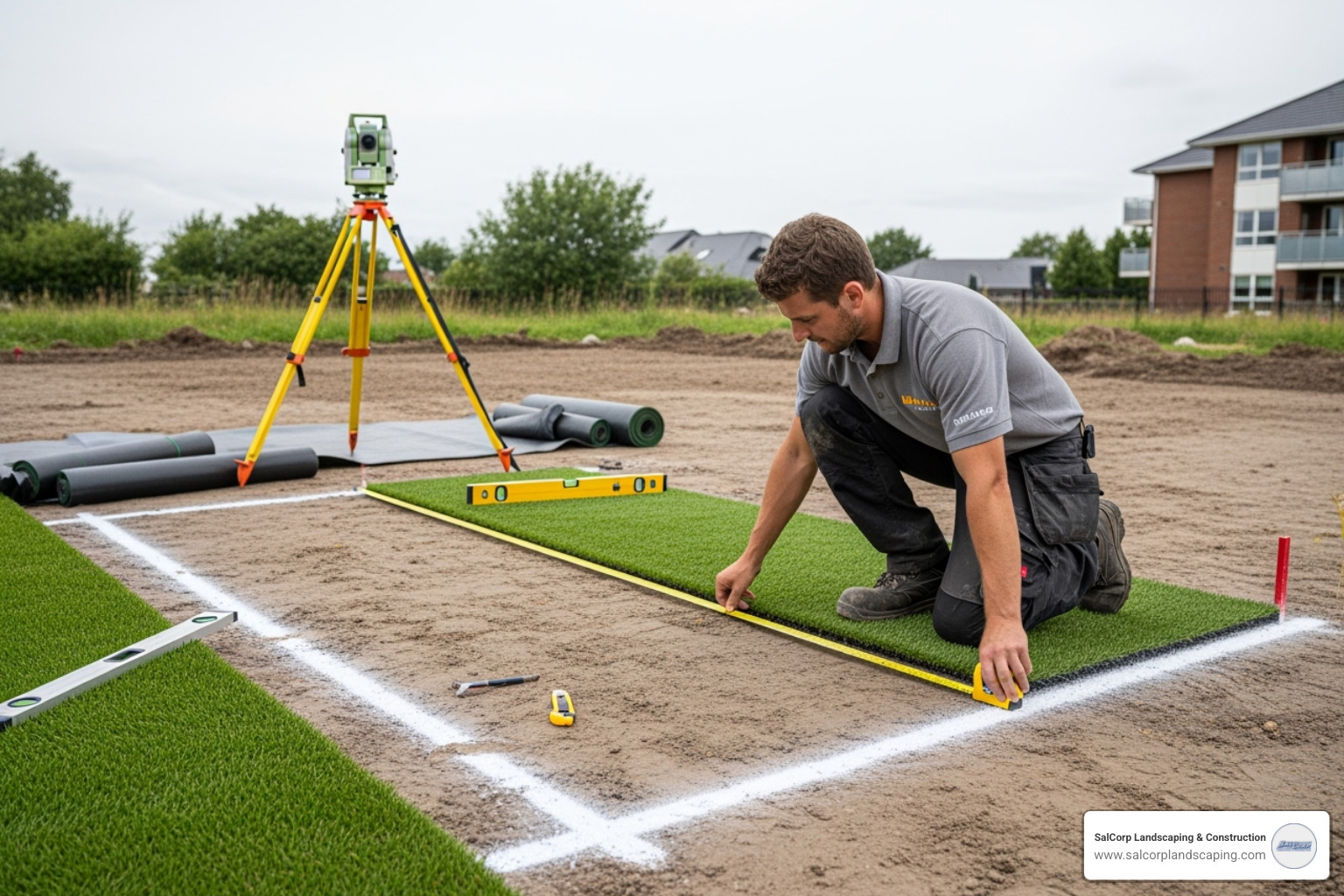
Base materials form the foundation of everything. We typically use up to 2 inches of crushed gravel or similar aggregate – this isn’t optional. Without proper base preparation, even the best turf will develop problems over time.
Seaming materials become crucial for larger areas. Artificial turf comes in 15-foot-wide rolls, so most projects need multiple pieces joined together. Professional seaming requires specialized adhesives and techniques to create virtually invisible connections.
Quality infill material gets spread into the turf fibers after installation. This isn’t just decorative – it helps grass blades stand upright, adds weight to prevent shifting, provides cushioning underfoot, and protects the backing from UV damage.
Professional labor covers everything from precise measuring and cutting to final cleanup. The expertise here makes the difference between a lawn that looks professionally installed and one that screams “DIY disaster.”
Waste removal and basic site grading round out most standard quotes. Proper grading ensures water flows away from your foundation instead of pooling on your new lawn.
Many professional installations also include weed barrier fabric beneath the base. While some installers treat this as an add-on, we consider it essential for long-term weed control. After all, nobody wants dandelions poking through their beautiful new artificial lawn!
Key Factors That Influence Your Turf Grass Installation Cost
Understanding what drives your turf grass installation cost is like peeling back the layers of an onion – there’s always more beneath the surface! While material and labor form the foundation of any quote, several other factors can significantly impact your final investment.
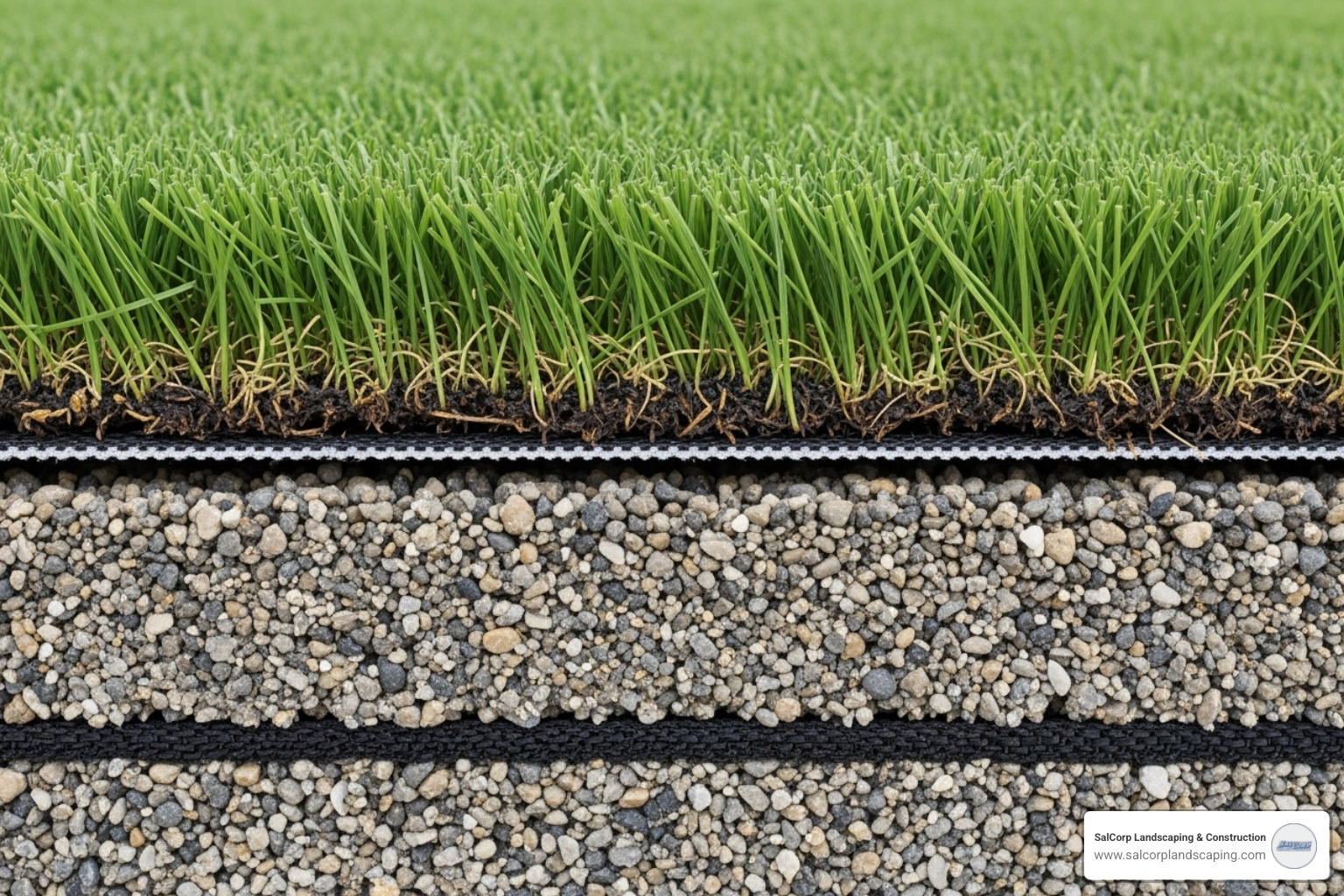
The three biggest game-changers are site complexity, project size, and geographic location. Here in Massachusetts, serving communities from Avon to Yarmouth, we’ve learned that each property tells its own story – and that story directly influences the price tag.
A simple, flat backyard in Canton will cost far less per square foot than a sloped, curved installation in Nantucket with challenging access. It’s not just about the turf itself; it’s about everything that goes into creating a perfect foundation for your new lawn.
Turf Material and Quality
Think of artificial turf like choosing a car – you’ve got your reliable economy models and your luxury options, each with different price points and features. The type and quality of turf you select creates one of the biggest swings in your turf grass installation cost.
Polyethylene turf sits in the sweet spot for most homeowners. It offers excellent realism with a soft, natural feel that’s perfect for backyards and play areas. The material cost typically ranges from around $2.00 to $4.00 per square foot, though premium versions can reach much higher.
Polypropylene represents the budget-friendly option, costing between $1.90 and $6.75 per square foot for materials. While it’s less realistic and feels stiffer underfoot, it works well for decorative areas or spaces with light foot traffic. We often recommend it for putting greens where you want a consistent, firm surface.
Nylon is the premium choice, with material costs ranging from $5.05 to $5.83 per square foot for standard grades, but high-end versions can cost significantly more. It’s incredibly durable and resilient, bouncing back beautifully even after heavy use. If you’re planning a high-traffic area or want something that’ll look perfect for decades, nylon delivers.
Note: These are average material costs based on internet data and not actual costs for SalCorp Landscaping.
Beyond the base material, several features affect both quality and cost. Pile height and density make a huge difference – taller, denser turf feels more luxurious but costs more. Blade shape isn’t just about looks; different shapes affect how the turf handles heat, wear, and weather.
UV protection is absolutely essential here in Massachusetts. Quality turf includes built-in UV stabilizers that prevent fading and degradation, typically adding 10% to 15% to the material cost. Backing material quality determines how well your turf drains and how long it lasts, making it worth the investment for long-term performance.
| Material Type | Material Cost (per sq. ft.) | Durability | Realism | Common Uses |
|---|---|---|---|---|
| Polyethylene | $2.00 – $4.00 | Good | High, soft feel | Landscapes, gardens, playgrounds |
| Polypropylene | $1.90 – $6.75 | Fair | Less realistic, stiffer | Putting greens (short pile), low-traffic areas |
| Nylon | $5.05 – $5.83 | Excellent | Very realistic, resilient | High-traffic areas, sports fields, putting greens (heavy use) |
Labor and Professional Installation Costs
Here’s where experience really shows its value. Professional installation labor typically ranges from $4 to $25 per square foot, with the wide range reflecting everything from simple, straightforward jobs to complex installations requiring specialized expertise.
The temptation to go DIY is understandable – you might save anywhere from $1,000 to $3,250 in labor costs. But here’s the thing: artificial turf installation is like brain surgery for your backyard. One mistake in seaming, base preparation, or drainage can turn your dream lawn into a nightmare that costs more to fix than professional installation would have cost initially.
We’ve rescued plenty of DIY projects over our 20+ years in business. Visible seams, uneven surfaces, buckling, and poor drainage are the most common issues we see. These problems don’t just look bad – they can significantly shorten your turf’s lifespan.
Our owner-operated approach means you get experienced hands on every aspect of your project. We handle proper seaming techniques that make joints virtually invisible, expert base preparation that ensures perfect drainage, and precise turf cutting that eliminates waste and creates clean edges.
Regional factors matter too. Labor costs in areas like Boston or the Cape tend to run higher than in other parts of Massachusetts, reflecting both the local economy and the logistics of getting materials and equipment to the job site.
If you’re looking for qualified professionals in your area, you can explore options through Turf Landscapers Near Me.
Site Preparation and Additional Features
This is where your turf grass installation cost can really vary, because every property is unique. Site preparation is like the foundation of a house – you can’t see it when it’s done, but it determines everything about how your turf performs.
Grass removal is usually the first step, costing between $0.50 and $2.00 per square foot depending on what’s currently growing and how accessible your yard is. Removing established sod from a flat, open backyard costs far less than dealing with overgrown areas or tight spaces.
Sub-base preparation represents the most critical investment in your project’s long-term success. We excavate existing soil, install weed barrier fabric, and then lay and compact several inches of aggregate base material. This foundation work typically adds around $1.00 per square foot but can cost much more for challenging sites. Proper site preparation follows established site preparation best practices that ensure decades of performance.
Drainage systems become essential in areas with poor natural drainage or heavy clay soils common in parts of Massachusetts. Basic drainage improvements add $2-3 per square foot, while complex systems for problematic sites can increase costs by $6-8 per square foot or more. The investment pays off by preventing water pooling and extending your turf’s life.
Weed barrier fabric costs $0.20 to $0.75 per square foot and provides an extra layer of protection against aggressive weeds. While some debate its long-term effectiveness, we’ve found it particularly valuable in areas with persistent weed problems.
Landscape edging creates clean borders and helps contain the base material. Plastic edging runs $2 to $10 per linear foot, while premium metal edging costs $5 to $20 per linear foot but offers superior durability and appearance.
Specialized features can add significant value for specific needs. Shock pads for play areas add $1 to $2 per square foot but provide crucial safety cushioning. Premium infill options like pet-friendly or cooling infills cost an extra $0.50 to $2.00 per square foot but solve specific problems for pet owners or hot, sunny installations.
Project complexity creates the biggest cost variables. Curved installations typically increase costs by 15% to 20% due to additional cutting and fitting requirements. Sloped areas can drive costs up by 50% to 60% or more, requiring specialized techniques and materials for proper stabilization.
The key is identifying exactly what your property needs. A simple rectangular backyard in Walpole requires far different preparation than a curved, sloped installation in Franklin with drainage challenges. Our experience helps Massachusetts property owners invest in the right features while avoiding unnecessary extras.
Artificial Turf vs. Natural Grass: A Long-Term Cost Showdown
Here’s where things get really interesting – and where many homeowners find they’ve been looking at turf grass installation cost all wrong. That beautiful natural lawn seems like the budget-friendly choice upfront, but let’s pull back the curtain on what it actually costs over time.
When you’re seeding a new natural lawn, you’re looking at roughly $0.05 to $0.25 per square foot. Sod installation runs about $1.00 to $4.00 per square foot. Pretty reasonable, right? But here’s the kicker – that’s just the beginning of your financial relationship with natural grass.
These are average costs based on internet data and not actual costs for SalCorp Landscaping.
Natural grass is like that friend who always “just needs a little help” – it never stops asking. Between watering bills, fertilizer, pest control, reseeding bare spots, and equipment maintenance, you’re looking at annual costs ranging from $1,600 to $6,600. Yes, you read that right – some homeowners spend more maintaining their lawn each year than others spend on vacation!
Over 20 years, these ongoing expenses can easily total $32,000 to $132,000. That’s not including the value of your time spent mowing every weekend or the frustration of watching your lawn turn brown during Massachusetts’ unpredictable dry spells.
Now let’s talk artificial turf. The upfront turf grass installation cost is definitely higher, but the maintenance story is completely different. You’re looking at maybe $250 to $350 annually for occasional brushing, rinsing, and infill touch-ups. That’s it. No more Saturday morning mowing marathons or panic-watering during heat waves.
When we crunch the numbers over 20 years, artificial turf typically wins the financial race by a significant margin. The initial investment pays for itself through dramatically lower maintenance costs and water savings – something increasingly important here in Massachusetts.
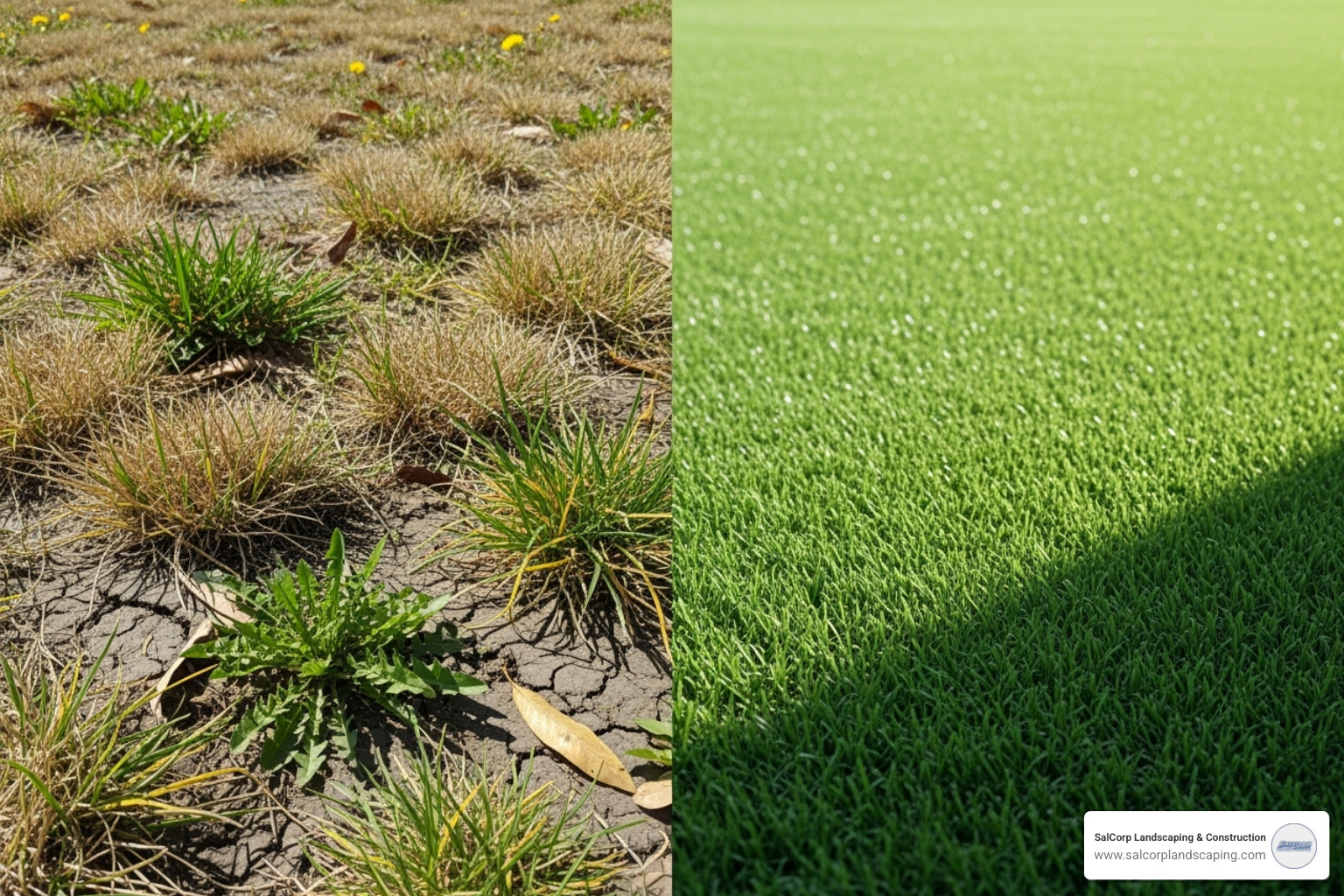
The water conservation alone can be substantial. We’ve had clients in Dedham and Franklin tell us their summer water bills dropped by hundreds of dollars after switching to artificial turf. No more guilt about watering during drought restrictions or watching your investment turn crispy during those inevitable August dry spells.
Of course, every property is different, and natural grass does have its place. Some homeowners love the ritual of lawn care or prefer the environmental benefits of living grass. If you’re considering natural alternatives like hydroseeding, you can explore costs at How Much Does Hydroseeding a Lawn Cost?.
But for busy families, commercial properties, or anyone tired of the endless maintenance cycle, artificial turf often proves to be the smarter long-term investment. The math is pretty compelling when you add up all those years of saved time, water, and maintenance headaches.
The Lifespan and Upkeep of Your New Turf Lawn
Think of artificial turf as the reliable friend who never lets you down. Once installed, high-quality artificial grass typically lasts 15 to 25 years with proper care – that’s potentially a quarter-century of beautiful, green lawn without the headaches of natural grass maintenance!
The longevity really depends on the quality of materials and installation. Premium products we install often exceed expectations, sometimes lasting well beyond 25 years. Most reputable manufacturers back their products with warranties ranging from 10 to 15 years, giving you that extra peace of mind when considering your turf grass installation cost.
Here’s the reality check: while “maintenance-free” gets thrown around a lot, “low-maintenance” is more accurate – and honestly, it’s still pretty amazing! Your annual maintenance costs will typically run around $250 to $350, which is a fraction of what you’d spend keeping natural grass healthy and attractive.
Note: These are average costs based on internet data and not actual costs for SalCorp Landscaping.
The maintenance routine is refreshingly simple. Brushing your turf regularly with a stiff-bristled broom or power brush keeps those fibers standing tall and prevents matting, especially in high-traffic areas where kids play or pets roam. Rinsing with your garden hose removes dust, pollen, and debris – and for pet owners in communities like Walpole or Needham, regular rinsing helps wash away urine and prevent any unwanted odors.
Over time, you’ll need some infill replenishment as the material settles or gets displaced. This keeps your turf blades properly supported and maintains that cushioned feel underfoot. Debris removal is as simple as blowing or raking off leaves and twigs – just avoid leaf vacuums that might suck up your infill material along with the debris.
Compare this to the endless cycle of mowing, watering, fertilizing, weeding, and pest control that natural grass demands, and you’ll wonder why you didn’t make the switch sooner. More time enjoying your outdoor space, less time working on it – that’s what we call a win-win!
For ongoing professional care and maintenance, you can always find qualified help through Turf Lawn Care Near Me.
Is Artificial Turf Right for You? Pros, Cons, and Final Considerations
After walking through all the turf grass installation cost factors and long-term considerations, you might be wondering if artificial turf makes sense for your Massachusetts property. Like any major investment, it’s not right for everyone – but it can be a game-changer for the right situation.
Let’s start with what makes artificial turf shine. The low maintenance aspect is honestly what sells most of our clients. Imagine never having to mow your lawn again, never worrying about brown patches during those brutal Massachusetts summers, or dealing with muddy spring messes. Your weekends suddenly become yours again!
The water conservation benefits can’t be overstated either. With water costs rising and environmental consciousness growing, eliminating irrigation from your property makes both financial and ecological sense. Plus, you’ll enjoy that year-round green appearance – no more embarrassing brown lawn when the neighbors’ looks perfect.
For families dealing with allergies, artificial turf offers genuine relief. No more grass pollen means outdoor gatherings become enjoyable again instead of sneeze-fests. The durability factor is impressive too – quality artificial turf handles everything from kids’ soccer games to pet play sessions without showing wear.
Being pest-free is another huge advantage. Say goodbye to grubs, moles, and the mosquitoes that love to breed in overwatered natural lawns. Your outdoor space becomes much more comfortable for entertaining.
However, we’d be doing you a disservice if we didn’t discuss the challenges. That high initial cost is real – there’s no sugar-coating it. While the long-term savings are substantial, coming up with the upfront investment can be tough for some budgets.
Heat retention is something to consider, especially for play areas. On hot summer days, artificial turf can get quite warm underfoot. It’s not a deal-breaker, but it’s worth knowing if you have young children who love running around barefoot.
Some folks have environmental concerns about microplastics and disposal at the end of the turf’s life. While we use high-quality, safe materials, these are valid considerations for environmentally conscious homeowners.
The potential impact on home value is debated. Some real estate experts suggest artificial grass might lower property value by around 5%, while others argue quality installations actually increase value due to the low-maintenance appeal. In our experience serving Massachusetts communities, much depends on the installation quality and regional preferences.
Before moving forward, make sure to check your HOA and local regulations. Most residential turf installations don’t require permits, but if your project involves significant grading or drainage changes, you might need approval. Some homeowners’ associations have strict landscaping rules, and a few even prohibit artificial turf entirely.
We always recommend our clients in towns like Cohasset, Hingham, and Milton check with their HOA first. Nothing’s worse than completing a beautiful installation only to face compliance issues later. Permit requirements are usually minimal for basic turf installation, but it’s always smart to verify with your local building department.
The bottom line? Artificial turf works best for busy homeowners who value their time, properties with challenging growing conditions, or anyone tired of the endless cycle of lawn maintenance. If you’re looking for that perfect green space without the work, it might just be your answer.
Conclusion
Making sense of turf grass installation cost doesn’t have to feel like solving a puzzle with missing pieces. Throughout this guide, we’ve walked through the key factors that shape your investment – from material quality and site complexity to labor expertise and long-term value.
The numbers tell a clear story: while artificial turf requires a higher upfront investment than natural grass, the long-term value proposition is compelling. When you factor in decades of reduced maintenance, eliminated water bills, and consistent curb appeal, many of our Massachusetts clients find that artificial turf pays for itself over time.
The importance of professional installation cannot be overstated. We’ve seen too many DIY attempts that looked great for a few months, only to develop visible seams, drainage issues, or premature wear. Quality installation isn’t just about laying turf – it’s about proper base preparation, expert grading, seamless joining, and understanding how Massachusetts weather patterns affect long-term performance.
At SalCorp Landscaping & Construction, our owner-operated approach means Sal Musto personally oversees every project. With over 20 years of experience serving communities from Walpole to the South Shore, we’ve refined our installation process to deliver results that last. Our own state-of-the-art machinery gives us the flexibility to handle everything from compact urban backyards in Newton to sprawling commercial properties in Foxborough.
Every property tells its own story, and every turf grass installation cost reflects unique site conditions, material choices, and client needs. What works perfectly for a pet-friendly backyard in Canton might be completely different from what’s needed for a high-traffic commercial space in Braintree.
For a detailed consultation and quote custom to your specific Massachusetts property, explore our Lawn Installation Services. Let’s work together to create an outdoor space that fits your lifestyle, budget, and vision – one that you’ll enjoy for decades to come!