

Hydroseeding Services in Massachusetts
A green lawn from seed in weeks, not months. Professional hydroseeding for residential yards, commercial properties, slopes, and new construction sites across Norfolk and Plymouth County.
Get a Hydroseeding Estimate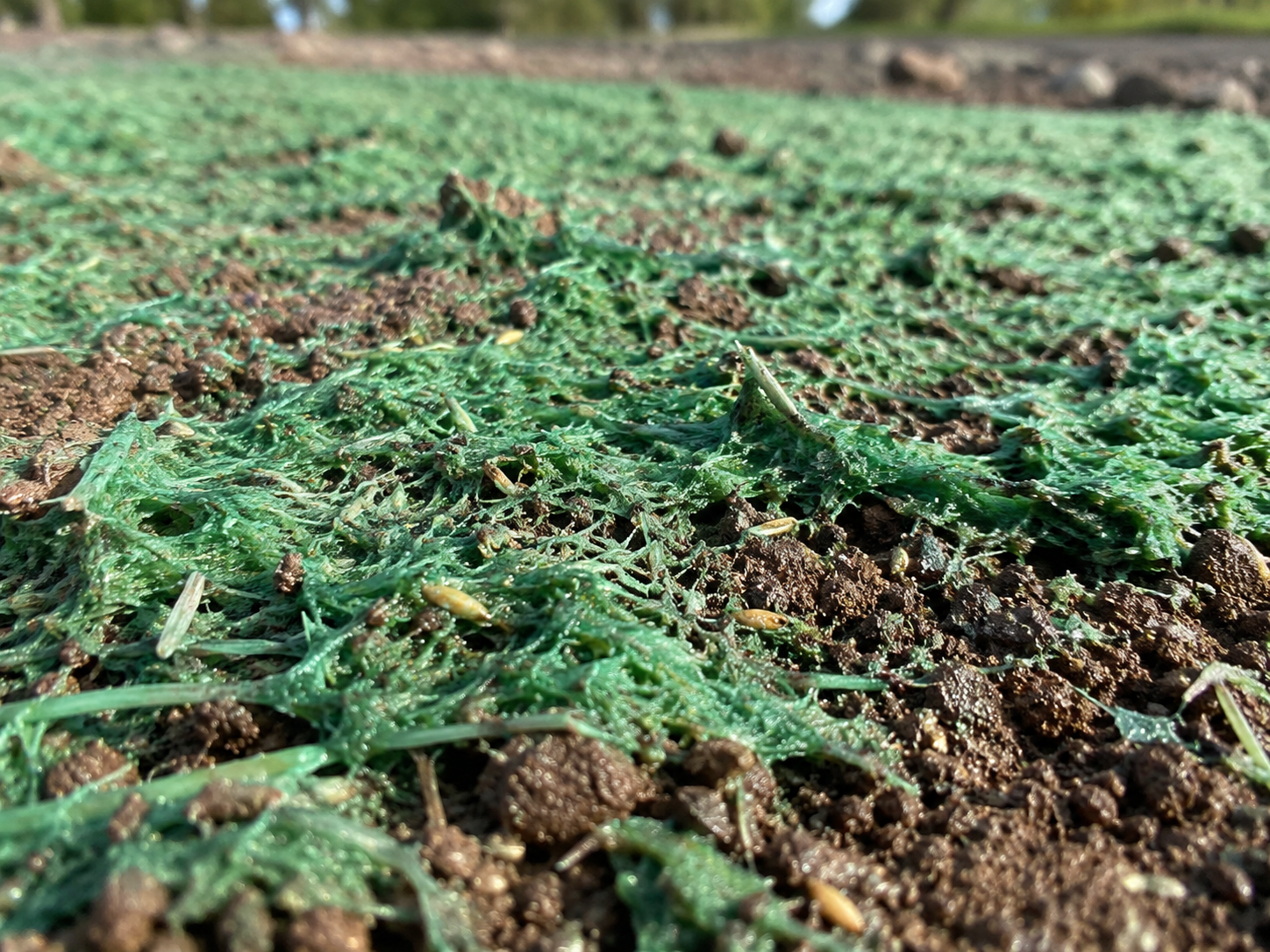
Seed, Mulch, Fertilizer, Tackifier — One Application
Hydroseeding sprays a carefully mixed slurry of grass seed, wood-fiber mulch, starter fertilizer, and a natural tackifier directly onto prepared soil. The mulch holds moisture against the seed, the tackifier bonds everything to the ground so rain doesn't wash it away, and the fertilizer gives germinating seeds an immediate nutrient boost.
The result is faster, more uniform germination than broadcast seeding, better erosion control on slopes, and a custom seed blend selected specifically for your soil type, sun exposure, and intended use.
Hydroseeding for Every Property Type
From small residential yards to multi-acre commercial sites, hydroseeding scales efficiently because the equipment does the heavy lifting. Here's where it fits best.
Residential Lawns
New lawn installation or full renovation for existing properties. Custom seed blends matched to your sun, shade, and soil conditions for a lawn that thrives long-term.
New Construction
Post-construction lawn establishment for builders and homeowners. Grade, prep, and hydroseed in a single mobilization, often the same week the construction crew finishes.
Commercial Properties
Large-area coverage for office parks, HOAs, municipal properties, and commercial developments. The most cost-effective professional lawn installation method at scale.
Slopes & Erosion Control
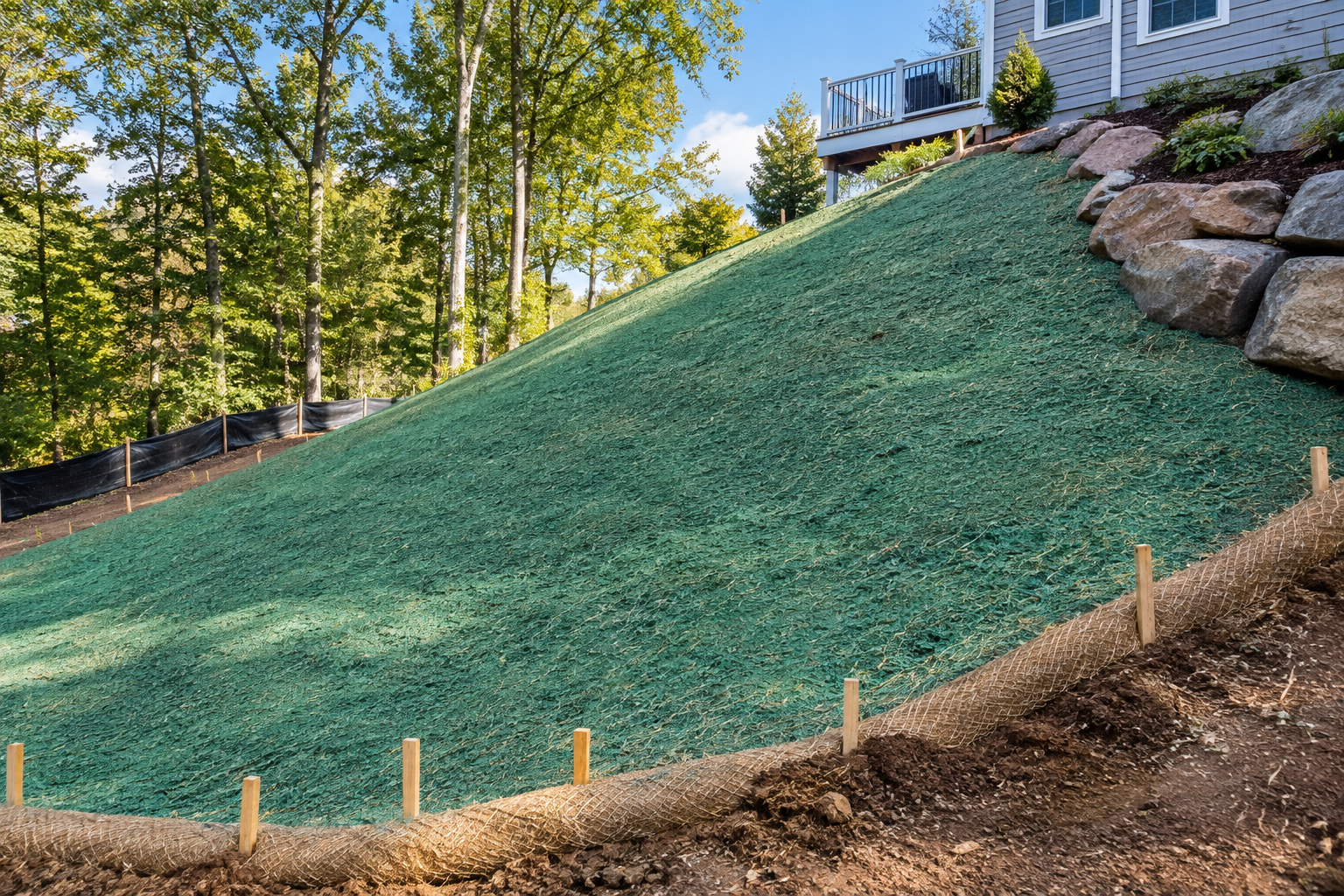
Hydroseeding's tackifier bonds seed and mulch to steep terrain where broadcast seeding washes away. The preferred method for slope stabilization and embankment coverage.
Lawn Renovation
Full lawn tear-out and regrow for properties where the existing lawn is beyond repair. Strip the old turf, amend the soil, grade for drainage, and hydroseed for a fresh start.
Overseeding Programs
Thicken thin, patchy lawns by hydroseeding over aerated turf. The slurry fills aeration holes and bare spots, delivering seed directly where it's needed most.
Which Lawn Installation Method Is Right for You?
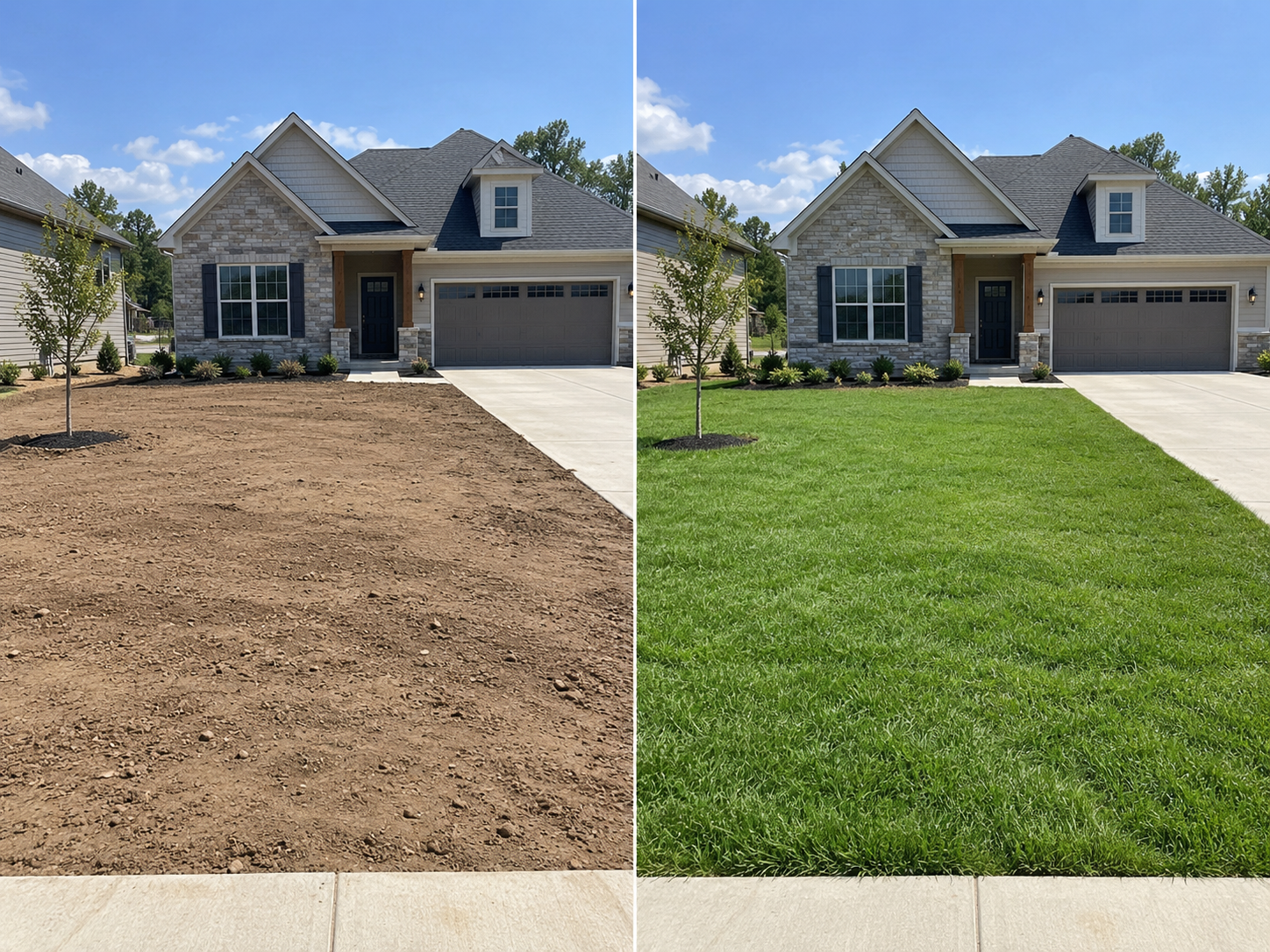
Hydroseeding and sod installation both produce quality lawns, but they serve different situations. Hydroseeding costs significantly less per square foot and allows you to specify the exact seed blend for your property's conditions. Sod delivers an instant green lawn the same day it's installed.
For most residential properties, the deciding factor is timeline versus budget. If you need the lawn usable for an event or you're selling the house, sod makes sense. If you can wait 6-8 weeks and want to invest less upfront, hydroseeding produces an equally strong lawn at a fraction of the cost. We do both and can advise on which fits your specific project.
The Work Before the Spray
Hydroseeding applied to unprepared soil produces poor results regardless of seed quality. The ground preparation is the most labor-intensive part of the job and the most important for long-term success.
Our process: clear existing vegetation and debris, till the soil to 4-6 inches to break compaction, amend with topsoil or compost if the existing soil is poor, grade the surface for proper drainage (always sloping away from structures), and final-rake to a smooth, level seedbed. Only then does the hydroseed slurry go down. The prep work is why professional results look different from DIY attempts.
The Hydroseeding Process
- Site evaluation — assess soil conditions, sun/shade patterns, drainage, and intended lawn use to select the right seed blend
- Soil preparation — remove existing vegetation, till, amend, grade for drainage, and final-rake to a smooth seedbed
- Slurry mixing — combine seed, wood-fiber mulch, starter fertilizer, and tackifier in the hydroseeder tank with water
- Application — spray the slurry evenly across the prepared surface in overlapping passes for complete coverage
- Initial watering — light irrigation immediately after application to activate the tackifier and settle the mulch
- Aftercare guidance — detailed watering schedule and timeline provided so you know exactly what to do each week
The seed blend is the long-term decision.
The grass variety you plant today is what you'll maintain for decades. We select seed blends based on your specific conditions: sun vs. shade ratio, soil type (clay-heavy South Shore soil drains differently than sandy coastal soil), traffic level, and maintenance commitment. A turf-type tall fescue blend handles drought and moderate shade. A Kentucky bluegrass mix delivers the densest, greenest lawn but needs more water and sun. We match the blend to your property.
Massachusetts Communities We Serve
SalCorp provides hydroseeding services throughout Norfolk County, Plymouth County, and Greater Boston, including Walpole, Westwood, Norwood, Needham, Wellesley, Dover, Sherborn, Medfield, Sharon, Foxborough, Hingham, Norwell, Cohasset, Weymouth, Braintree, Milton, Canton, Pembroke, Hopkinton, and surrounding communities.
Ready for a new lawn? Contact SalCorp for a free on-site estimate. We'll evaluate your soil, measure the area, and recommend the right seed blend and timeline for your property.
Twenty Years of Lawn Installation in Massachusetts
20+
Years serving
Massachusetts
In-house
Owner-supervised,
no subcontractors
Licensed
Fully insured &
guaranteed
Walpole
Norfolk County
since 2004
Hydroseeding FAQs
How much does hydroseeding cost?
Costs vary based on property size, soil conditions, and seed mix. Hydroseeding is significantly less expensive than sod for the same area. We provide detailed estimates after evaluating your specific property and conditions.
What time of year is best for hydroseeding?
Early fall is optimal in Massachusetts. Soil is warm, air is moderate, weed pressure is declining, and autumn rainfall helps establishment. Late spring is the second-best window. Midsummer is possible but requires significantly more watering.
How long does hydroseeding take to grow?
Germination begins in 5-7 days, visible green coverage in 2-3 weeks, mowing height in 4-6 weeks, and full establishment in 8-12 weeks. Growth rate depends on seed mix, soil temperature, moisture, and sunlight.
Can you hydroseed over existing grass?
For overseeding thin lawns after core aeration, yes. For full renovation, we recommend removing existing turf, tilling, grading, and hydroseeding onto clean prepared soil for best seed-to-soil contact and germination rates.
What is the difference between hydroseeding and sod?
Hydroseeding grows grass from seed over 4-8 weeks at a lower cost. Sod delivers an instant green lawn at a higher price. Hydroseeding allows custom seed blend selection. Sod works better for high-visibility areas where immediate appearance matters. We do both and can advise on which fits your project.
How often do you water hydroseeded lawn?
Light watering 2-3 times daily for weeks 1-3. Once daily after germination is visible. Every other day after week 4. Normal schedule (2-3 deep waterings per week) after week 6-8. Morning watering always preferred.
What are the downsides of hydroseeding?
The main downsides are the 6-8 week establishment period and high watering demands. Heavy rain can wash seed on slopes. Weed seeds in the soil may germinate alongside the grass. Despite these factors, it remains the most cost-effective professional lawn installation method.
Can you hydroseed a slope?
Yes, and this is one of hydroseeding's biggest advantages. The tackifier bonds seed and mulch to steep terrain. For steep slopes, we apply heavier mulch rates and erosion control blankets. It's the preferred method for slope stabilization.
Ready for a New Lawn?
Contact SalCorp for a free hydroseeding estimate. We'll evaluate your soil, recommend the right seed blend, and show you why hydroseeding is the smartest way to grow a lawn.
Get Your Free Estimate