

Hydroseeding vs. Sod Installation in Massachusetts
Two proven methods for establishing a new lawn — each built for different properties, timelines, and goals. Here's how they compare for Massachusetts conditions so you can make the right call for your property.
Get Your Free AssessmentTwo Paths to a New Massachusetts Lawn
Whether you're replacing a lawn that's past saving, finishing a new construction lot, or establishing turf on a graded slope, the decision comes down to hydroseeding or sod. Both produce healthy, durable lawns when installed correctly. The difference is in how fast you need results, what your property demands, and how much involvement you want during the establishment period. At SalCorp Landscaping & Construction, we install both — and we recommend based on what actually makes sense for the property, not what's easiest to sell.
The Head-to-Head Comparison
Same goal — a thick, healthy lawn — but different paths to get there. Here's how hydroseeding and sod stack up across the factors that matter most in Massachusetts.

Hydroseeding
Spray-applied seed, mulch & tackifier slurryFirst Results
Green shoots visible within 7–10 days. Light foot traffic in 4–6 weeks. Full establishment over one growing season.
Watering Demands
High for the first 2–3 weeks: two to three short cycles daily to keep the mulch layer damp. Gradually reduces as grass establishes.
Seed Customization
Fully customizable. Blend shade-tolerant fescues for the backyard with sun-loving bluegrass for the front — tailored to your property's microclimates.
Slopes & Erosion
Superior on steep grades. Tackifiers chemically bond the slurry to the soil surface, holding seed in place through heavy rain and wind.
Root System
Grass grows in native soil from day one, developing a deep, robust root system adapted to your property's specific conditions.
Best For
Large lots, slopes over 15 degrees, new construction, properties where custom seed blends matter, and projects where timeline flexibility exists.
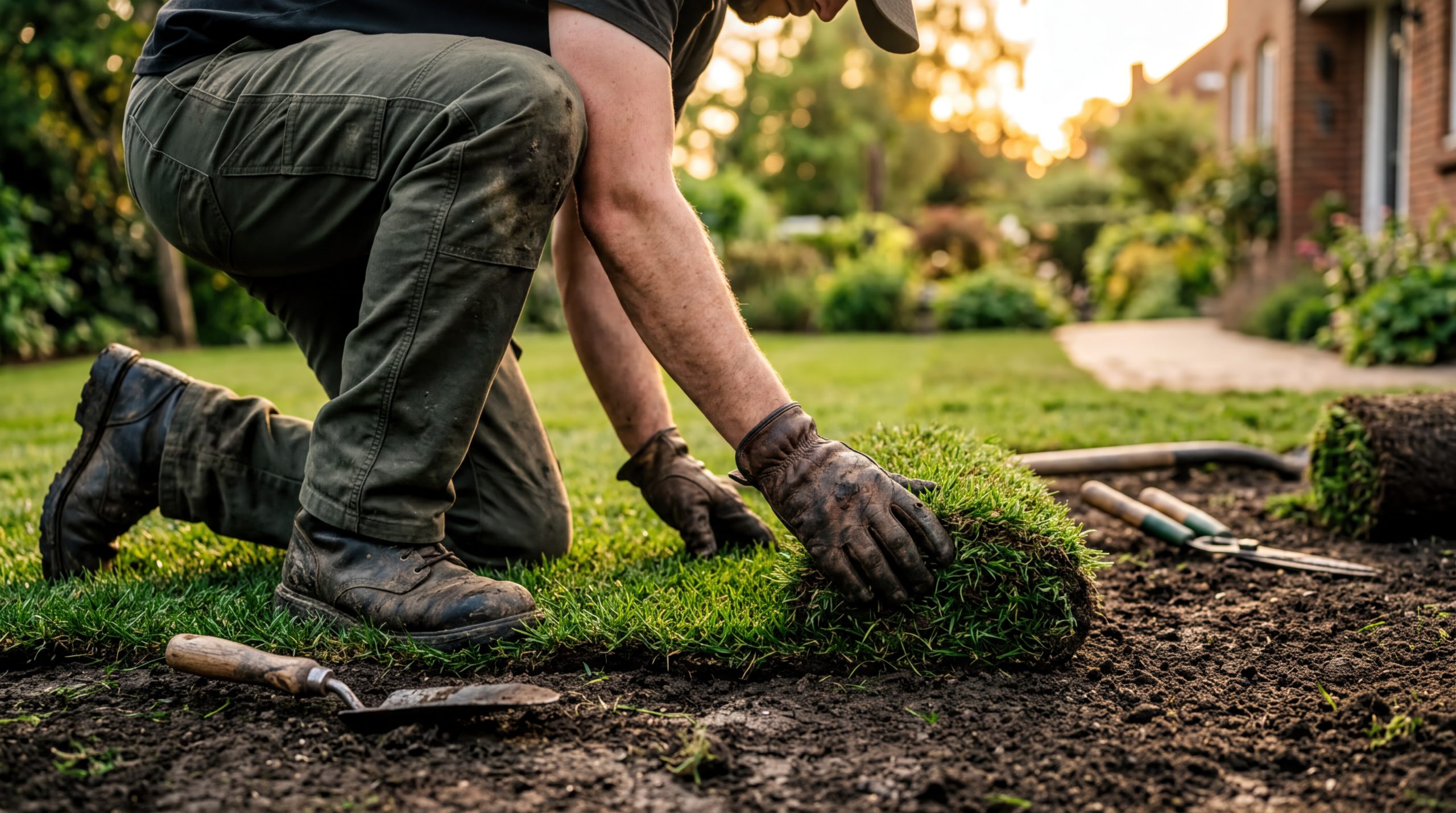
Sod Installation
Pre-grown turf rolls installed same dayFirst Results
Instant visual transformation in a single day. Root knitting in 2–4 weeks. Normal foot traffic and mowing within a month.
Watering Demands
Moderate for the first 2 weeks: daily deep watering to encourage root-to-soil contact. Less intensive than hydroseeding's mulch maintenance.
Seed Customization
Limited to whatever grass variety the regional sod farm is currently cultivating — typically a single bluegrass or fescue blend for the entire lawn.
Slopes & Erosion
Works well on flat to gently sloped yards. Steep grades (over 15 degrees) require staking to prevent heavy rolls from sliding before roots take hold.
Root System
Roots must adapt from farm soil to your native soil — transplant shock is a real risk, especially during hot weather or if the subsoil isn't properly prepared.
Best For
Flat to moderate yards, homeowners who need an immediate result, properties where erosion isn't a primary concern, and projects on a tight timeline.
When to Install in Massachusetts
Timing is everything for lawn establishment in New England. The right window gives roots the warmth and moisture they need; the wrong one fights against frozen ground, summer heat stress, or fall dormancy.
Key Decision Factors for Massachusetts Properties
Beyond the basic comparison, three local conditions push the decision in one direction or the other for most Massachusetts homeowners.
Massachusetts Clay Soils and Root Establishment
Much of eastern Massachusetts — Norfolk County, Plymouth County, Greater Boston — sits on dense clay soils that absorb water slowly and compact easily. This soil type affects both methods differently.
Hydroseeded grass grows directly in your native soil from germination, so the root system develops in and adapts to the clay from day one. Sod, on the other hand, was grown in the loamy soil of a sod farm. When those farm-adapted roots hit your clay subsoil, there's an adjustment period — transplant shock — where the grass must re-establish in a fundamentally different growing medium. Proper soil preparation (tilling, amending, grading) before sod installation reduces this risk, but it adds time and labor to the project.
On heavy clay: hydroseeding's native-soil root development is a meaningful long-term advantage.
The New England Erosion Problem
Massachusetts properties deal with aggressive erosion pressure: spring snowmelt dumps huge volumes of water onto thawing ground that can't absorb it. Fall Nor'easters deliver heavy, sustained rainfall. And sloped lots — common across the hilly terrain of Norfolk and Plymouth counties — funnel that water into concentrated flows that strip topsoil and undermine landscaping.
On slopes over 15 degrees, hydroseeding is the clear choice. The tackifiers in the slurry chemically bond seed and mulch to the soil surface, holding everything in place through heavy rain events that would wash away dry seed and send sod rolls sliding downhill. For flat-to-gentle slopes, both methods perform well when installed correctly — the decision shifts to other factors like timeline and establishment preference.
On steep slopes or erosion-prone sites: hydroseeding's tackifier bonding outperforms sod significantly.
Irrigation and the Watering Commitment
Both methods need consistent watering during establishment, but the intensity is different — and in Massachusetts, where summer droughts are increasingly common, the watering plan matters.
Hydroseeding demands two to three short watering cycles per day for the first 2–3 weeks. The mulch layer must stay consistently damp; if it dries out completely and forms a hard crust, germinating seeds die underneath. Sod needs daily deep watering for the first two weeks to encourage root-to-soil contact, but it's less frequency-dependent than hydroseeding.
Properties with an in-ground irrigation system can handle either method's demands easily through programmed zone schedules. Properties relying on manual hose watering will find sod's establishment period significantly easier to manage — fewer daily watering sessions and a wider margin for error.
Without irrigation: sod is more forgiving. With an irrigation system: either method works well.
Twenty Years Establishing Massachusetts Lawns
20+
Years installing lawns
across Massachusetts
Both
Hydroseeding & sod
installed in-house
Licensed
Fully insured &
workmanship guaranteed
Local
Norfolk County based
since 2004
Hydroseeding & Sod FAQs
Is hydroseeding cheaper than laying sod?
Yes — hydroseeding is significantly more affordable than professional sod installation, often running a fraction of the per-square-foot cost. The savings are most dramatic on larger properties (half-acre lots and above), where the efficiency of spray application keeps material and labor costs low. Sod is a premium option because you're paying for turf that was grown, maintained, and harvested at a sod farm over 12 to 18 months before it reaches your property.
How long does a hydroseeded lawn take to grow in Massachusetts?
In Massachusetts, you'll typically see initial green shoots within 7 to 10 days of application. However, the lawn needs roughly 4 to 6 weeks before it can handle light foot traffic and its first mowing. Full establishment — where the lawn is thick, durable, and ready for normal use — takes one full growing season. Fall-applied hydroseeding in Massachusetts (late August through September) takes advantage of warm soil and cool air for the fastest germination rates.
What are the disadvantages of hydroseeding?
The main drawbacks are the establishment period and watering demands. A hydroseeded lawn requires 4 to 6 weeks of strict avoidance — no foot traffic, no pets, no activity on the lawn — while the grass establishes. During that period, the lawn needs watering two to three times daily to keep the mulch layer consistently damp. If the mulch crust dries out completely, the germinating seeds beneath it can die. There's also a weather risk: torrential rain shortly after application can wash the slurry off slopes before the tackifiers fully bond. Proper timing and professional application minimize these risks significantly.
Can you lay sod over an existing lawn?
No — laying sod directly over existing grass is a common shortcut that leads to failure. The old grass decays beneath the new sod, creating a spongy, unstable layer that prevents the new roots from reaching the subsoil. The decomposing material also generates heat that can damage the sod's root system. Proper sod installation requires removing existing vegetation, tilling and grading the soil, adding amendments if needed, and then laying the fresh sod directly onto prepared earth so roots can knit into native soil within 2 to 4 weeks.
What is the best time to hydroseed in Massachusetts?
Late August through late September is the optimal hydroseeding window in Massachusetts. The soil is still warm from summer, which speeds germination, while the cooler fall air temperatures and more frequent rainfall reduce heat stress and watering demands. Spring (late April through May) is the second-best window — the thaw provides natural moisture, but an early summer heatwave before roots are established can stress new seedlings. Winter hydroseeding is not possible in Massachusetts due to frozen ground.
What is the best time to lay sod in Massachusetts?
Cool-season sod varieties used in Massachusetts — typically Kentucky Bluegrass, Perennial Ryegrass, and Fescue blends — install best in early fall (September through mid-October) or spring (April through May). Fall installations benefit from warm soil and cooler air, giving roots time to establish before winter dormancy. Spring installations work well but require attentive watering through the summer heat. Sod can technically be installed any time the ground isn't frozen, but extreme summer heat increases transplant shock and demands heavy irrigation.
Does hydroseeding work on slopes?
Hydroseeding is actually superior to sod on steep slopes. The slurry contains tackifiers — binding agents that chemically bond the seed, mulch, and fertilizer directly to the soil surface, holding everything in place even on grades over 15 degrees. Traditional sod on steep slopes requires physical staking to prevent the heavy rolls from sliding downhill before roots establish, and gaps between rolls create erosion channels. For slope stabilization and erosion control, hydroseeding is the preferred method among Massachusetts landscapers and civil engineers.
Do I need to water hydroseed every day?
Yes — maintaining consistent moisture is critical during the first 2 to 3 weeks after application. You should water a newly hydroseeded lawn two to three times daily in short cycles to keep the mulch layer damp but not puddling. If the mulch crust dries out completely, the germinating seeds beneath it can die. After the grass reaches about 2 inches in height, you can gradually reduce watering frequency to once daily, then transition to a normal deep-watering schedule (2 to 3 times per week). An in-ground irrigation system makes this process significantly easier and more consistent.
How long does it take for sod lines to disappear?
Visible seams between sod rolls typically disappear within 3 to 4 weeks as the root systems knit together and the grass blades fill in the gaps. Proper installation technique — staggering joints like a brick pattern, butting edges tightly without overlapping, and rolling the sod after placement to ensure full soil contact — speeds up this process. Consistent watering during the first two weeks is essential for root establishment and seamless knitting.
Not Sure Which Method Fits Your Property?
Schedule a free on-site assessment with SalCorp. We'll evaluate your soil, slope, sun exposure, and timeline — and recommend the lawn installation method that makes the most sense for your specific situation.
Schedule Your Assessment