Stone retaining wall contractors near me: Expert 2025
Your Guide to Building a Lasting Retaining Wall
Finding the right stone retaining wall contractors near me can feel overwhelming when you’re dealing with soil erosion or trying to create usable space on a sloped property. A retaining wall is a structure designed to hold back soil and prevent erosion, typically used to create level areas, protect structures, or manage different ground elevations on your property.
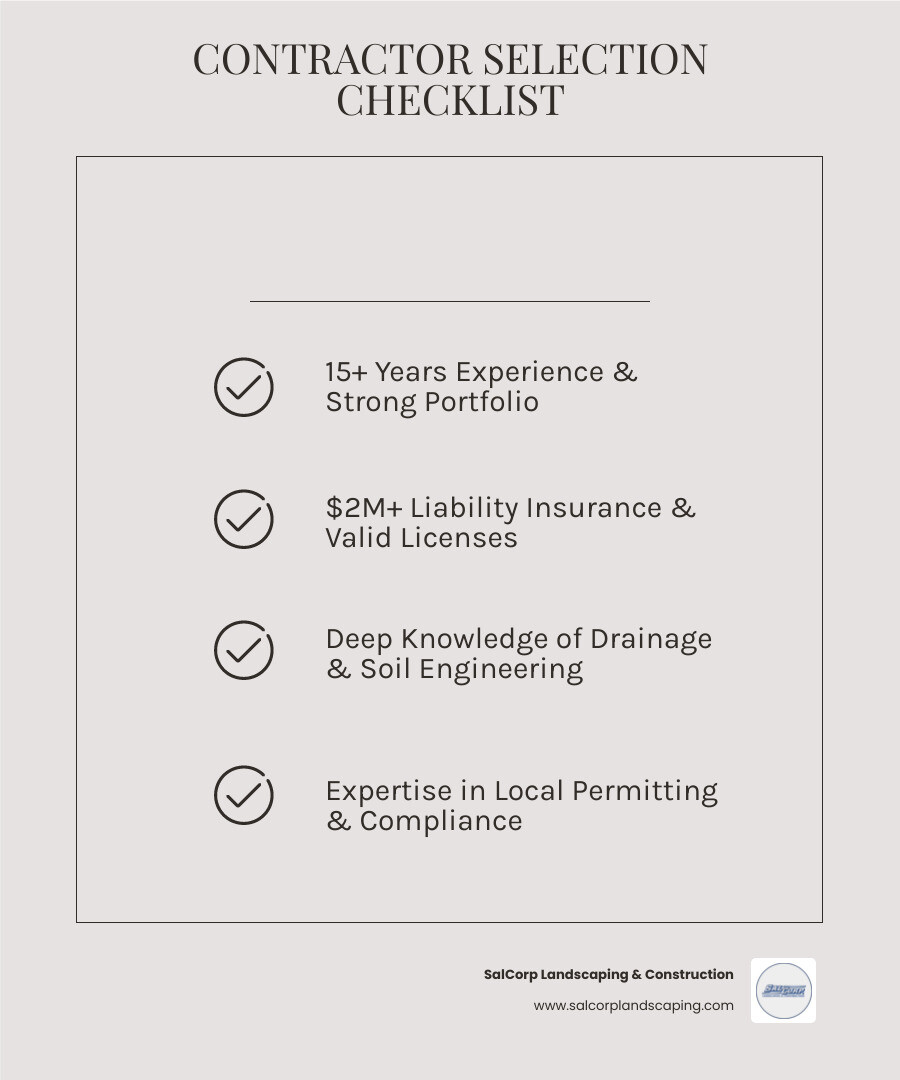
Quick contractor selection checklist:
- Experience: Look for 15+ years in retaining wall construction
- Insurance: Verify $2+ million liability coverage
- Licensing: Confirm proper state and local licenses
- Portfolio: Review photos of completed stone wall projects
- References: Contact recent customers about their experience
- Engineering knowledge: Ensure they understand drainage and soil compaction
- Local permits: Verify they handle permitting for walls over 3-4 feet
Whether you’re preventing soil from sliding down a hillside, creating terraced garden beds, or adding functional outdoor living space, the right retaining wall serves both practical and aesthetic purposes. Common materials include natural fieldstone, granite boulders, and manufactured concrete blocks, each offering different benefits for durability, appearance, and cost.
The key to a successful project lies in finding contractors who understand that retaining walls face immense pressure from soil, water, and weather. Poor construction leads to bulging, cracking, or complete failure – problems that can cost thousands more to fix than building it right the first time.
I’m Sal Musto, owner of SalCorp Landscaping & Construction, and over the past 20 years I’ve seen too many failed walls built by inexperienced contractors who didn’t understand proper drainage and soil compaction. When searching for stone retaining wall contractors near me, Massachusetts property owners need professionals who combine engineering knowledge with quality craftsmanship to deliver walls that last decades, not just years.
Simple guide to stone retaining wall contractors near me:
Why a Stone Retaining Wall is a Smart Investment for Your Property
Let’s be honest – nobody dreams of having a soggy, eroding hillside in their backyard. But when you’re searching for stone retaining wall contractors near me, you’re not just solving a problem. You’re actually making one of the smartest investments you can make in your property.
The functional benefits alone make retaining walls worth considering. If you’ve ever watched your topsoil wash away during a heavy rainstorm, you know how frustrating soil erosion can be. A properly built stone wall acts like a loyal guard, holding everything in place and directing water where it should go – away from your foundation and landscaping.
But here’s where it gets exciting: retaining walls are masters at creating usable space from what was once unusable slope. That steep hill where nothing grows well? It can become beautiful terraced garden beds or even a level area for outdoor entertaining. We’ve helped countless homeowners transform challenging slopes into level tiers that actually add square footage to their outdoor living space.
Think of retaining walls as the ultimate multitaskers. They’re perfect for defining outdoor rooms – creating distinct areas for dining, relaxing, or gardening. You might have a fire pit area on one level and a vegetable garden on another. For inspiration on how these elements work together, check out our Hardscape Ideas and explore Retaining Wall Landscaping options.
The aesthetic improvement is where stone walls really shine. Natural stone brings texture and timeless elegance that transforms any landscape from ordinary to extraordinary. Whether you choose rugged fieldstone or clean-lined blocks, you’re adding visual interest that complements your home’s architecture.
All of these benefits translate directly into increased property value. When potential buyers see well-designed hardscaping that solves drainage issues while creating beautiful, functional space, they recognize quality. A stone retaining wall isn’t just an expense – it’s an investment that pays you back in daily enjoyment and long-term equity.
The bonus? You get erosion control and flood prevention that protects your most valuable asset – your home itself.
Exploring Your Options: Types of Stone and Block Retaining Walls
Choosing the right material for your retaining wall is one of the most exciting parts of the planning process. When stone retaining wall contractors near me discuss options with homeowners, we always consider three key factors: your property’s specific conditions, your budget, and the aesthetic you’re hoping to achieve.
The material you select will determine not just how your wall looks, but how long it lasts and how it performs over time. Some materials work better in certain soil conditions, while others might be more suitable for specific heights or drainage requirements.
Natural Stone and Boulder Walls
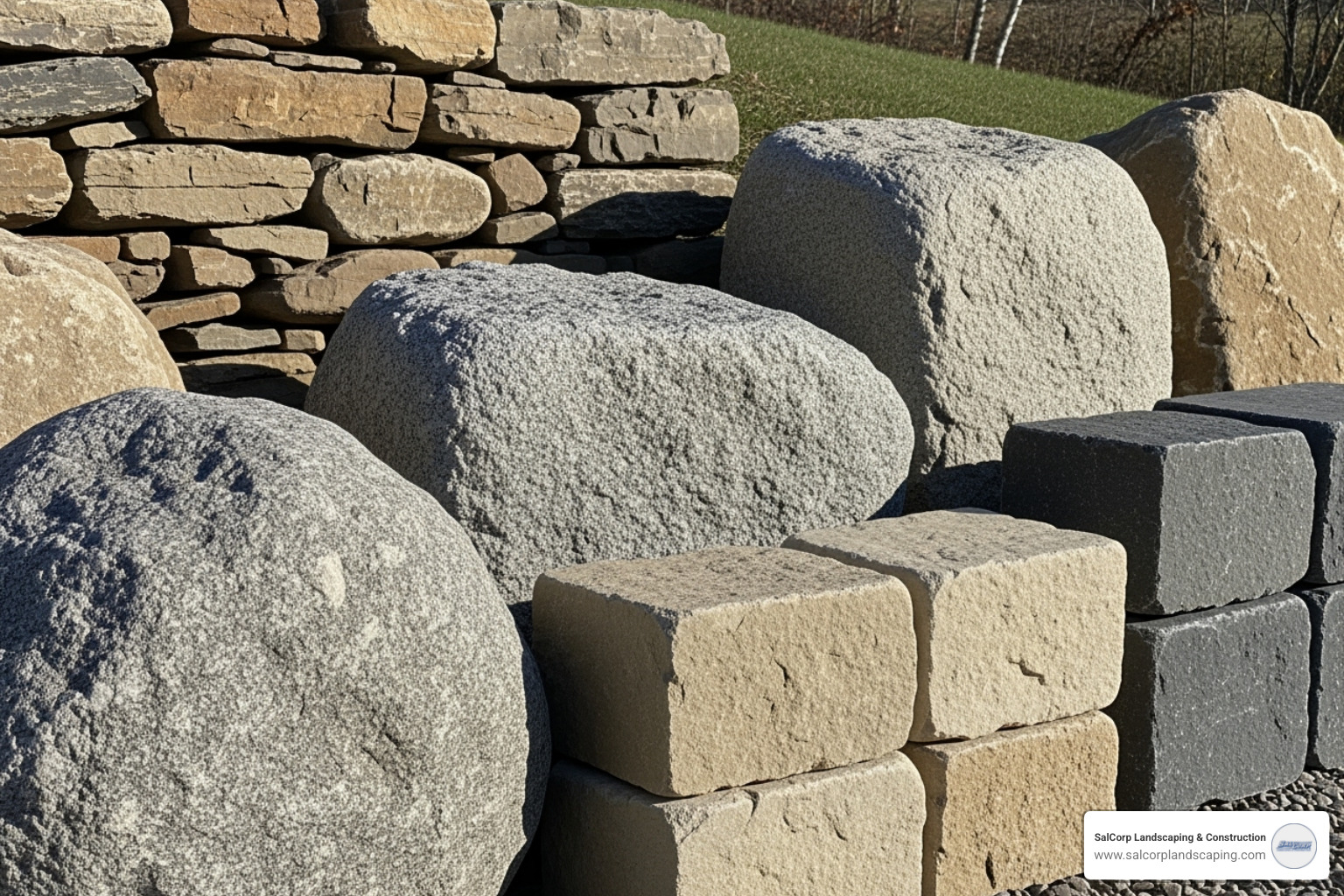
There’s something truly magical about a natural stone wall. Fieldstone, granite, and boulders each bring their own character to your landscape, creating a wall that feels like it’s been part of your property forever. No two stones are exactly alike, which means your wall will be completely unique.
The durability of natural stone is legendary – and I mean that literally. Think about stone walls that have stood for centuries without mortar, like those you see throughout New England’s countryside. When we install these walls correctly, they can last for generations.
We work with different sizes of stone depending on your project. Half-man rocks (stones one person can handle) and two-man rocks (requiring two people or machinery) each have their place. For smaller walls up to four feet, the hand-placed stones create beautiful, intricate patterns. For larger projects, bigger stones actually make the installation more efficient and often more economical.
The natural look these walls provide is best. They blend seamlessly into your landscape, whether you’re going for a rustic New England feel or a more polished garden design. You can learn more about different stone options in our Hardscaping Hardscape Material guide.
The main consideration with natural stone is the installation complexity. These walls require experienced contractors who understand how stones fit together and how to create proper drainage behind them. It’s definitely not a weekend DIY project.
Segmental Concrete Block Walls
If you’re looking for clean lines, consistent colors, or specific design features, segmental concrete blocks might be your perfect match. These interlocking blocks stack together like sophisticated building blocks, creating incredibly strong walls with a more uniform appearance.
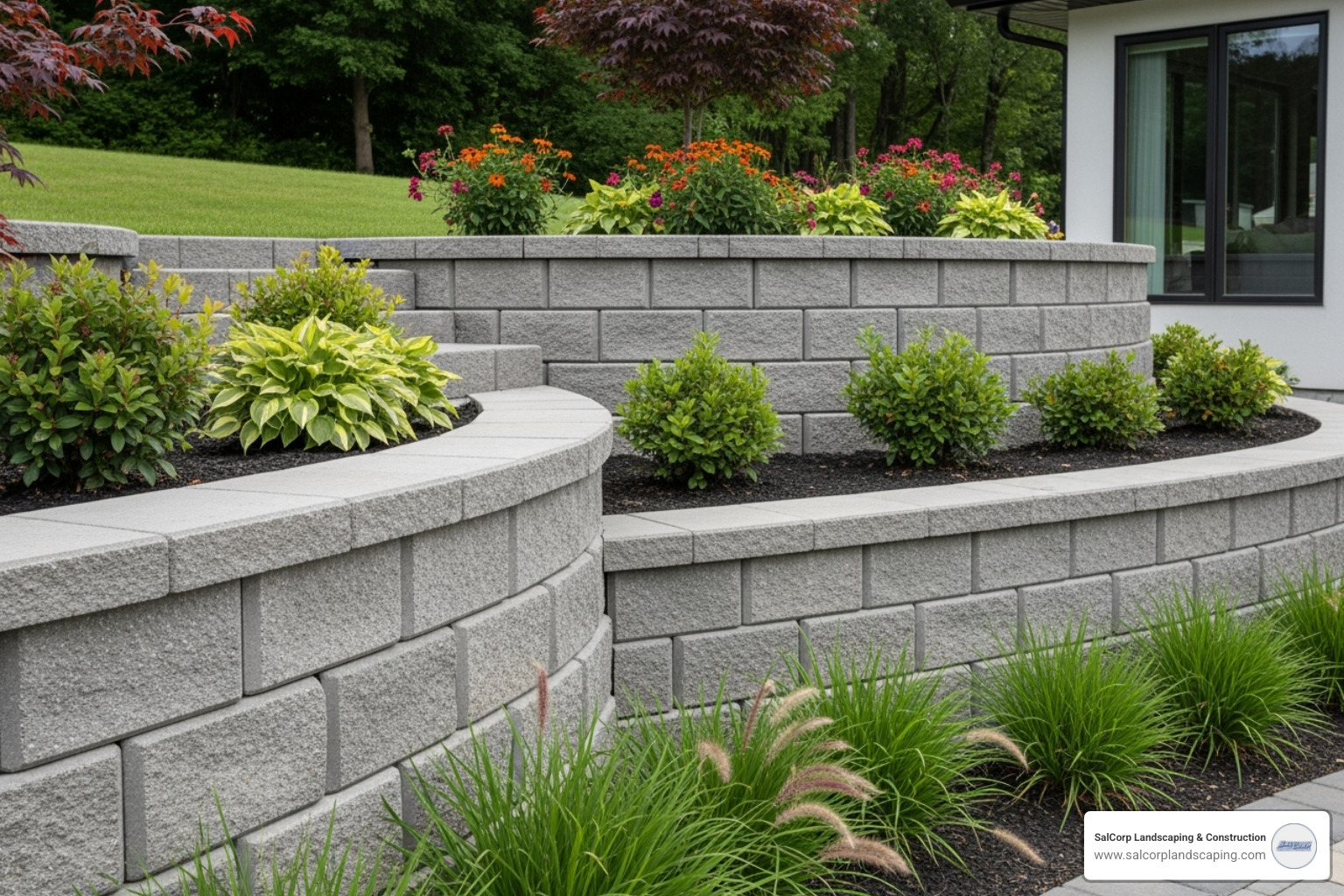
Modern concrete blocks offer incredible versatility. You can choose from dozens of color and texture options that mimic natural stone, or go with smooth, contemporary finishes for a more modern look. The consistency of manufactured blocks also makes them easier to work with when creating curves, corners, or multi-level designs.
The ease of installation is a real advantage with quality block systems. High-end blocks often have built-in alignment systems that help ensure each course is perfectly level and properly positioned. This precision translates into stronger, more durable walls.
Popular block styles include:
- Split-face blocks that look like rough-hewn stone
- Smooth finishes for contemporary landscapes
- Rustic textures that mimic aged, weathered stone
- Dimensional blocks with varying sizes for dynamic patterns
These blocks work particularly well when you need precise measurements or want to integrate other hardscape elements like steps or planters. If you’re considering other concrete hardscape features, our Average Cost To Install Concrete Paver Patio guide might provide helpful context for your overall project planning.
The engineering behind quality concrete blocks is impressive. They’re designed to handle specific loads and drainage requirements, making them an excellent choice for taller walls or challenging soil conditions.
How to Find the Best Stone Retaining Wall Contractors Near Me
Finding the right contractor can make the difference between a wall that lasts decades and one that fails within a few years. After 20 years in this business, I’ve seen too many homeowners learn this lesson the hard way. The key is understanding that stone retaining wall contractors near me aren’t all created equal – you need someone who truly understands both the art and science of wall construction.

Your due diligence now will save you thousands later. Start by focusing on local experts who specialize in retaining walls, not general contractors who build them occasionally. We serve communities throughout Massachusetts, and you can begin your search by exploring Hardscapers Near Me in your area.
The vetting process might seem overwhelming, but it’s actually straightforward when you know what to look for. Think of it as interviewing candidates for one of the most important outdoor investments you’ll make.
What to Look for in Local Stone Retaining Wall Contractors Near Me
Experience matters more than you might think. Look for contractors with at least 15 years specifically building retaining walls. This isn’t just about time in business – it’s about encountering different soil conditions, drainage challenges, and material types. Someone who’s built hundreds of walls has likely solved problems similar to yours.
Insurance protection is non-negotiable. Verify they carry comprehensive liability insurance of at least $2 million. This protects you if something goes wrong during construction. Don’t just take their word for it – ask to see the certificate and confirm it’s current.
Licensing requirements vary by state, but proper business licensing should be a given. In Massachusetts, while specific landscaping certifications aren’t always required, legitimate contractors maintain all necessary permits and registrations. This shows they operate professionally and legally.
Their portfolio tells the real story. Ask to see photos of recent stone retaining wall projects, not just their best work from five years ago. Look for consistency in quality and variety in styles. Can they handle both natural stone and manufactured blocks? Do their walls look straight and properly finished?
References should be recent and enthusiastic. A good contractor will gladly provide contacts from jobs completed within the last year. When you call these references, ask about communication, timeliness, and how they handled unexpected issues. For additional guidance on finding skilled professionals, check out our guide on Local Masonry Contractors.
Technical knowledge separates the pros from the pretenders. Your contractor should understand soil types, drainage solutions, and why certain materials work better for your specific site. If they can’t explain the engineering behind their recommendations, keep looking.
Warranties and guarantees show confidence in their work. Look for companies offering installation warranties (we provide a 2-year warranty) and manufacturers’ product warranties. This demonstrates they stand behind their craftsmanship.
In-house machinery often means better control over scheduling and costs. Companies that own their equipment typically have more experienced operators and can respond faster to weather delays or site challenges.
Key Questions to Ask Stone Retaining Wall Contractors Near Me
The right questions will quickly reveal whether you’re talking to an expert or someone learning on your dime. Start with their experience: “How many stone retaining walls have you built in the past three years?” This gives you a sense of their current activity level and expertise.
Ask about their approach to drainage – this is where many walls fail. They should discuss gravel backfill, drainage pipes, and filter fabric without you having to prompt them. If they seem unclear about hydrostatic pressure, that’s a red flag.
Material sourcing matters for both quality and timeline. Ask where they source their stone or blocks and whether they maintain relationships with local suppliers. This affects both material quality and project scheduling.
Subcontractor use isn’t necessarily bad, but you should know about it upfront. If they use subs for excavation or other work, ask about their vetting process and whether the same crews work together regularly.
Base preparation is critical for long-term stability. Ask specifically about their compaction process and what equipment they use. They should mention proper granular base materials and mechanical compaction methods.
Permitting can be complex for walls over 3-4 feet tall. Your contractor should handle this process and be familiar with local building codes. For more detailed information about building on challenging terrain, read our guide on How To Build A Retaining Wall On A Slope.
Timeline expectations should be realistic and account for weather, permits, and material delivery. Be wary of contractors who promise unusually fast completion – quality work takes time.
Get detailed, itemized quotes that break down materials, labor, equipment, and any additional costs. This makes it easier to compare bids fairly and avoid surprise charges later.
The contractor you choose will determine whether your retaining wall becomes a source of pride or a recurring headache. Take the time to ask these questions and trust your instincts about their professionalism and expertise.
Understanding Costs and Why Proper Engineering is Crucial
When planning your retaining wall project, understanding the investment involved is crucial. But here’s something I’ve learned after 20 years in this business: cutting corners on proper engineering to save money upfront almost always leads to much more expensive problems later. I’ve seen too many homeowners face complete wall rebuilds because they chose the lowest bidder who didn’t understand the science behind what they were building.
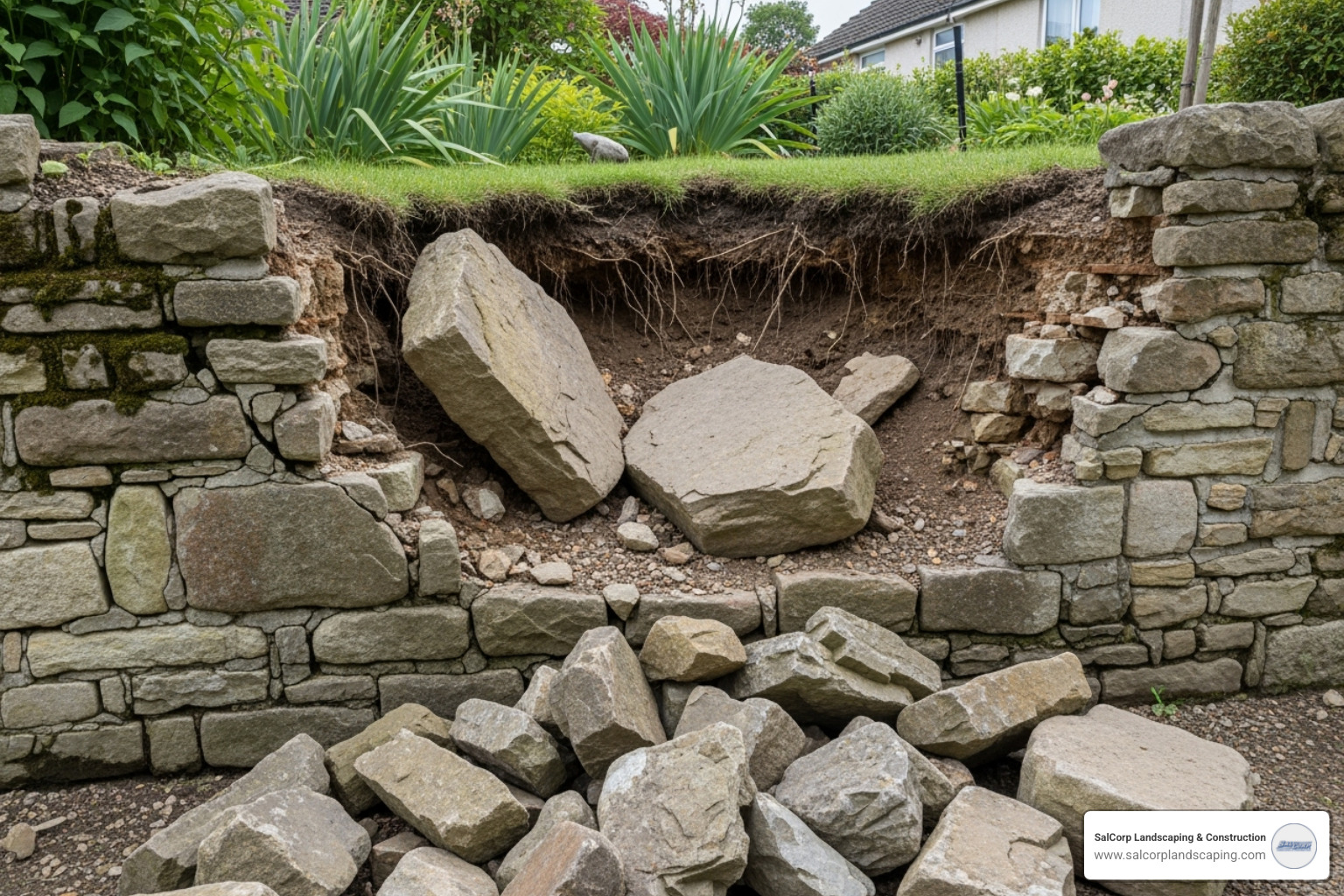
Several key factors influence what you’ll invest in your stone retaining wall. Material costs vary dramatically – natural stone, especially specialty granite boulders, typically costs more than manufactured concrete blocks, but each offers different benefits. Labor costs depend heavily on the complexity of your design and the skill required. Natural stone installation is more labor-intensive, requiring experienced craftspeople who understand how each stone fits together.
Site access plays a huge role in pricing. If we can’t get our machinery close to the work area, or if we’re working on steep slopes with limited space, the project becomes more challenging and time-consuming. Wall height and length naturally affect costs – taller walls need more materials, deeper excavation, and more complex engineering. Most retaining walls exceed 2 feet in height, with gravity walls reaching up to ten feet and cantilever walls extending to 16 feet.
Other factors include design complexity (curves, steps, or integrated seating add to the challenge), whether demolition of an existing structure is needed, and permit requirements for walls over certain heights. When searching for stone retaining wall contractors near me, make sure they factor all these elements into their estimate.
Average Retaining Wall Costs
Disclaimer: The following are national average costs based on industry data and do not represent actual pricing for our services. Costs can vary significantly based on location, materials, and project complexity.
Understanding typical investment ranges helps you plan your project budget effectively. Most retaining walls cost between $20 and $50 per square foot on average. However, premium materials like large natural stone boulders or specialized engineered systems can push costs to $150 per square foot or higher. Even basic wood retaining walls typically run $10 to $40 per square foot installed, showing how material choice affects your investment.
Here’s how different materials compare in terms of typical costs:
| Material Type | Estimated Average Cost (per square foot) |
|---|---|
| Segmental Concrete Block | $20 – $50 |
| Natural Fieldstone | $40 – $100 |
| Large Natural Boulders | $50 – $150+ |
| Poured Concrete | $30 – $70 |
| Wood (Treated Timber) | $10 – $40 |
These are rough estimates – your actual investment will depend on your specific site conditions, design requirements, and regional material availability. For detailed information about project costs, check our Retaining Wall Installation Cost guide.
The Science Behind a Stable Wall: Drainage, Compaction, and Design
You might think, “It’s just stacking stones – how hard can it be?” Trust me, I’ve heard this before, and it’s exactly this thinking that leads to the failures we see. A retaining wall fights massive natural forces every single day, and proper engineering is what keeps it standing strong for decades.
The biggest enemy of any retaining wall is hydrostatic pressure – the force of water trapped behind the wall. When water can’t escape, it builds up tremendous pressure that will eventually push your wall over, no matter how heavy those stones are. This is why proper drainage isn’t optional – it’s absolutely critical.
We create effective drainage through free-draining gravel backfill directly behind the wall, allowing water to flow down instead of building pressure. Drainage pipes at the base collect this water and direct it safely away from the structure. Filter fabric between the gravel and soil prevents fine particles from clogging the system over time.
Soil compaction is equally important but often overlooked by inexperienced contractors. The soil behind and beneath your wall must be compacted in layers during installation. Loose soil settles over time, creating voids and uneven pressure that can crack or topple your wall. I’ve seen beautiful walls fail simply because someone skipped this crucial step.
The overall design and reinforcement require engineering expertise, especially for walls over 2 feet high. A qualified civil engineer should review the design – skipping this is like building a house without blueprints. The design must account for your specific soil type, wall height and weight, and any loads from driveways or structures above.
For taller walls, we integrate geogrid reinforcements into the soil layers behind the wall. These provide tensile strength and create a larger, more stable soil mass that resists movement and pressure. Following NCMA standards ensures every wall meets industry requirements for structural integrity.
Common failures we see include lack of proper compaction leading to settlement, drainage issues causing hydrostatic pressure, improper installation that ignores manufacturer specifications, and insufficient reinforcement for the soil loads. Our approach includes excavating and installing a compacted crushed stone footing (typically 12 inches deep), burying at least one course of blocks for stability, and properly integrating drainage and reinforcement systems.
For insights into how these principles apply to challenging sites, explore our guide on Retaining Wall Slope Stability. When you understand the science behind a stable wall, you’ll appreciate why choosing experienced stone retaining wall contractors near me who respect these engineering principles is so important for your investment’s long-term success.
Frequently Asked Questions about Stone Retaining Walls
Over our 20 years in business, we’ve answered many questions from Massachusetts homeowners about retaining walls. These are the most common ones, showing that people are thinking seriously about their investment.
What is the most durable material for a retaining wall?
When it comes to pure staying power, natural stone like granite takes the crown. These walls can literally last centuries when built properly – just look at ancient stone structures that are still standing today. The natural density and weather resistance of granite makes it incredibly tough against Massachusetts winters and everything else Mother Nature throws at it.
High-quality solid concrete blocks run a very close second for durability. The premium ones we work with have a minimum compressive strength of 5000 PSI and are specifically engineered to handle freeze-thaw cycles without cracking. They’re built like tanks, honestly.
Here’s the thing though – while concrete blocks are generally more budget-friendly, most homeowners find that natural stone gives them the biggest bang for their buck when it comes to property value increase. There’s just something about that natural, timeless look that buyers love. The choice often comes down to your budget and the specific look you’re going for.
Do I need a permit to build a retaining wall?
This is where things get a bit tricky because every town has its own rules. Most municipalities around here require permits for walls over 3 to 4 feet tall. Some places are stricter than others – we’ve seen towns that want permits for anything over 2 feet.
And here’s what catches some people off guard: walls over 4 feet often need structural plans reviewed by a civil engineer. It sounds intimidating, but it’s actually a good thing because it ensures your wall will be safe and stable for decades.
The good news? As your contractor, we handle all the permitting headaches for you. We know the ins and outs of local codes in Walpole, Canton, Needham, and all the other communities we serve. We’ll pull the permits, submit the paperwork, and make sure everything’s up to code so you don’t have to worry about it.
How long does it take to build a stone retaining wall?
This is probably our most asked question, and I wish there was a simple answer! The timeline really depends on several factors that can make a huge difference.
A small, straightforward wall – maybe 50 feet long and 3 feet high – might only take our crew a few days to complete. We can usually knock these out pretty quickly when the site is accessible and the design is simple.
But a large, engineered wall is a completely different story. We’re talking about walls that need extensive excavation, complex drainage systems, and careful placement of heavy stones. These projects can easily take several weeks, especially if we’re working with massive boulders that require precise machinery work.
Weather plays a big role too – we can’t pour concrete footings in freezing temperatures, and heavy rain can shut down excavation work. Site access is another factor. If we can’t get our machinery close to the work area, everything takes longer.
During our initial consultation, we always give you a realistic timeline based on your specific project. We’d rather over-estimate and finish early than promise something we can’t deliver. Nobody likes surprises when it comes to construction schedules!
Partner with a Pro for a Flawless Finish
When it comes to building a retaining wall that will stand the test of time, your choice of contractor makes all the difference. You’ve learned about materials, costs, and engineering principles, but none of that matters if the person building your wall doesn’t have the expertise to execute properly.
Finding the right stone retaining wall contractors near me isn’t just about getting quotes – it’s about finding a partner who understands that your retaining wall is both a significant investment and a permanent feature of your landscape. After two decades in this business, I’ve seen too many walls fail because corners were cut during installation. The heartbreak on a homeowner’s face when their “bargain” wall starts bulging after just one winter is something I never want to see again.
An experienced, owner-operated company brings something different to your project. When you work with SalCorp Landscaping & Construction, you’re not dealing with a sales rep who disappears after signing the contract. You’re working directly with me and my team – professionals who have built our reputation on proper insurance coverage, specialized machinery, and most importantly, doing things right the first time.
We’re proud to serve communities across Massachusetts, including Walpole, Franklin, Needham, and many others. Over the years, we’ve tackled everything from simple garden walls to complex engineered structures on challenging slopes. Each project teaches us something new, but the fundamentals never change: proper drainage, solid foundations, and meticulous attention to detail.
Our own machinery means we control project timelines and quality. We’re not waiting for rental equipment or dealing with unfamiliar tools. Our crews know these machines inside and out, which translates to more efficient work and better results for you.
For a landscape feature that will improve your property for decades to come, trust a team that understands both the art and science of hardscaping. We won’t leave you between a rock and a hard place – that’s a promise backed by over 20 years of satisfied customers throughout Massachusetts.
Contact a professional retaining wall contractor today!