Hydroseed for Homeowners: Easy Guide 2025
Why Hydroseed for Homeowners is Changing the Lawn Game
Hydroseed for homeowners is a proven method for establishing a new lawn by spraying a nutrient-rich slurry of seed, mulch, fertilizer, and water onto bare soil. This technique offers a fantastic middle ground between slow traditional seeding and expensive sod, delivering faster growth, better coverage, and excellent erosion control at a cost-effective price. Seed blends can even be customized for your specific climate and soil conditions.
If you’re starting with a bare yard or renovating a patchy lawn, hydroseeding provides a path to a lush, uniform green space. While it requires proper soil preparation and consistent watering initially, the results are well worth the effort. The main challenge for homeowners is understanding the process, from choosing the right seed mix to deciding between a DIY approach and hiring a professional.
With over 50 years of refinement, hydroseeding is more accessible than ever. I’m Sal Musto, and for two decades at SalCorp, I’ve helped homeowners in the Walpole, MA area use hydroseeding to establish healthy, beautiful lawns. When done correctly, it consistently delivers superior results compared to traditional methods.
What is Hydroseeding and Why is it a Great Choice?
When establishing a new lawn, you can scatter dry seed, lay expensive sod, or choose the proven middle-ground solution: hydroseeding. Also known as hydromulching, this method uses a specialized spray system to coat your soil with everything grass needs to thrive, combining speed, quality, and affordability.
Understanding the Hydroseed Slurry and Process
The magic is in the slurry—that bright green mixture sprayed across your yard. The green dye is an eco-friendly colorant that ensures we don’t miss any spots. This isn’t just colored water; it’s a scientifically balanced mixture designed to turn bare soil into the perfect nursery for a new lawn.
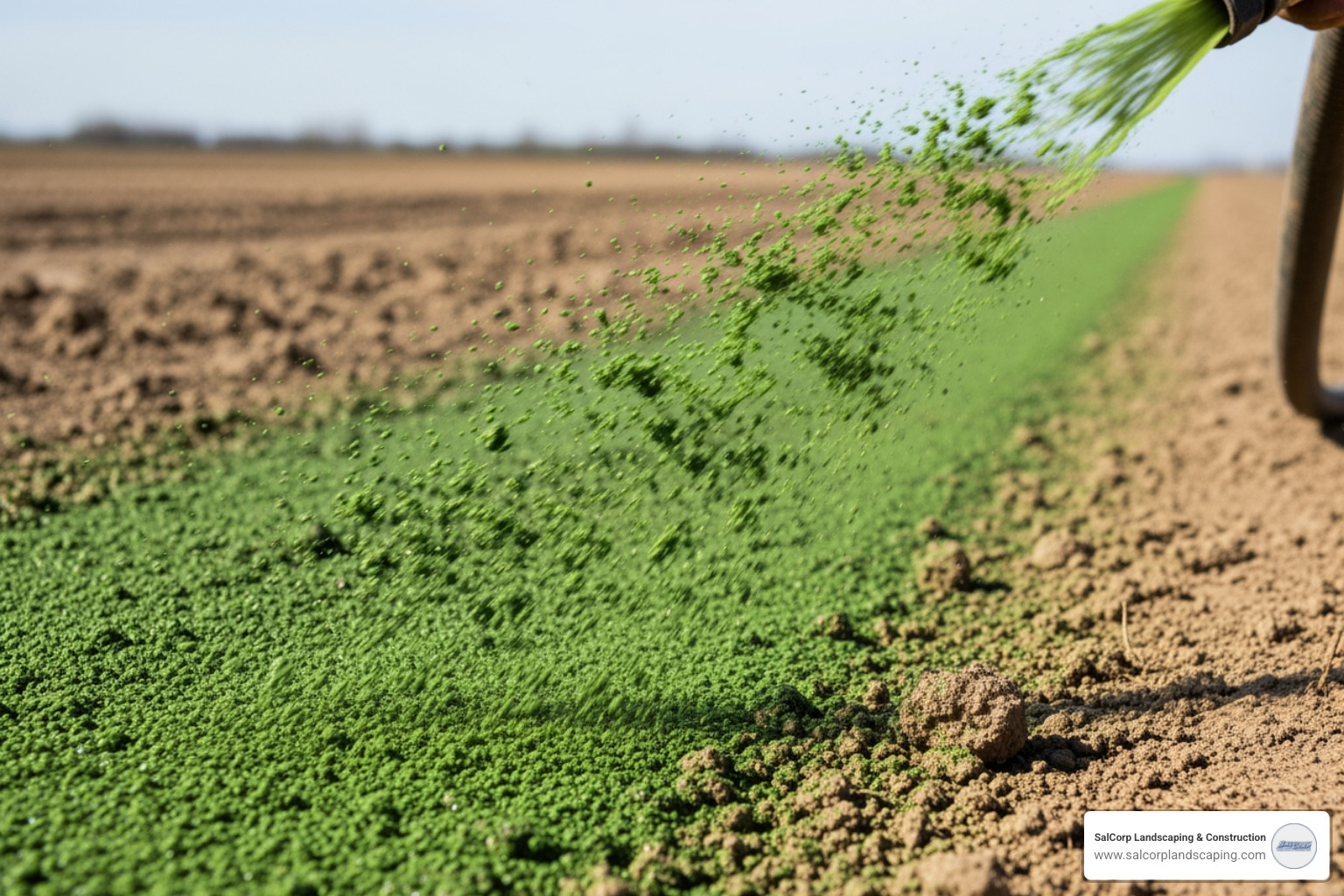
The slurry contains several key ingredients:
- Grass Seed: We select high-quality seed varieties that match your specific conditions in Massachusetts, considering sun exposure, foot traffic, and lawn goals. You can check the USDA Plant Hardiness Zone Map to see what grows best in your climate.
- Mulch: A protective layer of wood fiber, paper, or a blend acts like a blanket, bonding seeds to the soil. It retains moisture, prevents erosion, and ensures the seed-to-soil contact needed for germination. Wood fiber offers the best performance, especially on slopes.
- Fertilizer and Biostimulants: A starter fertilizer promotes strong root development, while biostimulants improve nutrient uptake and strengthen the grass’s natural defenses.
- Tackifiers: These binding agents make the slurry stick to the soil, keeping everything in place even on hills or during a downpour.
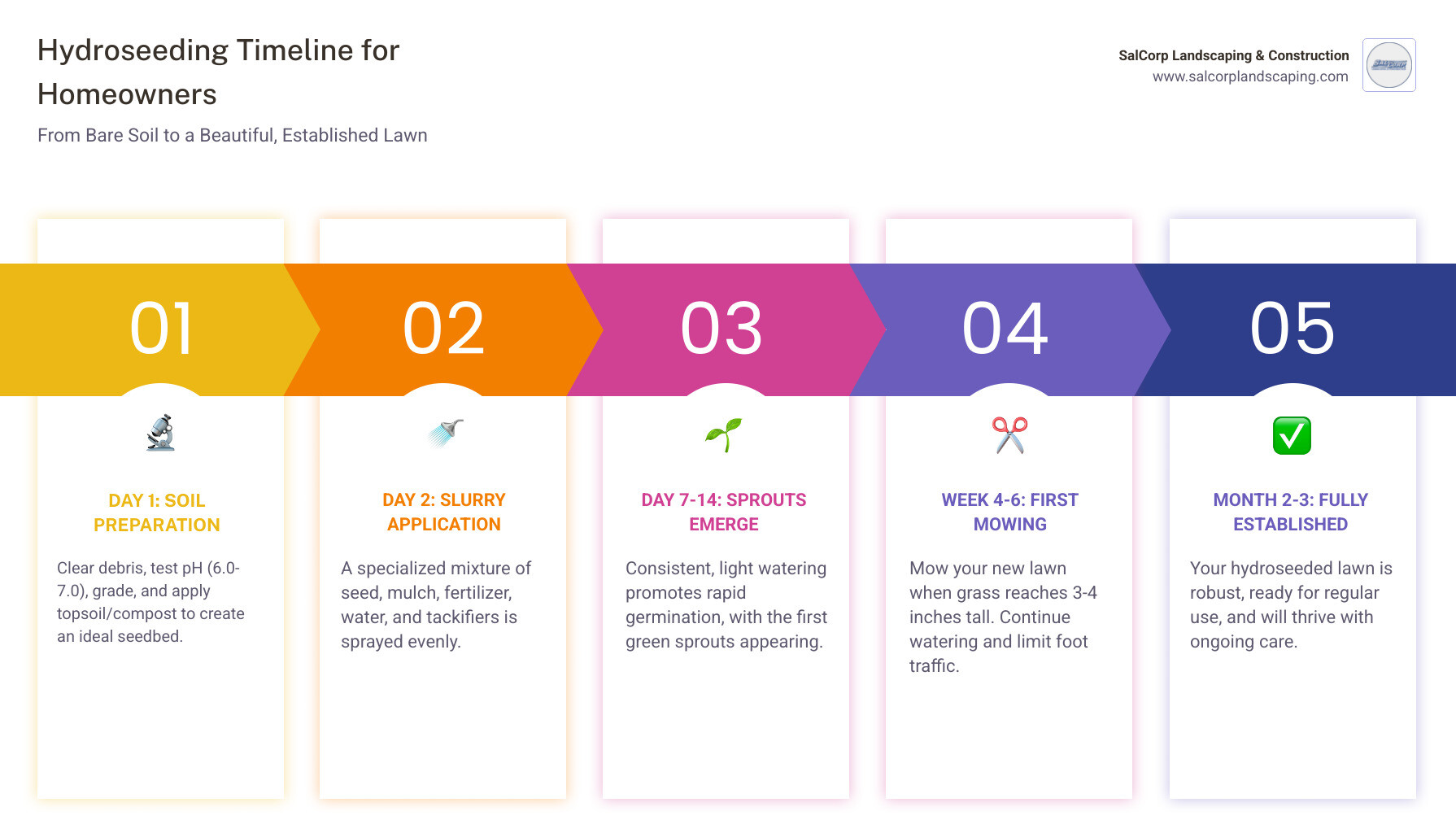
Using specialized equipment, we mix these components and spray the slurry evenly onto your prepared soil. This process provides immediate seed-to-soil contact and a protective environment, which is why grass can sprout in as little as seven days—far faster than the weeks you’d wait with traditional seeding.
Weighing the Pros and Cons of Hydroseeding
Every method has its place, but hydroseed for homeowners offers a compelling mix of benefits.
Advantages: Hydroseeding costs significantly less than sod while delivering results that hand-seeding can’t match. You get fast germination, uniform coverage without seams, and excellent erosion control, making it ideal for slopes. For our grass seed installation clients, this even application is a key differentiator. Plus, we can create custom seed blends for your yard’s unique needs, from shady spots to high-traffic areas.
Disadvantages: A newly hydroseeded lawn requires intensive watering for the first few weeks, a commitment some find challenging. The process also requires bare soil, so any existing grass or weeds must be removed first. While it creates a beautiful surface, it won’t fix underlying soil compaction issues without proper soil preparation. For very small patches, the minimum service charge may make it less economical than hand-seeding.
Here’s how hydroseeding compares to your other options:
| Feature | Hydroseeding | Traditional Seeding | Sod Installation |
|---|---|---|---|
| Cost | Moderate | Low | High |
| Speed to Sprout | 1-2 weeks | 2-4 weeks (or more) | Instant |
| Speed to Use | 4-8 weeks (light traffic) | 6-10 weeks | 2-4 weeks (light traffic) |
| Labor | Moderate (professional equipment) | High (manual spreading, uneven) | High (heavy lifting, precise placement) |
| Quality/Uniformity | Excellent, uniform coverage | Can be patchy, susceptible to washouts | Instant, but seams can show |
| Erosion Control | Excellent (mulch and tackifiers) | Poor (seeds can wash away) | Good (mats hold soil) |
| Weed Suppression | Good (mulch layer) | Poor | Good (dense mat) |
The sweet spot for hydroseeding is medium to large residential properties where you want professional results without the premium price of sod, especially if you have slopes or erosion concerns. In my two decades of experience in Massachusetts, hydroseeded lawns consistently outperform hand-seeded alternatives.
Your Complete Guide to Hydroseed for Homeowners
Understanding the practical side of hydroseeding—cost, timing, and the DIY vs. pro debate—will help you make the best choice for your property.
The Cost of Hydroseed for Homeowners
The first question is always about cost. While every project is unique, we can look at general pricing to give you an idea. Based on average internet data (note: these are not actual SalCorp Landscaping prices), hydroseed for homeowners typically ranges from $0.06 to $0.20 per square foot. Total project costs for professional services can range from $650 to over $4,000, while larger properties may fall in the $2,000 to $7,000 per acre range.
Several factors influence the final price:
- Lawn Size: Larger areas cost more overall, but the price per square foot often decreases. Most companies have a minimum charge.
- Site Preparation: Clearing old vegetation, grading, or removing debris adds to the cost.
- Soil Condition: Poor soil may require adding topsoil and compost, which is an investment in your lawn’s long-term health.
- Seed & Mulch Type: Specialty seed blends and premium mulches (like wood fiber for erosion control) cost more than basic options.
For an accurate quote, a detailed estimate is best. You can also find more information on hydroseeding costs from Angi for general market ranges.
The Hydroseeding Process: A Step-by-Step Guide
Proper execution is key to getting great results. Here’s a breakdown of the process.
When is the Best Time to Hydroseed?
In Massachusetts, spring (March-June) and fall (late August-October) are the ideal times. Both seasons offer moderate temperatures and sufficient moisture for cool-season grasses to thrive. Fall is often preferred as the warm soil and cool air create perfect growing conditions with less weed competition. You can hydroseed in summer, but it requires a much more intensive watering schedule. Check your USDA Plant Hardiness Zone to confirm the best timing and grass types for your area.
Soil Preparation: The Foundation of a Great Lawn
This is the most critical step. You can’t just spray over an existing lawn.
- Clear the Area: Remove all existing grass, weeds, rocks, and debris to create a bare soil surface.
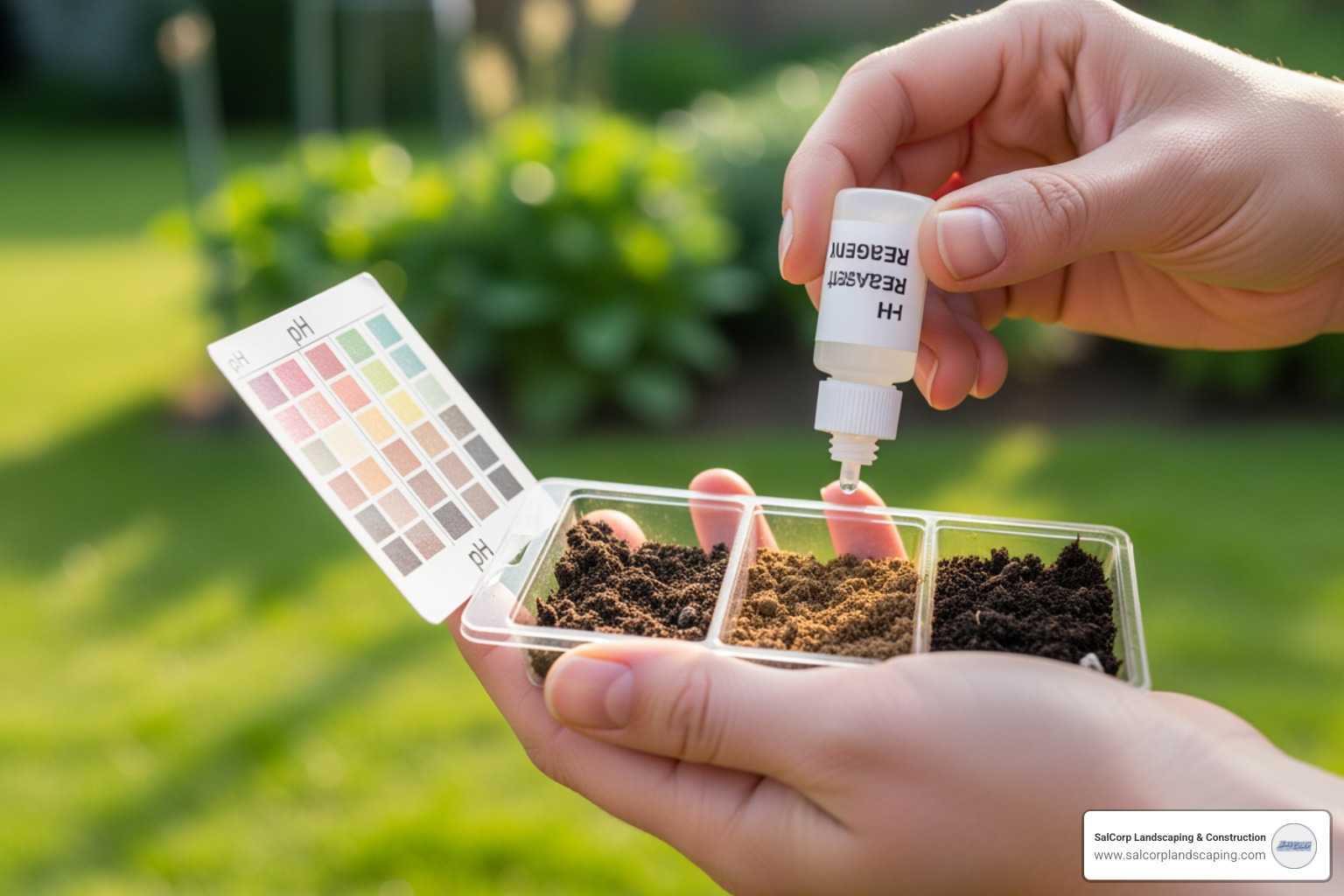
- Test the Soil: A simple soil test reveals your pH and nutrient levels. Most grasses prefer a pH between 6.0 and 7.0. We amend the soil with lime or sulfur as needed.
- Grade and Add Topsoil: We grade the area to ensure proper drainage away from your home’s foundation, then add a 2-inch layer of high-quality topsoil and compost to create a fertile seedbed.
- Final Leveling: The surface is raked smooth to ensure a uniform lawn without low spots where water can puddle.
Application Technique: Spraying the Slurry
With the soil prepared, the application is quick. We mix the seed, mulch, fertilizer, and tackifiers in the hydroseeder tank and spray the slurry evenly across the soil. The green dye helps us ensure complete, overlapping coverage for a flawless result.
DIY vs. Professional Hydroseed for Homeowners
For very small patches, a DIY kit or a homemade sprayer might be a fun project. You can also rent equipment for larger jobs. Our Do It Yourself Hydroseeding guide offers more details. However, DIY hydroseeding is labor-intensive and requires careful research to get the slurry ratios right. Results are often inferior to professional applications.
Hiring a professional offers significant advantages:
- Commercial-Grade Equipment: Ensures precise, even application.
- High-Quality Materials: Access to superior seed blends, mulches, and additives.
- Expertise: Professionals understand soil conditions and can customize the slurry for your specific needs.
- Time and Effort: We handle the demanding soil prep and application, saving you time and physical labor.
For most homeowners looking to establish a new lawn, professional services like our Grass Seed Installation deliver superior results with far less stress. You can also consult our Turf Grass Installation Cost Guide to compare all your options.
Nurturing Your New Hydroseeded Lawn to Perfection
The application of hydroseed is just the beginning of your journey to a beautiful lawn. What happens in the weeks and months following that bright green spray makes all the difference between a patchy, struggling yard and the lush, vibrant lawn you’re dreaming of. Think of it as the “baby grass” stage—your new lawn needs consistent attention and care to thrive.
Post-Application Care: The First Month and Beyond

The first month is critical. Follow this care routine for a lush, healthy lawn.
- Watering: This is the most important step. For the first two weeks, water 2-3 times daily for 15 minutes per session to keep the mulch bed consistently moist but not puddled. After sprouts appear, switch to once-daily, longer waterings to encourage deep root growth. After one month, your lawn will need about 1-1.5 inches of water per week. For more details, see our guide on How to Care for Hydroseeded Lawn.
- Growth Timeline: You’ll see the first sprouts in just 5-7 days. Within 2-3 weeks, you should have widespread germination. Your lawn will start to look full around the 30-40 day mark.
- First Mowing: Wait until the grass is 3-4 inches tall (usually 4-6 weeks). Set your mower to its highest setting and never cut more than one-third of the blade length. Mow when the soil is dry to avoid ruts. Our Mowing Hydroseeded Lawn guide has more tips.
- Fertilizing: The initial slurry contains starter fertilizer, but a follow-up feeding about 30 days after application is beneficial. Use a starter or slow-release fertilizer to support continued growth.
- Foot Traffic: Keep off the lawn completely for at least the first four weeks. Young seedlings are extremely fragile. Minimize traffic for the first three months to allow the root system to establish fully. Learn more in our Can I Walk Over Hydroseeded Lawn article.
- Weed Control: The mulch layer helps suppress weeds, but some may still appear. Pull large weeds by hand. Avoid using any chemical herbicides for at least 3-4 months, as they can kill your new grass.
Following these steps will turn your hydroseed for homeowners investment into the beautiful lawn you envisioned. The combination of quick establishment, high-quality results, and cost-effectiveness makes it an outstanding choice for Massachusetts properties.
At SalCorp Landscaping & Construction, we’ve spent over 20 years helping homeowners in Walpole, Sharon, Milton, Canton, and surrounding areas create their dream landscapes. From design to hardscaping and expert hydroseeding, we provide comprehensive solutions.
For expert advice and professional application in the Walpole, MA area, explore our hydroseeding lawn services. We’re ready to help you achieve the lush, green lawn you deserve.